
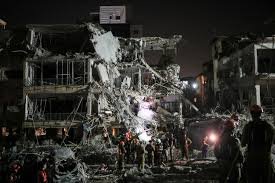
Agencies | Dubai: The ongoing conflict in West Asia took a sharp and dangerous turn as Iran launched missile strikes on southern Israel late Saturday, injuring dozens and causing widespread damage to residential areas near the country’s key nuclear research zone.
According to reports, missiles struck the cities of Dimona and Arad in the Negev desert region, marking a rare breach of Israel’s air defence systems in a highly sensitive area. At least 64 people were hospitalised, with several buildings severely damaged.
The escalation comes as Donald Trump issued a stern warning to Tehran, demanding that it reopen the strategically vital Strait of Hormuz within 48 hours or face massive US retaliation. In a strongly worded statement, Trump threatened to target Iran’s power infrastructure if the waterway remains blocked.
Iran, in response, warned that any attack on its energy facilities would trigger retaliatory strikes on US and Israeli assets across the region, raising fears of a wider and more destructive conflict.
The Strait of Hormuz, a critical artery for global oil shipments, remains largely disrupted due to ongoing hostilities, significantly impacting global energy supplies and driving up fuel prices worldwide.
Tensions further intensified after Iran reportedly attempted a long-range strike on the US-UK military base at Diego Garcia, indicating a possible expansion of the conflict beyond the Middle East into the Indian Ocean region.
The missile strikes followed earlier attacks on Iran’s nuclear facility at Natanz, although Israel has denied involvement. Meanwhile, global powers have expressed growing concern over the rapidly deteriorating security situation, warning of severe economic and humanitarian consequences.
With both sides exchanging threats and military actions escalating, the conflict has entered a critical phase, with fears mounting that it could spiral into a broader regional war with global repercussions.