
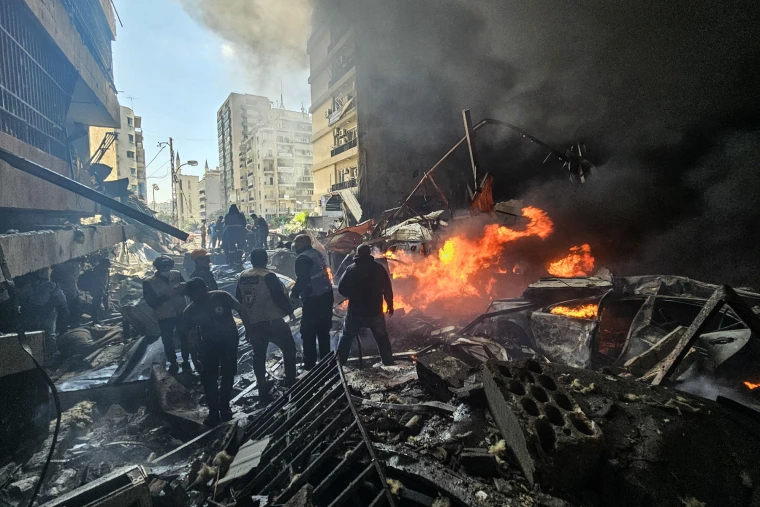
Agencies | Srinagar: The fragile ceasefire between the United States and Iran faced fresh strain on Wednesday as Tehran reportedly shut down the Strait of Hormuz in retaliation for Israeli strikes on Lebanon, raising fears of renewed escalation in the already volatile West Asia region.
Washington has urged Iran to reopen the crucial maritime corridor, a vital artery for global oil supplies, while attempting to keep diplomatic channels open. In a key development, an Iranian delegation led by Parliament Speaker Mohammad-Bagher Ghalibaf is expected to arrive in Islamabad for ceasefire talks with US officials scheduled for April 10.
Meanwhile, Israel has intensified its military operations against Hezbollah in Beirut, targeting multiple residential and commercial areas. The strikes have resulted in over 200 deaths and thousands of injuries, marking one of the deadliest phases in the ongoing Israel–Lebanon conflict.
Iran has also presented a 10-point proposal aimed at ending hostilities, calling for recognition of its uranium enrichment programme and the lifting of international sanctions. However, tensions remain high as Tehran warned it could withdraw from the ceasefire if attacks continue.
Global stakeholders have called for expanding the ceasefire framework. Turkey and Russia have both stressed that any truce must include Lebanon to ensure regional stability. Russian Foreign Minister Sergei Lavrov underscored the need for a broader agreement, while Turkey echoed similar concerns.
Despite ongoing clashes, there were signs of a temporary lull, with Gulf nations reporting no fresh Iranian missile or drone attacks on Thursday—the first such pause since the conflict began on February 28.
Adding to economic concerns, the International Monetary Fund has warned that the war could require up to $50 billion in emergency financial assistance for affected countries, highlighting the far-reaching impact of the crisis.
As diplomatic efforts intensify, the situation remains fluid, with uncertainty over whether the ceasefire can hold amid continued military activity and deep geopolitical divisions.