
Agencies | New Delhi:
The Supreme Court on Tuesday ordered the quashing of all FIRs registered against students who participated in the Cockroach Janta Party (CJP)-led protests between July 20 and 25, bringing the criminal proceedings against the protesters to an end.
A bench comprising Justices Joymalya Bagchi and V. Mohana invoked the court’s powers under Article 142 of the Constitution, which empowers the Supreme Court to pass orders necessary to ensure complete justice.
The bench said the decision was taken while keeping in view the future prospects of the young protesters. The court also considered submissions made by Solicitor General Tushar Mehta before widening the scope of its order.
Reacting to the judgment, CJP Chief Spokesperson Saurav Das said the party had maintained that individuals with serious criminal antecedents should not be shielded if they were found to have committed offences during the protests.
Das said the party had also addressed concerns raised by the Delhi Police over the alleged presence of nearly 2,800 individuals identified through facial-recognition technology at the protest site.
He argued that if any of those individuals had committed serious offences, including rape, murder or other grave crimes during the demonstrations, they should be investigated and prosecuted in accordance with law.
According to Das, the Supreme Court has permitted Delhi Police to register a separate fresh FIR in Delhi to investigate the role of the identified individuals.
The Supreme Court had earlier agreed to hear a plea by Delhi Police seeking the quashing of 13 FIRs registered against students who participated in the protests and permission to register a fresh case against 2,873 individuals.
In its application, Delhi Police said it no longer wished to pursue the 13 FIRs following a decision taken by the Centre on July 25.
The police contended that the individuals identified as having serious criminal antecedents, based on National Crime Records Bureau data, were allegedly present at the protest site and that their specific roles in any offences involving bodily harm or property damage needed to be investigated.
Delhi Police had sought permission to register a fresh and specific FIR against those individuals, with the investigation to be conducted in accordance with the court’s clarification regarding the term “criminal antecedents.”
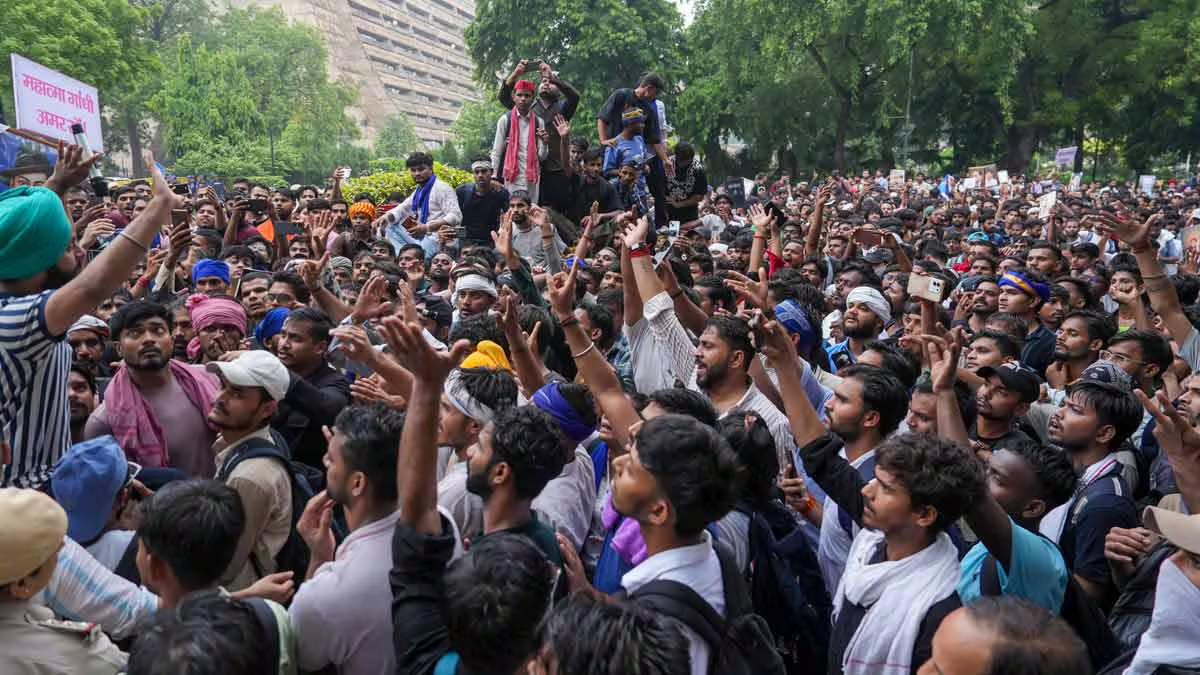
The CJP-led agitation began at Jantar Mantar on June 20 and later spread to several cities. The protests were primarily focused on demands for the resignation of then Union Education Minister Dharmendra Pradhan.
The July 20 march in Delhi witnessed clashes between protesters and security personnel after demonstrators attempted to march towards Parliament. Police used lathis and tear gas to disperse the crowd.
The agitation was called off on July 25 after Pradhan resigned and the government accepted other demands raised by the protesters.
With Tuesday’s order, the Supreme Court has brought the proceedings arising from the specified FIRs against the student protesters to a close, while allowing authorities to separately investigate allegations involving individuals with serious criminal antecedents.