
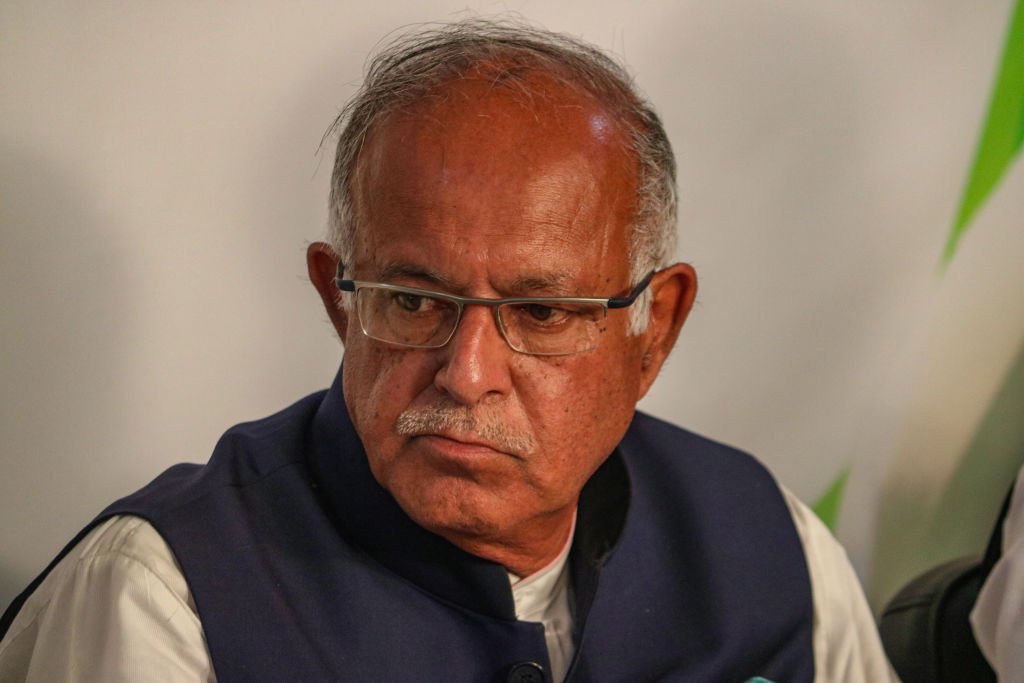
Examiner Bureau | Srinagar:
Pradesh Congress Committee president Tariq Hamid Karra has hit back at Chief Minister Omar Abdullah over his remarks questioning whether the Congress expected people in Kashmir to “go to jail over the national song”, saying the party’s expectations were directed at the Jammu and Kashmir government and not the public.
Reacting to Omar’s comments, Karra described them as “detached from reality and highly unfortunate”, questioning how the people of Jammu and Kashmir had been brought into a debate that, according to him, concerned the government’s position.
“How did the ‘People of Jammu & Kashmir’ come into the picture when our expectations were clearly and exclusively from the Government of Jammu & Kashmir?” Karra said in a post on X.
He maintained that the public had no role in the dispute and argued that it was the government that was expected to take a clear position.
“The public has nothing to do with this debate. It is the government that is expected to stand upright,” he said.
Karra also referred to Independence Day events in other states, particularly Kerala, where he said the government chose to sing only the first two stanzas of Vande Mataram.
“Did a single person in Kerala go to jail when its government chose to sing only the first two stanzas of Vande Mataram at the Independence Day parade?” he asked.
He questioned whether it was unreasonable to expect the J&K Chief Minister to uphold what he described as secular and inclusive values, citing the governments of Kerala, Tamil Nadu, Karnataka and Telangana as examples.
“Are we wrong to expect our Hon’ble CM to be equally capable of standing up for secular and inclusive values as the CMs of Kerala, Tamil Nadu, and now even Karnataka and Telangana have done by limiting Vande Mataram to the first two stanzas at state events?” Karra said.
The exchange marks another public disagreement between the Congress leadership in Jammu and Kashmir and the National Conference-led government over the handling of issues involving national symbols and the political positioning of the administration.