
BY: Syed Salman
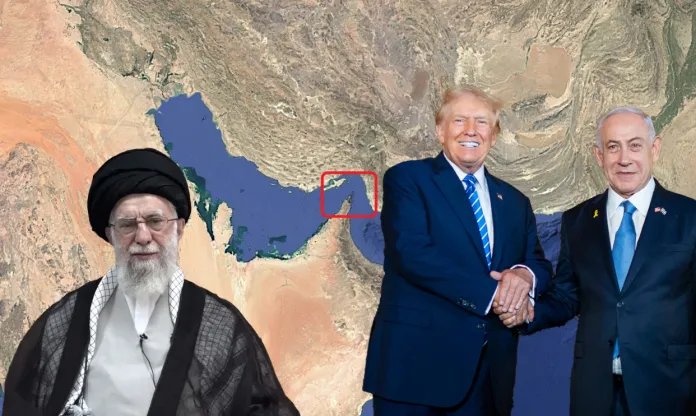
Amid the intensifying conflict between the United States, Israel and Iran, US President Donald Trump has proposed forming a multinational naval coalition to secure the strategically vital Strait of Hormuz after Iran allegedly attempted to disrupt shipping through the key global oil route.
In a post on the social media platform Truth Social, Trump said several countries affected by the disruption in the strait could join the United States in deploying naval forces to keep the waterway open and secure. He suggested that nations heavily dependent on energy supplies passing through the strait—including China, France, Japan, South Korea and the United Kingdom—may have strong incentives to participate in the effort.
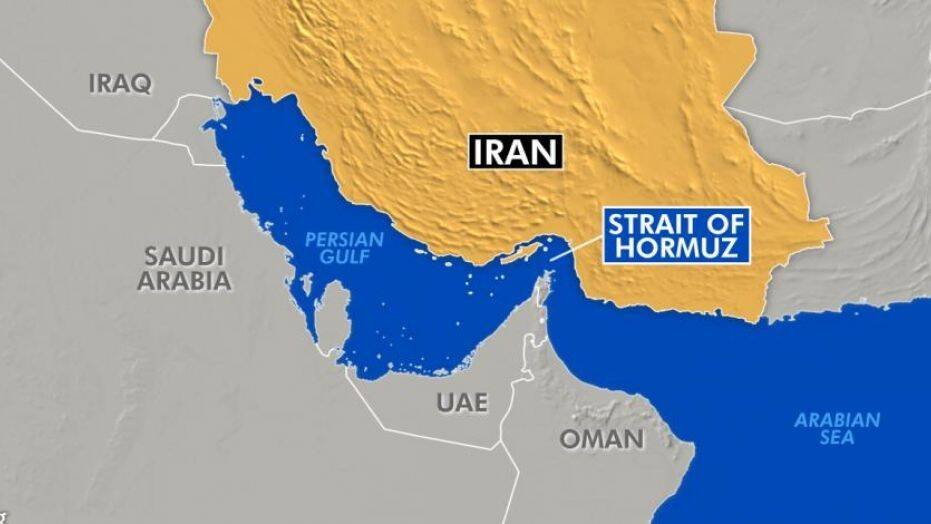
“Countries that receive oil through the Strait of Hormuz must take care of that passage, and the United States will help significantly,” Trump wrote, adding that Washington would coordinate closely with participating nations to ensure safe and uninterrupted maritime traffic.
Why the Strait of Hormuz Matters
The Strait of Hormuz is widely considered the world’s most critical maritime chokepoint, linking the Persian Gulf to the open ocean. Nearly 20–25 percent of global seaborne oil trade, estimated at around 20 million barrels per day, passes through the narrow waterway. It also carries about 20 percent of global liquefied natural gas (LNG) exports, including almost all shipments from Qatar.
More than 80 percent of the oil transported through the strait is destined for Asian markets, with countries like China, India, Japan and South Korea among the largest importers.
Iran’s Response and Strategy
Iran has reportedly adopted a strategy of “selective blockade” rather than a complete shutdown of the waterway. Officials in Tehran say the strait remains open but have effectively restricted passage for vessels linked to the United States and Israel while allowing limited movement for countries considered neutral or friendly.
The Islamic Revolutionary Guard Corps (IRGC) has reportedly carried out missile and drone strikes targeting Israeli positions and US bases in the region as part of what it described as the first round of retaliation following attacks on Iranian infrastructure.
Iran’s naval tactics rely heavily on asymmetric warfare methods. These include deploying small explosive boats disguised as fishing vessels, laying advanced naval mines, and positioning mobile anti-ship missile batteries and drones along its rugged coastline. These tactics are designed to threaten shipping and complicate efforts by Western navies to fully secure the narrow waterway.
Economic Pressure Through Insurance and Shipping
Another powerful tool in Iran’s strategy has been economic disruption. By issuing warnings over maritime emergency channels and escalating threats, Tehran has contributed to a dramatic rise in insurance premiums for vessels entering the strait. Many global insurers have withdrawn war-risk coverage, making commercial transit through the region financially unviable for shipping companies.
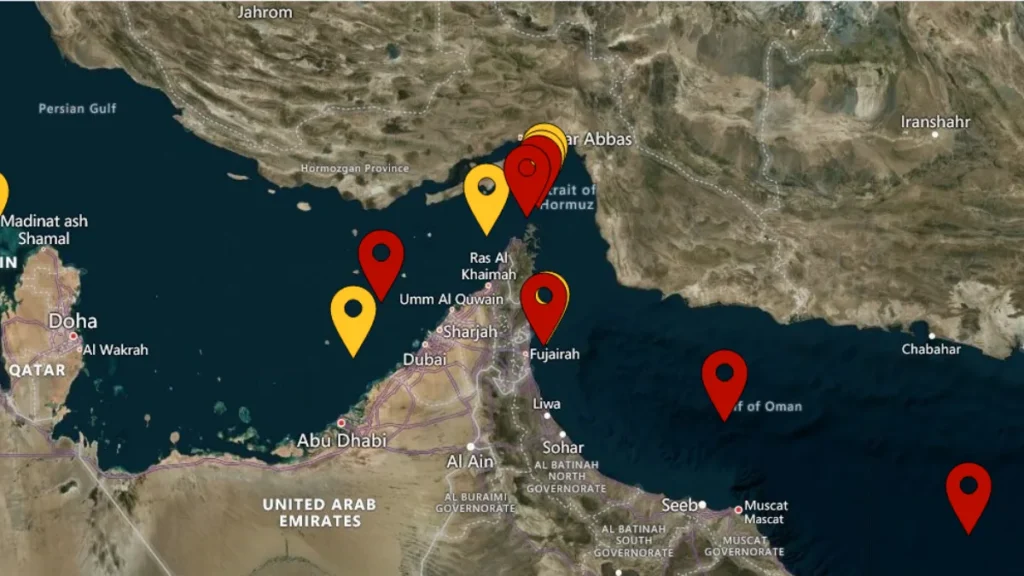
Major shipping firms such as Maersk and Hapag-Lloyd have reportedly suspended cargo services through the region, contributing to a 97 percent decline in commercial traffic since the conflict escalated in late February.
Risks of a Wider Military Escalation
Trump’s proposal involves deploying naval escorts for oil tankers and coordinating international maritime patrols in the region. However, defence experts warn that the narrow waterway could become a high-risk combat zone, where even advanced naval fleets may be vulnerable to Iran’s anti-ship missiles and naval mines.
Some US military analysts have also cautioned that any attempt to secure the strait through large-scale ground operations along Iran’s southern coastline would require thousands of troops and could significantly escalate the conflict.
Meanwhile, rising tensions in the region have already pushed global oil prices to their highest levels in years, prompting discussions within Washington about releasing strategic petroleum reserves or adopting emergency economic measures to stabilise global energy markets.
Analysts say that ultimately a ceasefire or diplomatic breakthrough may be the only sustainable solution to restore confidence in shipping lanes and prevent further disruption to the global energy supply chain.