
Agencies | News Report:
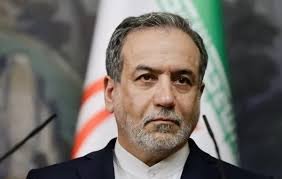
Amid intensifying tensions in West Asia, Iranian Foreign Affairs Minister Seyed Abbas Araghchi on Tuesday accused the United States of entering a “war of choice” on behalf of Israel, sharply criticising Washington’s recent military action against Tehran.
In a post on X, Araghchi claimed that the US had acted not in response to any genuine Iranian threat but in support of Israeli interests. “Rubio admitted what we all knew: U.S. has entered a war of choice on behalf of Israel. There was never any so-called Iranian ‘threat’,” he wrote.
He further alleged that the “shedding of both American and Iranian blood is thus on Israel Firsters,” adding that “the American people deserve better and should take back their country.”
Araghchi’s remarks followed statements by US Secretary of State Marco Rubio, who defended Washington’s decision to strike Iranian targets, describing it as a calculated and preemptive move to safeguard American forces and regional stability.
Speaking to reporters on Capitol Hill on Monday (local time), Rubio said the United States acted with prior knowledge that Israel was preparing its own military strike against Iran. According to Rubio, US intelligence assessments indicated that any Israeli action would likely trigger retaliatory attacks on American personnel in the region.
“We knew that there was going to be an Israeli action. We knew that that would precipitate an attack against American forces, and we knew that if we didn’t pre-emptively go after them before they launched those attacks, we would suffer higher casualties,” Rubio stated.
He said the primary objective of the operation was to neutralise Iran’s ballistic missile infrastructure and its ability to manufacture and deploy such weapons. “Our mission and our focus is the destruction of their ballistic missile capabilities and their ability to manufacture them, as well as the threat posed by their Navy to global shipping,” he added.
Rubio acknowledged that Washington had anticipated retaliation from Tehran but argued that acting first was necessary to minimise risks. “We knew that if Iran was attacked, they would immediately come after us, and we were not going to sit there and absorb a blow before we responded,” he said, describing the move as essential to avoid higher casualties.
Calling Iran’s continued development of short-range ballistic missiles an “unacceptable risk,” Rubio maintained that the action was taken at a moment when Tehran was at its “weakest point.” While expressing hope for eventual political change within Iran, he clarified that the immediate objective was to ensure that Tehran no longer possessed weapons capable of threatening the United States and its allies.
The exchange of accusations underscores the rapidly escalating geopolitical tensions in the region, with both sides defending their actions as necessary measures in an increasingly volatile security environment.