
Agencies | Srinagar:
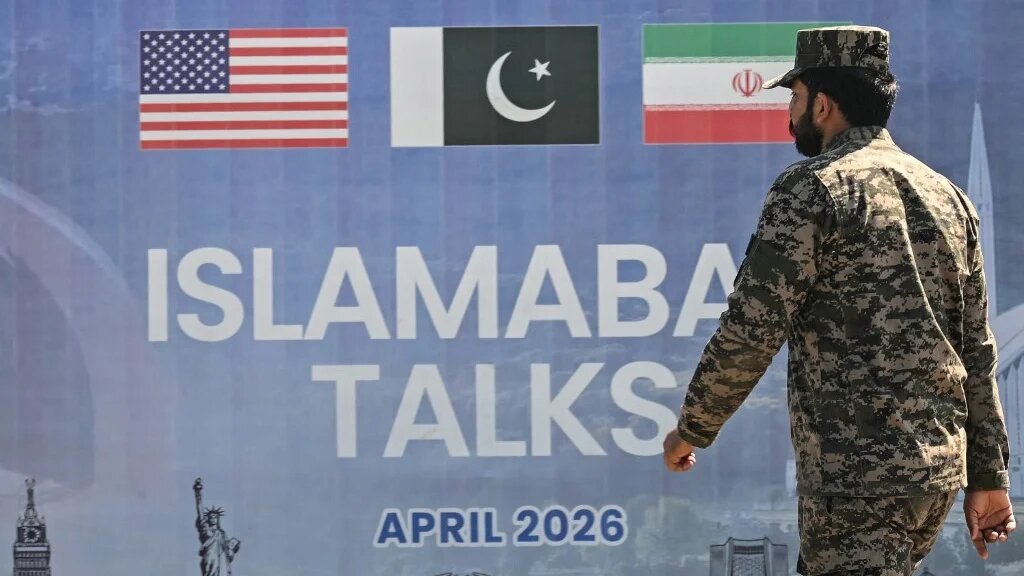
Uncertainty continues to cloud the next round of US-Iran peace talks in Islamabad, even as Washington proceeds with plans to send a high-level delegation while Tehran’s final decision on participation remains unclear.
According to sources cited by Agence France-Presse, a US delegation is expected to travel to Pakistan soon for negotiations aimed at de-escalating the ongoing conflict, which has unsettled the region and impacted global markets. US President Donald Trump confirmed that the United States would participate, stating that Iran was “supposed to be there” and that both sides had agreed in principle.
A White House official said the delegation would be led by Vice President JD Vance, accompanied by Middle East envoy Steve Witkoff and senior adviser Jared Kushner. Security has been tightened in Islamabad ahead of the anticipated visit.
On the Iranian side, signals remain mixed. A report by The New York Times suggested that a delegation led by Parliament Speaker Mohammad Bagher Ghalibaf may attend the talks, although his participation appears conditional on the presence of JD Vance. Tehran has also made it clear that it will not engage in negotiations “under threats,” reflecting its continued resistance to mounting military pressure.
Tensions have escalated further following the US Navy’s seizure of an Iranian cargo vessel near the Strait of Hormuz—an action Iran has termed “piracy” and a violation of ceasefire understandings. Tehran has warned of possible retaliation, while also criticising Washington’s ongoing naval blockade of Iranian ports.
The situation is further complicated by fluctuating messaging from Washington, with Trump alternating between optimism about a potential deal and warnings of escalation, including the possibility of not extending the ceasefire.
Earlier rounds of talks in Islamabad failed to yield a breakthrough, with both sides accusing each other of violating ceasefire terms. Meanwhile, global concerns persist as shipping through the Strait of Hormuz remains severely disrupted, with only limited vessel movement reported in recent hours.
With the ceasefire deadline approaching, the upcoming talks—if they materialise—could prove critical in determining whether the region moves towards de-escalation or further conflict. (Inputs from Washington Times)