
Examiner Bureau | Srinager:
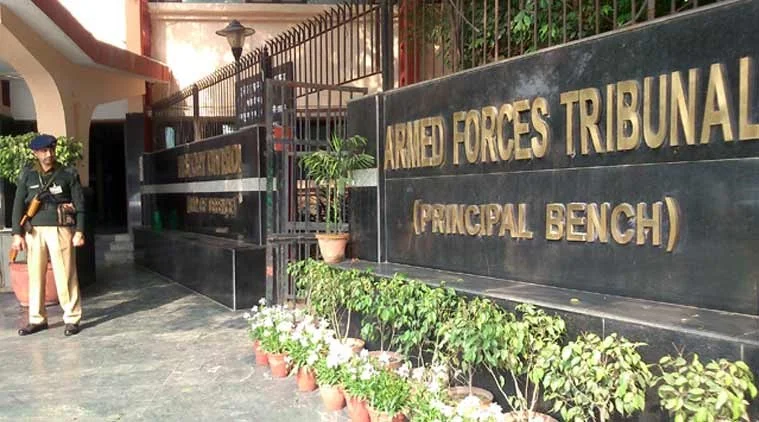
The Armed Forces Tribunal (AFT) has upheld the “severe displeasure” imposed on former Rashtriya Rifles sector commander Brigadier Padmasambhava Acharya in connection with the December 2023 deaths of three civilians in Poonch, observing that security forces cannot resort to excessive force even during intense counter-insurgency operations.
Dismissing Acharya’s challenge to the disciplinary action, the tribunal held that military discipline, constitutional obligations and safeguards for human rights must remain paramount even when troops are operating under extreme operational and emotional pressure.
“While dealing with insurgents, the security forces must not violate human rights,” the tribunal observed, stressing that unnecessary force cannot be used and that the rule of law must be maintained even in difficult security situations.
The case relates to the December 21, 2023, militant ambush near Dera Ki Gali (DKG) in Poonch, in which four Army personnel were killed. The bodies of two soldiers were also mutilated.
Following the attack, security forces launched search and follow-up operations and detained several civilians for questioning as part of efforts to gather intelligence about those responsible.
Three civilians subsequently died from injuries sustained during interrogation at the Company Operating Base in Mastan Dhara.
A Court of Inquiry ordered by Headquarters 16 Corps examined the circumstances surrounding the deaths and resulted in administrative action against Acharya, who was then commanding 13 Sector Rashtriya Rifles.
He was accused of failing to exercise adequate command and control, improperly handling civilians and failing to prevent the use of excessive force during interrogation.
The General Officer Commanding (GOC), 16 Corps, subsequently imposed a two-year “severe displeasure” on the officer.
Acharya challenged the action before the AFT, arguing, among other things, that senior commanders, including the corps commander and the GOC of Counter Insurgency Force Romeo, were present at the DKG control room during the operation and should also have shared responsibility.
He also contended that the corps commander had effectively acted as a judge in his own cause.
The tribunal rejected these arguments, holding that responsibility for direct command and control of ground-level operations rested with the commanding and sector commanders.
The presence of senior officers at forward control rooms for situational awareness, it said, did not amount to direct executive control over tactical operations or the interrogation of civilians.
The AFT also rejected the argument that protection under the Armed Forces (Jammu and Kashmir) Special Powers Act (AFSPA) prevented administrative action against the officer.
The tribunal clarified that Section 7 of AFSPA provides protection from prosecution, suits or other legal proceedings for acts done in good faith without prior sanction from the Central Government. However, it does not prevent departmental or administrative action.
The bench further held that the powers granted under AFSPA do not authorise arbitrary or excessive use of force.
It relied on Supreme Court judgments dealing with the use of force and human-rights protections during counter-insurgency operations and noted that Army guidelines prohibiting physical force and third-degree methods during interrogation are binding on personnel.
The tribunal acknowledged the extraordinary circumstances confronting the troops after the DKG ambush.
It noted that soldiers had lost comrades in a particularly brutal attack and that feelings of anger, grief and a desire for revenge were understandable in such circumstances.
However, the bench made it clear that emotional reactions could not override military discipline or legal obligations.
“In the conflict between human emotions and requirements of discipline… human emotions must yield,” the tribunal observed.
The AFT said the sector commander had a crucial responsibility to maintain discipline and ensure that personnel under his command were properly trained and followed established rules while dealing with civilians.
The tribunal also dismissed Acharya’s objections to the Court of Inquiry, holding that he had failed to establish any violation of the applicable Army rules or regulations.
His contention that the show-cause notice issued to him was vague was also rejected.
According to the tribunal, the notice clearly identified the alleged lapses, including failure to exercise proper command and control, failure to prevent excessive force and failure to issue clear directions regarding the treatment of civilians.
The tribunal consequently found no basis to interfere with the Army’s decision to impose the censure.
While upholding the “severe displeasure”, the tribunal granted the officer limited relief concerning the retention of the censure in his administrative record.
It directed that the censure should not continue to be retained in his administrative file, noting that the punishment imposed on July 8, 2024, had completed the two-year period prescribed under a Defence Ministry policy dated October 30, 2023.
Under the policy, a censure ordinarily remains part of an officer’s administrative record for 10 years, while a “Severe Displeasure” issued by a corps commander remains operative for a maximum of two years.
The tribunal, however, clarified that its direction regarding removal of the record was confined to the facts of the case and should not be treated as a precedent or an interpretation of law.
The ruling underscores the tribunal’s emphasis on accountability within the armed forces, while recognising the difficult circumstances in which troops operate in conflict-affected areas. It also reinforces the principle that operational pressure cannot displace the legal and disciplinary safeguards governing the treatment of civilians.