
Examiner Bureau | Srinagar:
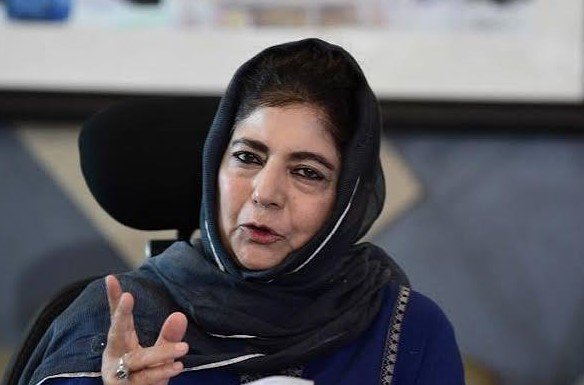
Former Jammu and Kashmir Chief Minister and PDP president Mehbooba Mufti has urged Chief Minister Omar Abdullah to take up with the Centre the issue of restoring the original purpose of the Salamabad Trade Facilitation Centre in Uri.
In a post on X, Mehbooba said the facility was established to facilitate contact between divided families, promote cross-LoC trade and help heal the legacy of the region’s conflict.
“The Salamabad Trade Facilitation Centre was built to bridge divided families, revive trade and heal wounds, not be reduced to a mere tourist site,” she said.
Mehbooba also recalled the PDP’s “Muzaffarabad Chalo” campaign, saying the establishment of the facility had come after a prolonged political struggle in which, she claimed, several party workers lost their lives.
She urged Omar Abdullah to raise the matter with the Government of India and seek the restoration of the centre’s original role.
“Kashmir needs more bridges to the outside world, not the shutting of those that connect us,” she said.
The Salamabad Trade Facilitation Centre was one of two designated points for cross-LoC trade, the other being Chakkan-da-Bagh in Poonch. The trade mechanism was introduced in 2008 as a confidence-building measure and operated on a barter and zero-duty basis.
The Centre suspended cross-LoC trade through both routes with effect from April 19, 2019, citing reports of the mechanism being misused for the movement of illegal weapons, narcotics and fake currency. The Ministry of Home Affairs said at the time that a stricter regulatory and enforcement mechanism would be worked out before the issue of reopening the trade was revisited.
Mehbooba’s latest remarks come amid renewed discussion over the future use of the Salamabad facility and the role it could play in reconnecting communities and promoting economic activity in the border region.
For the government, the session will be an opportunity to put its record on the floor, provide explanations and respond to demands for timelines and action.
For the Opposition, it will be an opportunity to convert public grievances into questions, resolutions and debates.
With a short sitting schedule and a long list of contentious issues, the effectiveness of the session is likely to depend not only on the intensity of political exchanges but also on the extent to which legislators secure specific answers and commitments from the government.
For the people watching the proceedings, the central question will be whether the Assembly becomes primarily a forum for political confrontation or a platform where concerns over jobs, electricity, reservations, local governance, workers’ rights and development translate into concrete legislative scrutiny and government responses.