Examiner News Desk | Srinagar:
Jammu division accounted for 14,17,028 reservation category certificates, or nearly 80.4 per cent of the total issued by the Jammu and Kashmir Government between 2018 and 2026, according to figures placed before the Legislative Assembly on Tuesday.
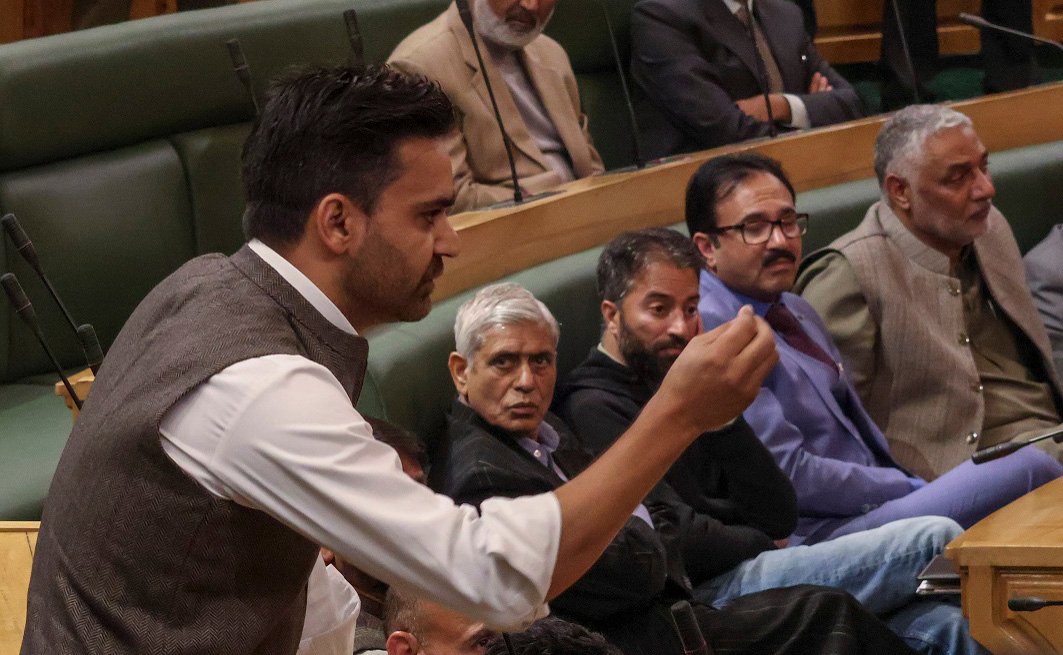
The data were provided in response to a question by PDP MLA Waheed-ur-Rehman Para and show that a total of 17,62,474 reservation category certificates were issued across the Union Territory during the period.
Of these, 3,45,446 certificates, or 19.6 per cent, were issued in Kashmir division.
The figures represent certificates issued during the period and should not be construed as the number of individual beneficiaries or as a measure of the actual share of reserved seats in government recruitment, admissions or other benefits.
Rajouri recorded the highest number of reservation certificates in Jammu division, with 4,37,479, followed by Poonch with 3,24,753 and Jammu district with 1,98,910.
Other districts recorded the following figures:
| District | Certificates |
| Rajouri | 4,37,479 |
| Poonch | 3,24,753 |
| Jammu | 1,98,910 |
| Kathua | 1,17,315 |
| Udhampur | 83,616 |
| Doda | 62,776 |
| Samba | 58,583 |
| Reasi | 53,023 |
| Ramban | 40,873 |
| Kishtwar | 39,700 |
| Total Jammu Division | 14,17,028 |
The three leading districts—Rajouri, Poonch and Jammu—together accounted for 9,61,142 certificates, equivalent to about 67.8 per cent of Jammu division’s reported total.
Rajouri alone accounted for nearly 31 per cent of all certificates issued in Jammu division, while Poonch contributed about 23 per cent.
The Assembly reply provides a category-wise breakup for Kashmir division. Residents of Backward Areas (RBA) accounted for the largest number, with 1,20,396 certificates.
They were followed by Scheduled Tribe-I (ST-I) with 96,517 and Other Backward Classes (OBC) with 77,199.
The remaining categories listed in the reply were:
- ST-II: 34,907
- Economically Weaker Sections (EWS): 9,927
- OBC Central: 2,694
- Other Social Castes (OSC): 1,361
- Actual Line of Control (ALC): 24
- Scheduled Caste (SC): 26
Together, RBA, ST-I and OBC certificates accounted for the overwhelming majority of the category-wise figures provided for Kashmir.
The figures presented in the House offer a cumulative picture of reservation-category certificates issued between 2018 and 2026, but do not establish how many unique individuals received them.
A single person may potentially hold certificates issued or renewed under relevant categories, and the Assembly data do not provide sufficient information to determine the number of distinct beneficiaries.
The figures also cannot be used to determine the actual regional distribution of reservation benefits in government recruitment or educational admissions, as certificate issuance and utilisation of reservation are separate measures.
The Assembly reply contains a numerical discrepancy in the Kashmir division data.
The category-wise figures supplied for Kashmir add up to 3,43,051, whereas the reported division-wide total is 3,45,446—a difference of 2,395 certificates.
The supplied data do not indicate which category or categories account for the difference, and the discrepancy could therefore not be reconciled from the information presented.
The Assembly response also does not provide a year-wise breakdown, making it impossible from the supplied figures to assess whether certificate issuance increased or declined in particular years.
The data, nevertheless, indicate a substantial regional difference in the number of reservation-category certificates issued during the 2018–2026 period, with Jammu division accounting for roughly four-fifths of the reported total.