
By | Syed Salman
The operation of heavy machinery near the ecologically sensitive Sheshnag Lake along the Amarnath Yatra route has triggered concern over the possible environmental impact of excavation and road-related work in the fragile Himalayan region, raising questions about the nature of the project, its authorisation and the safeguards being followed.
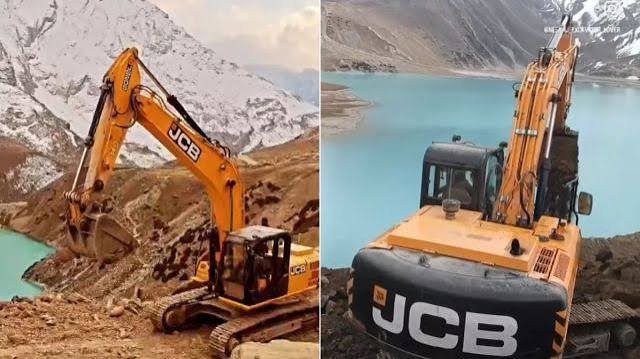
The issue came to light after a video showing a crawler excavator operating near the lake circulated widely on social media. The footage, reportedly shared initially by a machinery operator, prompted criticism from environmental activists and political leaders, who questioned the need for heavy equipment in the high-altitude area.
Climate activist Raja Muzaffar Bhat sought clarification over the deployment of machinery in the region, while PDP leader Mohit Bhan highlighted the religious significance of Sheshnag and called for the protection of its natural surroundings. Mirwaiz Umar Farooq also expressed concern, saying infrastructure development for the Amarnath Yatra should not come at the cost of the fragile mountain ecosystem.
The Border Roads Organisation (BRO), however, has defended the activity, stating that the work is part of post-Yatra maintenance and involves widening and stabilising existing tracks. It has maintained that no new construction is being undertaken and that measures are in place for the safe disposal of excavated material, protection of natural drainage and minimisation of disturbance to the surrounding terrain.
The BRO’s explanation has brought the focus on the precise scope of the work and whether the environmental safeguards can be independently verified. The available video establishes the presence of heavy machinery near the lake, but does not by itself establish the extent of excavation, the quantity of material removed or whether any environmental regulations have been violated.
Sheshnag, situated at an altitude of around 3,590 metres, lies in a fragile alpine landscape characterised by glaciers, steep slopes, seasonal snow and natural drainage channels. Any major intervention in such terrain requires careful assessment, as excavation and improper disposal of loose material can increase soil erosion, affect drainage patterns and lead to sediment entering nearby waterbodies.
The concerns assume added significance in view of official assessments of glacial-lake vulnerability in Jammu and Kashmir. In a written reply to Rajya Sabha Unstarred Question No. 4390 on April 2, 2026, the Union Ministry of Environment, Forest and Climate Change said the Central Water Commission had expanded its monitoring network to cover 2,843 glacial lakes and waterbodies across the Himalayan river basins.
The Ministry stated that 15 glacial lakes in Jammu and Kashmir had been assessed under a risk-indexing framework, with eight placed in Category 3 and seven in Category 4. The framework considers factors including lake size, changes in water spread, slope stability, proximity to other lakes and downstream exposure of settlements and infrastructure.
Sheshnag has also figured in assessments of glacial-lake vulnerability. However, its inclusion in such assessments does not establish that the present road-related activity has increased the risk of a glacial lake outburst flood. Any such conclusion would require a site-specific scientific assessment.
The key questions now concern the exact location and extent of the excavation, the distance of the work from the lake and its drainage channels, the quantity of material removed and the location where the excavated soil is being disposed of. Details of the approved project plan, applicable environmental and forest permissions, and any geological or slope-stability assessment would also help establish whether the work is being carried out within authorised limits.
Environmental experts have long cautioned that construction in high-altitude regions needs to account for the slow recovery of alpine vegetation, unstable slopes and the sensitivity of natural water systems. Excavation can expose loose soil and rock, while poorly managed debris can be carried by rainwater and snowmelt into nearby streams and lakes. The actual impact, however, depends on the site conditions, engineering methods and effectiveness of mitigation measures.
A joint inspection by the concerned engineering, environmental and disaster-management agencies, supported by water-quality monitoring and an assessment of the disturbed slopes, could help establish whether the activity has caused any ecological damage and whether corrective measures are required.
The controversy has also highlighted the need to balance pilgrimage infrastructure with environmental protection. Improving facilities and ensuring the safety of pilgrims are important, but the work must be guided by transparent approvals, scientific assessment and strict monitoring.
With the BRO maintaining that the activity is limited to existing tracks and that safeguards are being followed, the publication of project details and site-specific environmental assessments would help address public concerns and establish whether the work is consistent with the ecological sensitivity of the Sheshnag landscape.