
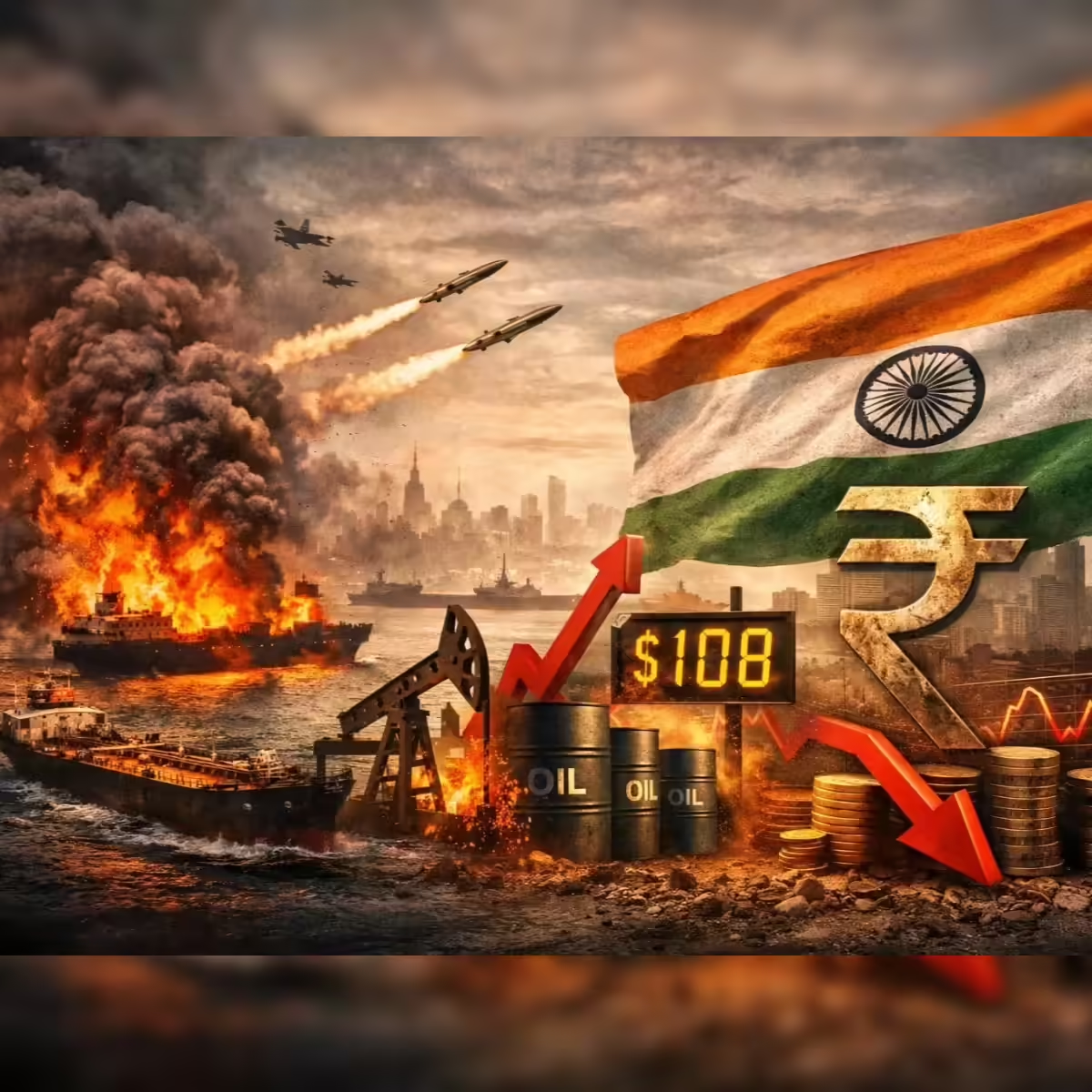
West Asia War Casts Shadow on India’s Economy
The escalating conflict involving Iran, Israel and the United States is sending shockwaves through global markets, and India—one of the world’s fastest-growing major economies—is feeling the tremors. Though geographically distant from the conflict zone, India’s deep economic links with the Middle East make it particularly vulnerable to geopolitical instability in the region.
From rising crude oil prices and inflationary pressure to currency volatility and supply disruptions, the war in West Asia has emerged as a major economic concern for policymakers in New Delhi.
Energy Security Under Pressure
The biggest economic risk for India stems from its heavy dependence on imported energy. India imports more than 80–85 percent of its crude oil requirements, much of it from the Middle East.
A critical factor is the Strait of Hormuz, through which nearly half of India’s crude oil and gas imports pass. Any disruption to shipping in this narrow waterway could sharply reduce energy supplies and push global oil prices higher.
Since the conflict intensified, crude prices have surged dramatically—touching around $118–$120 per barrel at one stage—raising concerns over India’s import bill and energy security.
Higher oil prices directly translate into increased costs for transportation, manufacturing and electricity generation, which eventually filter down to consumers.
Inflation and Rising Cost of Living
One of the immediate impacts of rising crude prices is inflation. When fuel prices rise, transportation and logistics costs increase, affecting the prices of everyday goods—from food and vegetables to consumer products.
Economic experts warn that prolonged geopolitical tension could push India’s inflation higher and slow economic growth. According to analysts, a sustained conflict in West Asia could reduce India’s GDP growth and increase inflation by up to 1.5 to 2 percentage points.
For households, this means higher fuel bills, rising cooking gas prices and increased cost of essential commodities.
Pressure on the Rupee and Financial Markets
Global geopolitical crises often trigger volatility in financial markets. The Iran-Israel-US conflict has already affected India’s currency and stock market.
The Indian rupee recently touched a record low before recovering slightly as crude prices fluctuated amid war-related uncertainty.
Stock markets have also shown signs of volatility as investors react to fluctuating oil prices and global risk sentiment. When oil prices rise sharply, foreign investors often withdraw funds from emerging markets like India, leading to market instability.
Trade Deficit and Fiscal Stress
Another major economic impact lies in India’s trade balance. Rising oil prices increase the country’s import bill, widening the current account deficit and putting pressure on government finances.
Experts estimate that even a $10 increase in crude oil prices could add billions of dollars to India’s import bill and widen the trade deficit.
Higher import costs also increase the demand for dollars, which can weaken the rupee and complicate fiscal planning for the government.
Impact on Businesses and Industries
The ripple effects of rising energy costs are being felt across industries.
Sectors such as aviation, transport, manufacturing, chemicals and cement depend heavily on fuel and petrochemical inputs. As costs increase, companies face shrinking profit margins and may pass on the burden to consumers.
Even the hospitality industry has begun to feel the pressure. Reports indicate that shortages and price spikes in cooking gas could force restaurants and hotels to reduce operations if the supply situation worsens.
Government’s Response
Recognising the potential risks, the Indian government has begun taking precautionary steps to stabilise the energy market.
Authorities have invoked the Essential Commodities Act to prioritise fuel supplies and ensure adequate availability of cooking gas and natural gas for essential sectors.
India has also explored diversifying energy imports and temporarily easing supply constraints through alternative crude purchases.
A Fragile Global Environment
The broader global economic environment is also becoming more uncertain. Rising oil prices, shipping risks and geopolitical tensions could slow global growth and affect international trade.
For India, which relies heavily on global markets for energy, investment and exports, prolonged instability in West Asia could create multiple economic challenges.
The Road Ahead
Despite the risks, economists believe India’s diversified economy, strategic petroleum reserves and policy interventions may help cushion the impact in the short term.
However, the ultimate economic fallout will depend on how long the conflict lasts and whether it spreads to other oil-producing countries in the region.
For now, the war in West Asia serves as a stark reminder of how deeply global geopolitics can shape national economies—even thousands of kilometres away.