
Agencies | Tehran /Washington:
Iran has rejected US President Donald Trump’s newly announced economic sanctions campaign, describing it as a “diversion from America’s own crisis” and warning that a further escalation of what Tehran called failed US policies would bring only “further defeat” for Washington.
The sharp response came after Trump announced what he described as the “most crushing economic operation ever taken against any country” as diplomatic efforts between Washington and Tehran remain deadlocked.
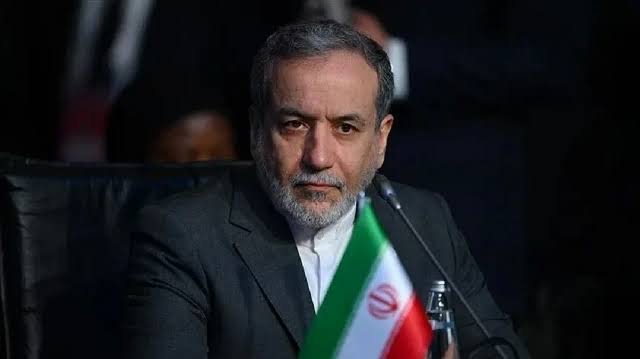
Iranian Foreign Minister Seyed Abbas Araghchi, in a post on X, said Trump’s so-called “Economic D-Day” was aimed at deflecting attention from the United States’ own financial challenges, including rising debt and interest costs.
“The so-called ‘Economic D-Day’ is a diversion from America’s own crisis: unprecedented debt & surging interest costs,” Araghchi wrote.
He described the US campaign as “economic terrorism” and warned that intensifying sanctions would further damage relations between the two countries.
“Doubling down on failed policies will only bring further defeat—and enmity of Iranians,” Araghchi said, adding that US economic measures threatened the global economy and national sovereignty.
The Iranian foreign minister also cited media reports claiming that US national debt had reached $40 trillion, arguing that Washington’s economic policies had failed to address the country’s growing fiscal burden.
Trump, meanwhile, on Wednesday threatened countries, banks and businesses assisting Iran with what he called “tremendous economic consequences.”
In a post on Truth Social, the US President described his proposed campaign as the “most crushing economic operation ever taken against any country,” calling it “economic warfare and isolation on an unprecedented scale.”
“This will be an ECONOMIC D-DAY, and we need all of our Allies to stand with the United States of America to isolate, and defeat, the Iran threat,” Trump wrote.
However, Trump did not identify specific countries, financial institutions or businesses that could face penalties, nor did he provide details of the measures he intended to impose.
The announcement comes amid an intensified US sanctions campaign aimed at restricting Tehran’s access to international finance and cutting off sources of revenue.
The US Treasury has also been pursuing what Washington has termed “Operation Economic Fury”, targeting Iranian financial networks and entities accused of supporting Tehran.
The latest escalation comes after a preliminary ceasefire between the United States and Iran expired on Monday, with Trump saying that no talks with Tehran were currently planned.
The US President also said the American naval blockade of Iranian ports would remain in force.
“There are no talks or conversations going on, or scheduled, with the Islamic Republic of Iran,” Trump said in a post on Truth Social.
“The Naval Blockade remains in full force and effect. The Hormuz Strait is open and operating. All water mines have been removed or detonated,” he added.
The statements have further raised concerns over the future of the fragile truce and the possibility of renewed confrontation between the two countries.
The conflict has also placed the Strait of Hormuz at the centre of international concern. The strategic waterway is a crucial route for global energy supplies, with a significant share of the world’s oil and gas shipments passing through it.
Any prolonged disruption to shipping through the strait could have far-reaching consequences for global energy markets, trade and inflation.
The conflict began on February 28, when the United States and Israel launched coordinated strikes against Iran amid stalled negotiations over Tehran’s nuclear programme. The strikes triggered a wider regional confrontation and intensified tensions across West Asia.
Iran subsequently moved to restrict access through the Strait of Hormuz, raising alarm in global markets and prompting concerns over potential disruptions to international energy supplies.
With the ceasefire now expired and diplomatic negotiations stalled, Washington and Tehran remain locked in a high-stakes confrontation, with the latest exchange of threats indicating that economic and geopolitical pressure could intensify further.