
Agencies | New Delhi:
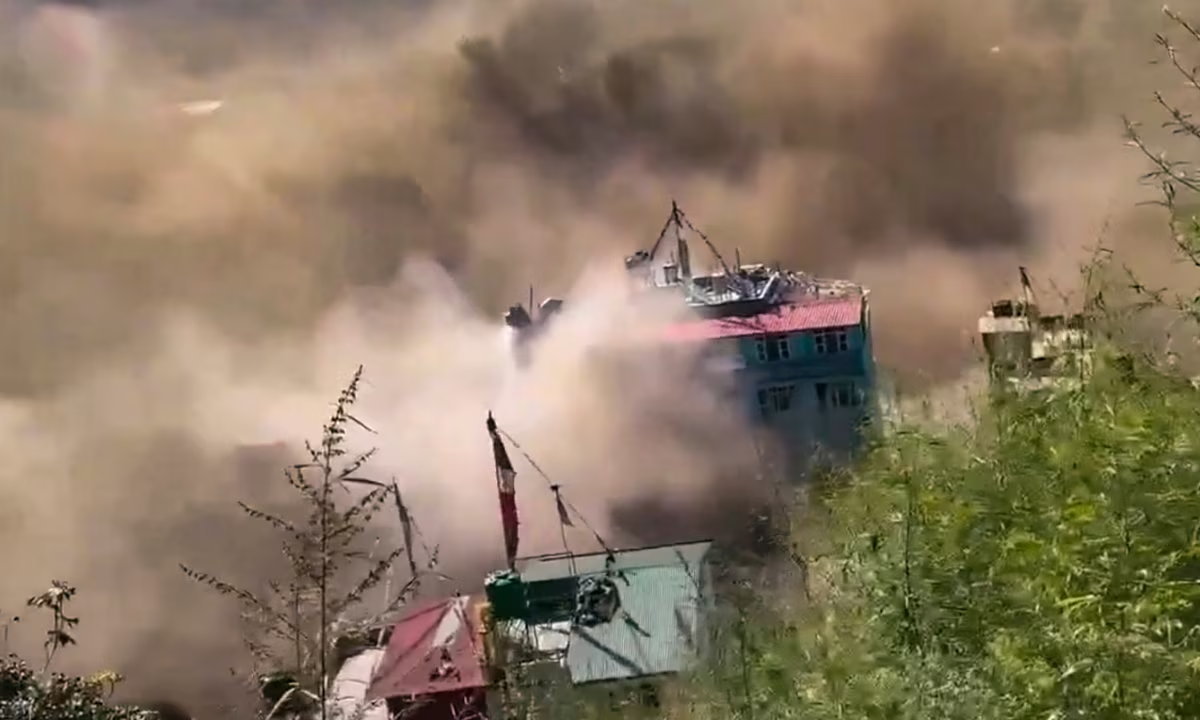
India has stepped up flood preparedness along its border with Nepal following a devastating flash flood in Nepal’s Rasuwa region that has reportedly killed at least 46 people and left hundreds missing, including Indians.
The disaster in the Bhote Koshi River has prompted authorities in Bihar and Uttar Pradesh to closely monitor rivers and vulnerable areas downstream amid concerns that a sudden increase in water flow could affect parts of the two states.
Both Bihar and Uttar Pradesh share borders with Nepal, and several districts are vulnerable to flooding from rivers originating in or flowing through the neighbouring country.
Union Home Minister Amit Shah spoke with Bihar Chief Minister Samrat Choudhary to review the situation and assured the state government of central assistance if the flood threat intensifies.
Choudhary said the state government has constituted a high-level committee to continuously monitor developments and coordinate preparedness and response measures.
“A high-level team has been constituted. The Chief Secretary and the DGP are monitoring this, and I am also holding a meeting immediately. If necessary, I will go there myself,” the Chief Minister said.
The state administration is maintaining close coordination with district authorities and monitoring developments along rivers connected to Nepal.
In Bihar’s West Champaran district, authorities have intensified surveillance following reports of a possible Glacial Lake Outburst Flood (GLOF) in Nepal and concerns over rising water levels in rivers flowing towards the state.
District Magistrate Taranjot Singh has directed officials and executive engineers to take precautionary measures in villages along the Nepal border and areas situated along the Gandak River.
The district administration said continuous monitoring is being carried out and departments concerned have been instructed to keep emergency arrangements ready in case water levels rise rapidly or other flood-related developments occur.
Residents living near the river and in low-lying areas have been advised to remain vigilant and avoid unnecessary movement close to the water.
The administration has also urged people not to panic or spread rumours and to rely only on official information.
“The public should not panic, but exercise utmost caution. People living on the banks of the Gandak River and in low-lying areas should not go near the river unnecessarily,” the administration said in its advisory.
Officials have further advised residents to immediately follow government directions if any evacuation or other emergency measures are ordered.
Uttar Pradesh has also stepped up preparedness in districts bordering Nepal.
Chief Minister Yogi Adityanath directed the administrations of Maharajganj and Kushinagar to remain fully alert amid rising water levels in the Gandak and Narayani rivers.
Reacting to the situation, Adityanath described the destruction caused by the flash flood in Nepal as “extremely alarming” and expressed concern over its possible impact on neighbouring Indian areas.
He directed the district administrations to make all necessary arrangements and closely monitor river levels and vulnerable locations.
The National Disaster Response Force (NDRF) has also deployed a team in Kushinagar as part of the preparedness measures.
The heightened alert in Bihar and Uttar Pradesh is linked to the interconnected river systems between Nepal and northern India.
The Gandak River, known as the Narayani River in Nepal, enters India from Nepal before flowing through parts of Uttar Pradesh and Bihar. Sudden changes in water levels upstream can therefore have consequences for communities located downstream.
During periods of intense rainfall, flash floods or glacial lake-related events in Nepal, water levels in rivers entering India can rise rapidly, leaving low-lying areas particularly vulnerable.
Authorities are therefore concentrating on early warning, continuous monitoring, emergency preparedness and coordination between district and state agencies.
Meanwhile, rescue and relief operations continue in Nepal’s flood-hit Rasuwa region.
The flash flood swept through areas near the Nepal-China border, causing extensive damage to settlements, roads, bridges and infrastructure. Security personnel and civilians are among those reported missing.
The scale of the destruction remains under assessment, with rescue teams searching affected areas for survivors and missing people.
The disaster has also raised concerns about the vulnerability of Himalayan river systems to sudden flooding, particularly in regions where glacial and supraglacial lakes can contribute to rapid changes in water flow.
As the situation continues to evolve, officials in Bihar and Uttar Pradesh are urging residents in vulnerable areas to remain alert without resorting to panic.
People living near rivers have been advised to avoid unnecessary movement close to swollen or fast-flowing water bodies, monitor official advisories and cooperate with local authorities.
The immediate priority for Indian authorities is to ensure that any sudden increase in downstream water levels is detected early and that vulnerable communities can be moved to safer locations if required.
With monitoring intensified along the Nepal border and major river systems, authorities in both states are maintaining heightened preparedness while keeping emergency response mechanisms ready.