
Examiner News Desk | Srinagar:
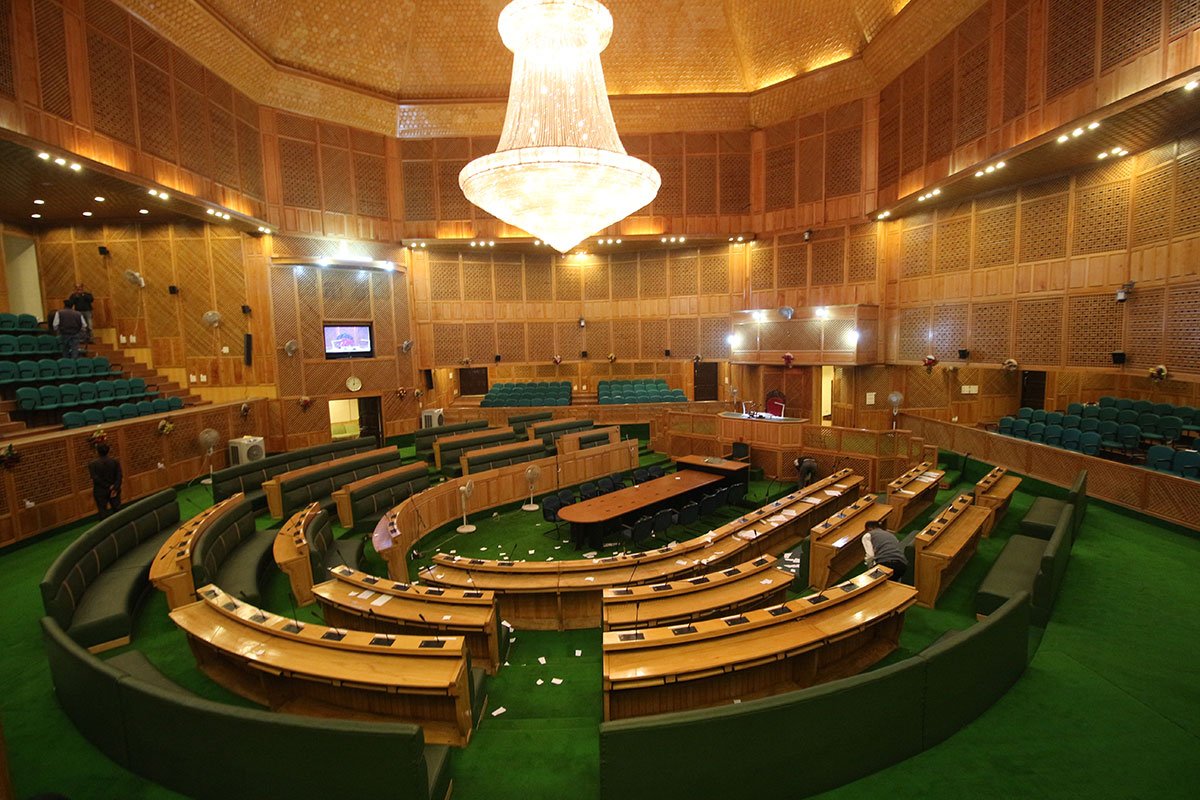
The Jammu and Kashmir Legislative Assembly is set to open its autumn session on Monday amid a sharp political contest, with opposition parties preparing to put the Omar Abdullah-led government on the defensive over unemployment, outsourcing of government jobs, electricity tariffs, reservations, delayed local body elections and the implementation of electoral promises.
The session, scheduled from September 21 to September 30, has been formally spread over 10 calendar days but will have seven effective sitting days because of scheduled holidays and non-sitting days. The brief session is itself likely to become an issue on the floor, with the BJP arguing that legislators need more time to debate the concerns of the people.
For the National Conference-led government, the session will provide an opportunity to present its account of nearly two years in office and respond to criticism from a fragmented Opposition. For the BJP, PDP and other opposition groups, it will be the principal platform to question the government over what they describe as gaps between its promises and its performance.
The Congress, despite being an alliance partner of the National Conference, has also made it clear that it will raise public issues in the House, including matters on which it has differed with its coalition partner.
The BJP, the principal opposition party in the 90-member Assembly, is preparing to raise a broad range of issues.
Party leaders have indicated that unemployment, outsourcing of government jobs, alleged corruption, delayed Panchayat and Urban Local Bodies elections, electricity tariff increases and unfulfilled electoral promises will figure prominently in its strategy.
Leader of Opposition Sunil Sharma has also criticised the duration of the session, arguing that a longer sitting would give legislators greater opportunity to raise public concerns.
The BJP is expected to repeatedly remind the government of commitments made during the 2024 Assembly elections, particularly the promise of 200 units of free electricity and assurances relating to employment and development.
BJP leaders have also indicated that they will question the government over the outsourcing of jobs and what they allege are shortcomings in administration and development.
The government, however, has rejected the Opposition’s criticism over the duration of the session. Chief Minister Omar Abdullah has argued that the seven-day sitting schedule is not unusual and has pointed to shorter sessions held in some BJP-ruled states.
The Peoples Democratic Party (PDP) is expected to concentrate its intervention on unemployment and issues affecting young people.
PDP legislature party leader Waheed-ur-Rehman Para has said the party will raise unemployment, outsourcing, the reservation policy and the regularisation of daily wagers.
The PDP is also expected to use the session to question the government’s progress on promises made during the election campaign and broader governance issues.
With youth unemployment remaining a politically sensitive issue, the debate is likely to extend beyond the number of vacancies to questions about recruitment examinations, delays in appointments, outsourcing arrangements and opportunities available to educated young people.
The Congress occupies a more complicated position in the Assembly because it is an ally of the National Conference while simultaneously functioning as a separate legislature party.
JKPCC president Tariq Hameed Karra has already made clear that the alliance will not prevent Congress legislators from raising public concerns.
Speaking after a meeting of Congress legislators, Karra said the party would raise genuine issues in the Assembly and seek their early resolution, maintaining that being in an alliance did not mean remaining silent on people’s legitimate demands.
That position could produce a distinctive dynamic on the treasury benches, particularly on issues where Congress and the National Conference have recently taken different positions.
The electricity tariff hike, concerns relating to daily wagers and the pace of government functioning are among the issues expected to attract attention from Congress legislators.
The party’s approach will therefore be closely watched: while it is expected to support the government on broader alliance matters, its legislators are likely to retain political space to question decisions and raise constituency-specific grievances.
The Peoples Conference is also preparing to use the session to raise issues beyond conventional governance questions.
Party chairman and MLA Sajad Gani Lone has said that his resolution opposing the recent power tariff hike has been admitted for consideration.
Lone has also sought the status of another resolution concerning the 1987 Assembly elections, an issue he has described as a watershed event in Jammu and Kashmir’s political history. He has questioned the Assembly Secretariat over the handling of that resolution.
The issue could bring a historical and political dimension to the proceedings, particularly because competing narratives surrounding the 1987 elections have remained a significant part of political discourse in Jammu and Kashmir.
Among the immediate public-interest issues expected to dominate the session is the recent electricity tariff hike.
The matter has already generated criticism from opposition parties and is likely to come up through questions, resolutions and discussions.
Sajad Lone has submitted a resolution on the tariff increase, while Congress has also indicated that it will raise public issues despite its alliance with the NC.
The government will face pressure to explain the rationale behind the tariff changes, their impact on consumers and the broader financial position of the power sector.
The issue also intersects with the NC’s earlier electoral promise of providing 200 units of free electricity, making it particularly politically sensitive.
Employment is expected to be one of the strongest themes of the session.
The BJP and PDP have both indicated that they intend to raise outsourcing and unemployment, while questions relating to recruitment and regularisation of workers are likely to receive attention from legislators across party lines.
For the government, the challenge will be to explain the pace of recruitment, the status of vacant posts and its approach towards outsourced and daily-wage workers.
For the Opposition, these issues offer an opportunity to press the government on its election commitments and seek specific timelines rather than broad assurances.
The debate could also bring renewed attention to the distinction between permanent government recruitment, contractual appointments and outsourced services, an issue that has implications for thousands of job seekers and workers.
The reservation framework is another issue likely to feature prominently.
The PDP has specifically identified the reservation policy as one of its priorities, while questions relating to the regularisation of daily wagers are also expected to be raised.
The government may face demands for clarity on the implementation of reservation provisions, their impact on recruitment and the status of different categories of workers awaiting regularisation.
Given the competing interests involved, the issue could generate detailed discussion beyond party lines.
The delay in holding Panchayat and Urban Local Bodies elections is another issue the BJP has said it intends to raise.
The Opposition is expected to question the government over the timeline for the polls and the functioning of local democratic institutions in their absence.
The issue is likely to be linked to broader questions of decentralisation and grassroots governance, with opposition legislators seeking clarity on when the electoral process will be initiated.
The National Conference, meanwhile, is preparing to defend its record.
The ruling party has said it intends to present its progress report and argue that the government is working towards fulfilling its electoral commitments.
NC spokesperson Imran Nabi Dar has said the government does not claim to have completed everything but is moving towards fulfilling its promises. He has also maintained that parliamentary democracy requires the Opposition to question the government and the government to respond.
Chief Minister Omar Abdullah has said the House will provide legislators an opportunity to raise issues affecting their constituencies and Jammu and Kashmir as a whole.
He has also acknowledged that, despite being a Union Territory, the Assembly still has legislative business to transact, including government bills and resolutions, besides questions and other matters raised by members.
The session is also beginning with two institutional issues unresolved.
The post of Deputy Speaker has remained vacant, while five nominated seats in the Assembly are also yet to be filled.
The BJP, as the largest opposition party, has sought the Deputy Speaker’s position, citing legislative convention. The question of the five nominations has remained contentious, with the Ministry of Home Affairs maintaining that the Lieutenant Governor can make the nominations without the aid and advice of the elected government.
The five nominations would increase the strength of the Assembly from 90 to 95. Their absence has therefore remained a significant constitutional and political issue since the Omar Abdullah government took office.
The Opposition could use the session to renew its demand for clarity on both matters.
According to the provisional calendar issued by Speaker Abdul Rahim Rather, the session will begin with obituary references on September 21, followed by government business from the next day.
Private members’ bills are scheduled for September 24, followed by private members’ resolutions on September 25. After the intervening non-sitting days, private members’ bills are scheduled for September 28, with government business listed for September 29 and 30.
The limited number of effective sittings means parties will have to prioritise the issues they want to bring before the House.
The Speaker has urged legislators to maintain the dignity and discipline of the House and ensure that parliamentary debate remains focused on public welfare and constructive deliberation.
The autumn session comes at a politically important point for Jammu and Kashmir’s elected government.
Nearly two years after taking office, the National Conference-led administration faces an Opposition that is increasingly seeking to measure its performance against its election promises. At the same time, the government’s Congress ally is signalling that coalition politics will not prevent it from raising issues affecting the public.
The BJP is expected to use its numerical strength and the office of the Leader of Opposition to push the government on jobs, tariffs, local elections and promises. The PDP is likely to focus on youth, reservation and workers’ issues, while the Peoples Conference is bringing questions on electricity tariffs and the political history of 1987 into the legislative arena.