
From | Editor Desk:
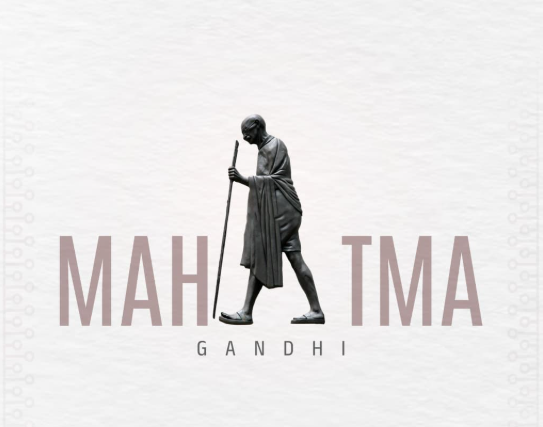
Mahatma Gandhi remains one of the most influential figures of modern history, not merely because of the political movement he led, but because of the values he placed at the centre of public and personal life. On Gandhi Jayanti, as the nation remembers his contribution to India’s freedom struggle, it is equally important to reflect on the principles that made his life a continuing source of inspiration.
Gandhi’s greatest strength lay in his insistence that the means were as important as the ends. His commitment to truth and non-violence transformed the nature of political resistance and demonstrated that courage does not always require physical force. Through Satyagraha, he showed that protest could be powerful without abandoning human dignity or compassion. At a time when political disagreements across the world increasingly become confrontational, this message remains deeply relevant.
Gandhi’s idea of non-violence was not simply the absence of physical violence. It demanded respect for the dignity of others, including those with whom one disagreed. He believed that social and political change could not be sustained through hatred. For a diverse country such as India, where different communities, languages, cultures and beliefs coexist, the values of tolerance, dialogue and mutual respect remain essential to social harmony.
His emphasis on Swadeshi and self-reliance also deserves renewed attention. Gandhi believed that economic freedom was closely connected with individual and community empowerment. His advocacy of Khadi was not merely about clothing; it represented dignity of labour, local production and the participation of ordinary people in nation-building. In an era of rapid economic transformation and globalisation, the idea of strengthening local skills, artisans and enterprises continues to have practical significance.
Gandhi also placed considerable emphasis on cleanliness, rural development, education and the uplift of the weakest sections of society. His concept of Sarvodaya — the welfare and progress of all — placed social responsibility at the heart of development. A prosperous society, in this understanding, cannot be measured only by economic growth; it must also be judged by how it treats those who are vulnerable and marginalised.
Remembering Gandhi, therefore, should go beyond ceremonial tributes and symbolic observances. His legacy invites society to examine whether public life is guided by truth, whether disagreements are handled with restraint, and whether development reaches those who need it most.
Gandhi was neither infallible nor beyond debate, and his ideas have been examined, challenged and interpreted in different ways over the decades. Yet his central questions remain relevant: Can power be exercised without arrogance? Can dissent exist without hatred? Can development proceed without leaving people behind?
These questions make Gandhi more than a figure of history. They make him part of an ongoing national conversation about the kind of society India seeks to build. On his birth anniversary, the most meaningful tribute may therefore be not merely to remember Gandhi, but to engage seriously with the values he placed before the nation — truth, non-violence, dignity, service and responsibility towards others.