
From Editor’s Desk:
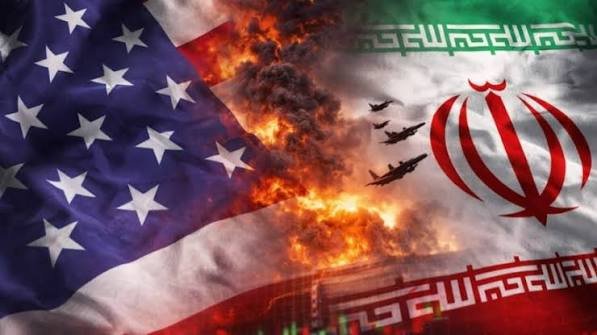
Washington now faces a costly question: how long can the United States sustain a conflict that is draining billions, consuming weapons and feeding pressure on an already strained economy?
Wars are often measured in territory captured, targets destroyed and military objectives achieved. But for ordinary citizens, the consequences are ultimately measured in something far more immediate: the price of fuel, food, public finances and the lives of soldiers sent into battle.
The latest assessment from the Congressional Budget Office should therefore command attention in Washington. The nonpartisan agency estimates that US combat operations against Iran have already cost about $38 billion, with another $2 billion to $3 billion potentially added every month if the conflict continues.
That is not merely an accounting exercise. It is a measure of the growing economic and strategic burden of a war that has lasted considerably longer than the short campaign initially envisaged by the Trump administration.
The CBO says the conflict has also significantly depleted US munitions, particularly expensive weapons and air-defence interceptors. Replenishing those stocks will take time and substantial additional resources. The agency estimates that replacing expended weapons could take years.
This raises a question that cannot be answered by military rhetoric alone: what exactly is the United States paying for, and what is the country receiving in return?
The headline figure of $38 billion captures only the direct budgetary cost assessed by the CBO. It does not represent the full economic consequences of the conflict.
The war is affecting energy markets, supply chains and inflation. The continued disruption around the Strait of Hormuz, one of the world’s most important energy chokepoints, has added another layer of uncertainty to global oil markets.
For American households, geopolitical strategy becomes real when filling a vehicle becomes more expensive or when higher transport costs eventually appear in grocery bills.
That is why the economic consequences of the war deserve as much scrutiny as battlefield developments.
America is already carrying a substantial fiscal burden. The CBO estimated that the federal budget deficit reached about $2 trillion during the first 11 months of fiscal year 2026.
Adding a prolonged military campaign to that environment does not automatically make the war unsustainable. The United States remains a large and wealthy economy with enormous borrowing capacity. But every additional dollar spent on war is a dollar that must ultimately be financed, borrowed or diverted from another priority.
Perhaps the most serious issue raised by the CBO assessment is not the price tag but the condition of America’s weapons inventories.
A military power can replenish ammunition. It cannot necessarily do so overnight.
Modern missiles, interceptors and precision weapons require specialised manufacturing capacity, trained workers, complex components and lengthy production schedules. If wartime consumption exceeds the rate at which industry can replace those systems, a conflict can create vulnerabilities far beyond its immediate battlefield.
A recent Lead Inspector General report on Operation Epic Fury, covering the conflict through June 30, has added to the public scrutiny of the campaign and the resources being consumed.
This should concern policymakers irrespective of political affiliation.
The fundamental question is not whether America possesses a large military. It does. The question is whether a prolonged conflict is consuming critical weapons faster than the industrial base can replace them while the United States must also remain prepared for other potential crises.
There is also a constitutional and political question.
Congress possesses the constitutional power to declare war, while presidents have historically relied on their authority as commander in chief to conduct military operations without a formal declaration of war in numerous conflicts.
That history, however, does not eliminate the need for congressional oversight.
When a conflict runs into its seventh month, costs tens of billions of dollars and requires continuing supplies of ammunition and personnel, elected representatives have a responsibility to examine its objectives, costs and risks.
Supporters of the administration may argue that military action is necessary to protect American interests and deter Iran. Critics may argue that the campaign has become too expensive or that its objectives remain unclear.
Both arguments deserve to be tested against facts rather than slogans.
The CBO’s role is particularly important here because its analysis provides Congress with an independent assessment of the financial consequences.
For voters, however, the most important measure may be much simpler.
Can families afford the consequences of the war?
Foreign policy and domestic economics are no longer separate conversations when an international conflict affects oil prices, transportation costs and inflation.
A government can explain why a war is necessary. It must also explain how long it expects to fight, how much it will cost and what conditions would allow it to end.
Those questions become even more important when the original expectation of a short conflict gives way to a prolonged campaign.
The most uncomfortable lesson from the CBO report is that wars rarely remain confined to the battlefield.
They consume weapons. They require money. They affect energy markets. They place pressure on government finances. They can reshape political debates at home. And, most importantly, they impose human costs that no budget document can fully capture.
The United States has the resources to wage a major war. But having the capacity to fight does not answer the more important question of whether continuing to fight is producing the desired strategic outcome.
That is a question for the President, Congress and ultimately the American public.
A responsible war policy must therefore include not only military objectives, but also a credible assessment of costs, risks and an eventual path toward ending the conflict.
The CBO’s $38 billion figure is more than a number. It is a warning that the price of a prolonged war is rising—and that Washington can no longer discuss the conflict only in terms of missiles, military operations and battlefield gains.
It must also answer the question that matters to every country caught in a long war:
How much is enough?