
The Editor’s Desk:
From clogged drains and polluted water bodies to damaged soil and wildlife, the growing dependence on polythene is turning a convenience into a serious environmental challenge for the Kashmir Valley.
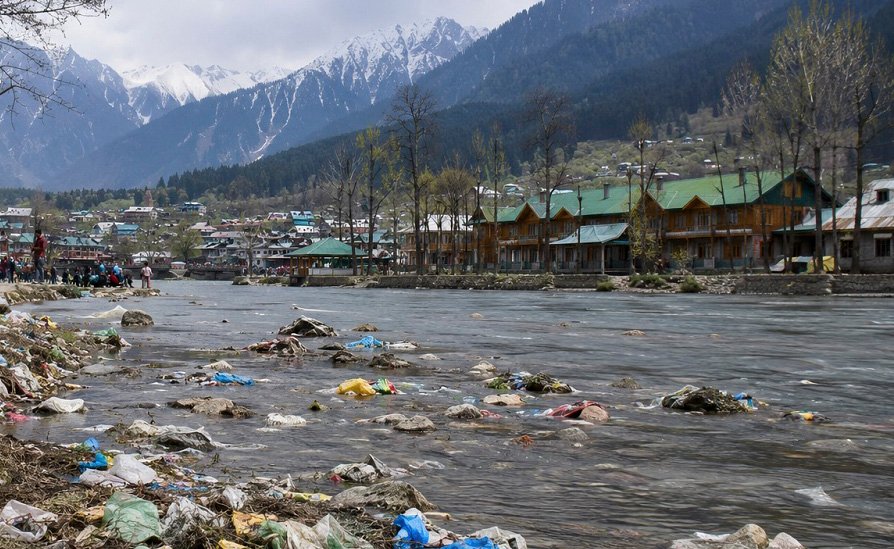
The Kashmir Valley is celebrated for its lakes, rivers, wetlands, forests and mountains. Yet beneath this extraordinary natural beauty, an increasingly familiar form of waste is creating an environmental crisis that can no longer be treated as a minor civic inconvenience: polythene.
What was once regarded as a convenient and inexpensive packaging material has gradually become deeply embedded in everyday life. Shopping bags, food packaging, disposable containers and other plastic products are now visible in markets, residential areas, roadsides, drains, water channels and even areas of ecological importance. Their growing presence reflects not merely a waste-management problem, but a larger failure to balance convenience with environmental responsibility.
The problem is particularly serious in the Kashmir Valley because of its fragile ecology. The Valley’s water bodies, wetlands and drainage systems are interconnected, while its mountainous terrain and seasonal weather patterns make the consequences of careless waste disposal difficult to contain.
Polythene’s greatest environmental danger lies in its persistence. Unlike organic waste, it does not readily decompose. A bag used for a few minutes can remain in the environment for decades or longer, gradually breaking down into smaller plastic particles rather than simply disappearing.
This creates a dangerous cycle. Plastic waste discarded on roadsides can be carried by rainwater into drains, streams and rivers. From there, it can ultimately reach lakes and wetlands. What begins as an individual act of littering can therefore become part of a much larger ecological problem.
In Kashmir, where water bodies are central to both the environment and the economy, such contamination deserves particular attention. Dal Lake, Nigeen Lake, the Jhelum and the Valley’s wetlands cannot be treated as limitless waste sinks.
Plastic waste has the potential to obstruct drainage channels and contribute to waterlogging, particularly when it accumulates along with other solid waste.
The consequences become more visible during periods of heavy rainfall. Blocked drains can slow the movement of water, increasing pressure on urban drainage systems and aggravating local flooding and sanitation problems.
Once plastic enters lakes and wetlands, removing it becomes considerably more difficult. Floating waste affects the visual character of these important landscapes, but the damage extends beyond aesthetics. Plastic fragments can interact with aquatic ecosystems and may be ingested by birds, fish and other organisms.
Kashmir’s wetlands are also important habitats for migratory birds. The presence of plastic waste in such areas raises concerns about the health of wildlife and the long-term integrity of these habitats.
Another reason for concern is that larger plastic items do not simply vanish. Exposure to sunlight, temperature changes, water and physical forces can cause plastic to fragment into increasingly smaller particles.
These microplastics are particularly difficult to remove once they enter soil and water. Their presence represents a more complicated environmental challenge because contamination is no longer limited to visible pieces of waste.
For a region whose communities depend heavily on agriculture, freshwater resources and tourism, the long-term implications of plastic pollution should not be underestimated.
It would be easy to place the entire responsibility on municipal bodies or enforcement agencies. But the problem is larger than that.
Polythene reaches the environment because it is discarded by people, supplied by businesses and insufficiently segregated and collected through waste-management systems. Weak enforcement can encourage irresponsible behaviour, but even the strongest regulations cannot succeed if citizens continue to treat public spaces as convenient dumping grounds.
The solution therefore requires a change in public behaviour alongside stronger enforcement.
Consumers must increasingly reject unnecessary plastic packaging. Shopkeepers and businesses must offer and encourage reusable alternatives. Institutions, schools and community organisations can play a role in making responsible waste disposal a social norm rather than an occasional campaign slogan.
Clean-up campaigns are useful, but they cannot become the primary strategy for dealing with plastic pollution.
Removing plastic from a drain after it has already been discarded is far less effective than preventing that plastic from entering the drainage system in the first place.
Authorities need a stronger approach based on reduction, segregation, collection, recycling and enforcement. Waste should be segregated at source, collection systems should function reliably, and plastic waste should reach authorised recycling or disposal channels.
At the same time, enforcement against banned or prohibited plastic products must be consistent. Rules that exist only on paper cannot change consumer behaviour.
There is also a need to strengthen alternatives. Reusable cloth and jute bags, durable containers and locally appropriate packaging can reduce dependence on disposable plastic. Consumers will be more willing to make the transition when affordable and convenient alternatives are readily available.
Kashmir’s growing tourism economy makes responsible waste management even more important.
Every year, visitors are drawn to the Valley’s landscapes, lakes, meadows and mountains. But tourism can also generate large quantities of disposable packaging, particularly in popular destinations.
Tourism-related businesses have a responsibility to minimise single-use plastic, ensure proper waste collection and educate visitors about responsible disposal. Tourists, too, must understand that preserving Kashmir’s beauty cannot be left solely to local authorities.
A simple principle should guide every visitor: what comes into the mountains should not be left behind in them.
The fight against polythene is ultimately about more than plastic bags. It is about what kind of environment Kashmir wants to leave for future generations.
A clean-up team can remove thousands of bags from a water body, but unless the source of the waste is addressed, the same material will return. A fine can punish one offender, but only sustained public awareness can change a culture of careless disposal.
Kashmir’s environmental challenges are already significant. Climate variability, pressure on water resources, urban expansion, deforestation and increasing waste generation are placing growing stress on fragile ecosystems. Adding an expanding plastic burden to these pressures would be a serious mistake.
The Valley’s lakes and wetlands cannot speak for themselves. Its rivers cannot demand cleaner surroundings. Wildlife cannot campaign against plastic pollution. The responsibility therefore rests with citizens, businesses, institutions and governments alike.
Kashmir’s natural beauty has immense ecological, cultural and economic value. Protecting it requires more than celebrating it in photographs and advertisements. It requires difficult choices in everyday life—carrying a reusable bag, refusing unnecessary packaging, segregating waste and disposing of plastic responsibly.
Polythene may offer minutes of convenience, but its environmental cost can last for generations. Kashmir cannot afford that trade-off.