
Agencies | Paris:
Prime Minister Sébastien Lecornu has ordered the suspension of high school classes across France for the remainder of the week as nationwide protests over education reforms intensified, with demonstrators demanding better school infrastructure, more teachers and changes to the length of the school day.
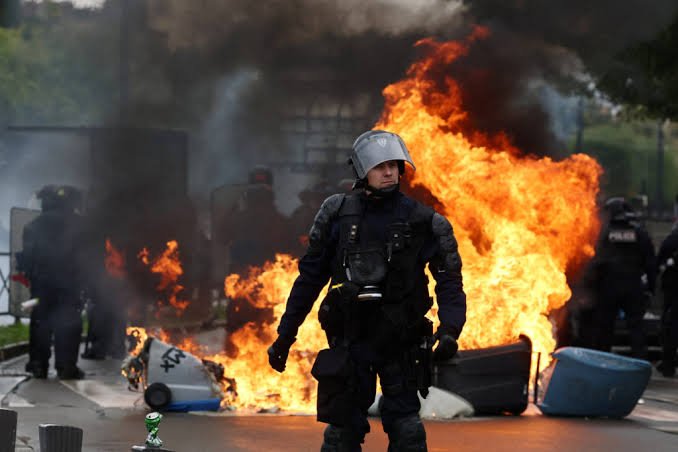
Police used tear gas in several cities on Tuesday as protesters blockaded high schools and hundreds of thousands of students, teachers, parents and activists took to the streets.
Authorities estimated the nationwide turnout at around 250,000, while organisers put the figure closer to 500,000. The High School Students Union said nearly 2,000 high schools were either blockaded or closed for the day.
The protests, which began about two weeks ago in some of Paris’s poorest suburbs, have since spread to cities across the country. Demonstrators are calling for measures including replacing absent teachers, longer lunch breaks, improved school facilities and changes to the length of the school day.
Reporting from a march in Paris, Al Jazeera correspondent Natacha Butler said the movement had attracted support from a growing number of unions and other groups, including farmers, energy workers and teachers.
Parents and teachers have also joined the demonstrations, she said, expressing concern about school conditions as well as the possibility of violence and excessive police force during the protests.
In Marseille, Nantes and Lyon, demonstrators carried placards with slogans including “they don’t really care about us” and “survive or study”.
Protests in Strasbourg, Lyon and Rennes turned violent at times, with police firing tear gas while some demonstrators set fires and threw projectiles.
“When the answer is violence, it means democracy is no longer working,” Hugo Vetzel, a recent high school graduate in Strasbourg, said.
Announcing the suspension of classes, Lecornu criticised acts of violence during the demonstrations.
“Burning down a high school does not improve the state of high school buildings,” he said.
The prime minister said the temporary closure was intended to give headteachers, teachers and students greater scope to engage in “internal democracy” and address concerns over school conditions.
He also directed ministers to respond to the students’ demands by the end of October and said the government would examine measures to repair ageing school buildings.
However, questions remain over how quickly the government can implement the demands amid France’s strained public finances and high debt levels.
France’s Interior Ministry said around 6,100 people had been arrested since the protests began, most of them under the age of 18. The Justice Ministry said more than 1,800 people would face prosecution, including 1,483 minors.
According to Lecornu, at least 215 teenagers and 715 police officers have been injured during the unrest.
On Monday, a 15-year-old teenager suffered severe injuries during clashes between students and police in the northern city of Lens. The government said between 200 and 250 protesters had thrown objects at police.
French newspaper La Voix du Nord reported that the teenager lost his hand and part of his arm after allegedly picking up a police grenade during the demonstration.
The protests have also drawn comments from US President Donald Trump, who linked the unrest to immigration and Islam without providing evidence.
In a post on his Truth Social platform, Trump claimed that the unrest in France was the result of “out of control mass migration” and alleged that the protests were connected to Islam.
His comments came amid a broader political debate in the United States over immigration and Islam, with critics accusing Republican politicians and officials of using Islamophobic rhetoric to appeal to right-wing voters ahead of the November midterm elections.