
From the Editor’s Desk
Winter in Jammu and Kashmir is not merely a change of season. It is a test of governance, preparedness and the administration’s ability to protect people from hardships that return almost every year. As temperatures begin to fall and the Valley prepares for the harsh winter months, one concern is once again dominating household conversations: electricity.
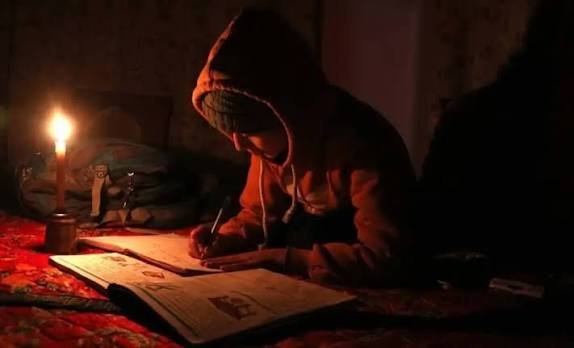
Frequent power cuts have become a familiar feature of the approaching winter. In several areas, residents complain that outages are occurring even before the cold intensifies. Students preparing for examinations struggle to study, elderly people and patients face discomfort, businesses lose working hours, and households are forced to reorganise their daily routines around uncertain electricity supply.
The situation is particularly concerning in view of the projected power deficit. According to figures reported by the media, Jammu and Kashmir and Ladakh may face a combined shortfall of around 623 megawatts during peak hours in November 2026, with projected demand of 3,813 MW against availability of 3,190 MW. The Ministry of Power has reportedly allocated more than 330 MW of additional power for Jammu and Kashmir for December 2026 to February 2027. These figures underline the scale of the challenge facing the administration.
The question, therefore, is straightforward: What is the government’s concrete roadmap to manage the power crisis this winter?
The government has already begun reviewing winter preparedness. Chief Minister Omar Abdullah, while chairing a high-level meeting on October 21, directed the Power Development Department and distribution companies to strictly follow notified curtailment schedules. He also called for advance information to consumers about unscheduled interruptions, effective monitoring of supply and an end to additional cuts imposed at the discretion of field staff. These are necessary directions, but their success will depend on implementation at the ground level.
Public frustration is not caused by scheduled curtailments alone. Consumers can, to some extent, plan their lives around announced timings. The real hardship arises when electricity disappears without warning, when outages continue beyond the notified duration and when complaints fail to produce timely responses. A schedule that exists only on paper offers little relief to a household sitting in darkness.
Recent complaints from residents in parts of Srinagar and other districts suggest that the gap between announced schedules and actual supply remains a serious concern. In some areas, people have questioned why they continue to face prolonged outages despite being metered consumers. The administration must investigate such complaints rather than dismiss them as routine winter grievances.
There is also a larger question of fairness. Electricity supply should not become a privilege determined by locality, influence or the ability to approach officials. Rural and remote areas, particularly those vulnerable to heavy snowfall, deserve special attention. At the same time, metered consumers who pay their bills regularly are entitled to transparent information about the supply they receive.
The government must now put in place a clearly defined winter power strategy. First, it should publish realistic, feeder-wise curtailment schedules and ensure that these are followed uniformly. Any change must be communicated promptly through official websites, local media, SMS alerts and other accessible channels. Consumers should not have to depend on informal messages or repeated calls to know when electricity will return.
Second, the administration must strengthen the distribution network before the onset of severe weather. Damaged transformers, overloaded feeders, weak conductors and vulnerable infrastructure should be identified and repaired on a priority basis. Adequate stocks of transformers, cables, insulators and other essential equipment must be maintained at district and subdivision levels. Sufficient repair teams should remain available to respond to breakdowns, particularly during snowfall and freezing conditions.
Third, the government must explain how it intends to bridge the projected power deficit. Has sufficient electricity been secured through long-term arrangements and additional allocations? What is the contingency plan if power exchange rates rise or electricity is not available in the market during peak demand? How much additional supply is expected to reach consumers, and when? These questions deserve clear answers from the Power Development Department.
Fourth, essential services must receive priority. Hospitals, healthcare facilities, water-supply installations and other critical infrastructure cannot be left vulnerable to prolonged outages. Backup power arrangements should be inspected and tested in advance. Special attention must also be given to schools, hostels, remote health centres and snowbound habitations.
The government should also accelerate efforts to reduce distribution losses, improve billing and collection efficiency and strengthen the electricity network. Smart metering and infrastructure upgrades can contribute to a more accountable power sector, but their benefits must be visible to consumers. Better revenue collection cannot become a substitute for reliable service, just as consumers cannot be expected to meet every obligation while the department remains unaccountable for unscheduled interruptions.
At the same time, the public has responsibilities. Electricity must be used judiciously, wastage avoided and bills paid on time. Theft and unauthorised connections contribute to the burden on the distribution system. But public cooperation can be sustained only when the government demonstrates fairness, transparency and measurable improvement.
The government must also recognise that electricity is no longer a luxury during winter. It is essential for education, healthcare, communication, livelihoods and basic household comfort. For students, a prolonged outage can mean lost study hours. For small businesses, it can mean lost income. For elderly people and patients, it can become a matter of health and safety.
The Chief Minister’s directions on adherence to curtailment schedules and accountability are welcome. But people will judge the administration not by the number of review meetings held or assurances issued, but by the electricity available in their homes when temperatures plunge.
Winter preparedness must be measured by results. The government should place its power procurement arrangements, expected availability, curtailment policy, repair mechanism and emergency response plan in the public domain. It should also establish a mechanism through which consumers can report violations of schedules and receive time-bound responses.
Jammu and Kashmir cannot continue to treat the winter power crisis as an annual surprise. The region has experienced these challenges for decades, and the administration has enough experience to anticipate the pressures that come with falling temperatures and rising demand. What is needed now is planning that is practical, transparent and backed by accountability.
The people are not demanding the impossible. They understand that supply constraints and technical failures can occur. What they expect is an honest explanation, a fair schedule, timely repairs and a government that does not leave them guessing.
The harsh winter is approaching. The government must ensure that its preparedness is not confined to official meetings and written directions. The real test will begin when the mercury drops, demand rises and households switch on their lights and heating appliances. Will the government have a roadmap ready, or will people once again be left to face the winter in the dark?