
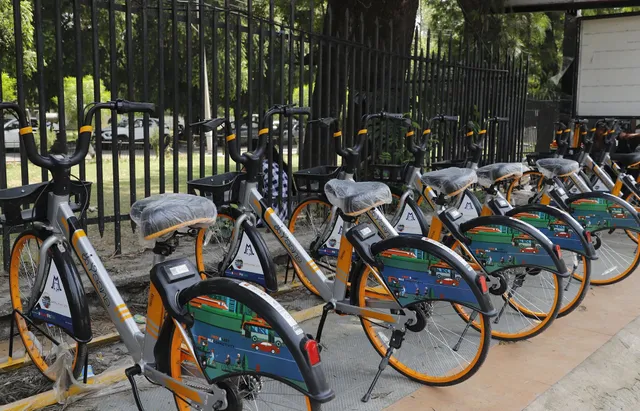
The failure of the Smart City public bicycle project in Jammu isn’t just about unused cycles—it reflects a deeper problem in how urban development is being planned and executed in the city.
At face value, the idea was strong. A ₹6.5 crore bicycle-sharing system with hundreds of GPS-enabled cycles and docking stations was meant to promote eco-friendly mobility and reduce congestion. But today, many of these cycles are lying unused, docking stations are abandoned, and the entire system is struggling due to poor maintenance and low public engagement.
Where it went wrong
The biggest issue is planning without ground reality. You cannot introduce a cycling culture in a city that lacks:
- Dedicated cycle tracks
- Safe road infrastructure
- Public awareness and behavioral adaptation
In Jammu, roads are already congested and not designed for cyclists. Without safe lanes, people simply won’t risk using bicycles—no matter how modern or subsidized the system is.
Second, there is a clear execution gap. Projects were launched quickly for visibility, but long-term sustainability—maintenance, repairs, user incentives—was neglected. That’s why cycles are rusting instead of running.
Third, it highlights a broader “top-down planning” problem. Smart City initiatives often focus on showcasing technology rather than solving everyday problems. While over ₹800 crore has been spent on various Smart City projects in Jammu, the real test is whether they improve daily life—and in this case, the answer is questionable.
The bigger picture
This failure is symbolic. It shows that:
- Infrastructure must come before services
- Public participation is as important as funding
- “Smart” should mean practical, not just digital or modern-looking
A cycle project can succeed—but only if integrated with urban planning, not treated as a standalone showcase.
Final opinion
The Jammu Smart City cycle project didn’t fail because the idea was bad—it failed because it was implemented in isolation, without ecosystem support.
If anything, it should serve as a lesson: development is not about launching projects, but about making them usable, relevant, and sustainable for the people they are meant to serve.