
Agencies | New Delhi:
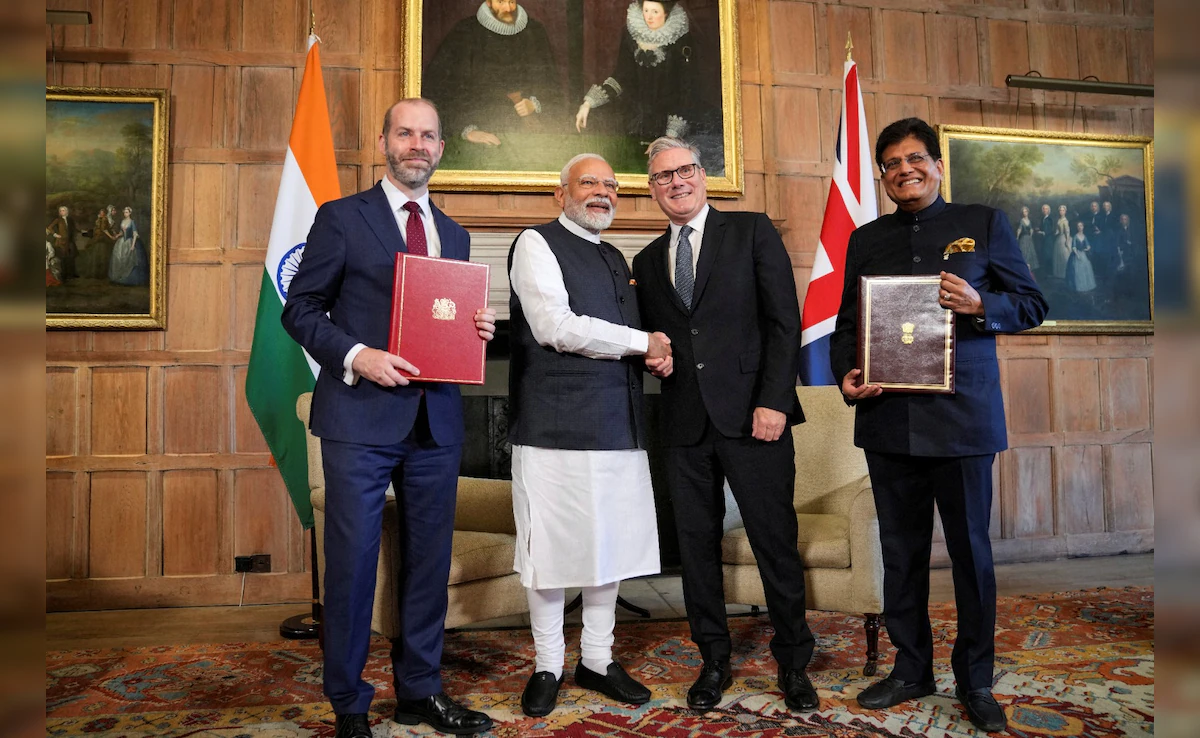
The India-UK Free Trade Agreement (FTA), officially known as the Comprehensive Economic and Trade Agreement (CETA), comes into force on Wednesday after nearly three years of negotiations, marking one of India’s most significant trade agreements with a developed economy since its pacts with the UAE and Australia.
The agreement is expected to make British Scotch whisky, gin and, over time, luxury cars more affordable in India, while opening wider access to one of the world’s largest consumer markets for Indian exporters. Industries ranging from textiles and footwear to seafood, engineering goods and auto components are expected to benefit from reduced trade barriers.
While some consumer benefits will be visible almost immediately, the broader economic impact is expected to unfold over the next decade as tariffs are gradually reduced and businesses expand trade and investment.
What Is the India-UK FTA?
The agreement reduces or eliminates customs duties on thousands of products traded between India and the UK, while also easing market access for goods, services and investments.
According to the government, 99% of India’s exports to the UK by value will now enjoy zero-duty access. The sectors covered include textiles, apparel, leather, footwear, gems and jewellery, marine products, engineering goods, chemicals and agricultural products.
In return, India will gradually lower tariffs on several British products, including Scotch whisky, gin and automobiles. The agreement is also expected to boost bilateral trade and investment flows over the coming years.
Scotch Whisky and Gin to Become Cheaper
Perhaps the most visible benefit for consumers is the reduction in import duties on Scotch whisky and gin.
India currently levies a 150% import duty on these products. Under the FTA, the tariff falls immediately to 75% and will be progressively reduced to 40% over the next 10 years.
Industry estimates suggest retail prices of several premium Scotch brands could eventually decline by 5-10%, although the final price will continue to depend on state excise duties, distributor margins and brand pricing strategies.
Industry leaders believe the agreement will expand India’s premium spirits market without significantly affecting domestic manufacturers, as imported Scotch represents only a small share of overall whisky consumption.
Luxury British Cars to See Gradual Duty Cuts
The FTA also provides for lower import duties on UK-built luxury vehicles, though the benefits will be phased in over time.
Imported British cars currently attract duties of up to 110%. Under the agreement, tariffs will gradually fall to 10% over a 15-year period. However, concessional duties will initially apply only under a Tariff Rate Quota (TRQ).
Luxury brands expected to benefit include Aston Martin, Bentley, Jaguar Land Rover (UK-built models), McLaren and Rolls-Royce.
Consumers should not expect immediate price reductions. Only 20,000 completely built-up petrol and diesel passenger vehicles will qualify for lower duties in the first year, with tariff reductions continuing in phases until the fifteenth year.
To safeguard domestic manufacturers, India has excluded lower-priced electric, hybrid and hydrogen-powered vehicles from tariff concessions during the first five years. Separate quotas for premium electric vehicles will begin from the sixth year.
What Won’t Become Cheaper Immediately?
While the agreement lowers tariffs on several British products, many imported goods are unlikely to see immediate price reductions.
Products such as chocolates, cosmetics, premium food items and fashion goods may become more competitive over time where duties have been reduced. However, retail prices will continue to depend on freight costs, exchange rates, GST, distributor margins and retailer pricing.
Similarly, luxury vehicles are expected to remain expensive despite the gradual reduction in import duties.
Major Boost for Indian Exporters
Economists believe the biggest beneficiaries of the agreement will be Indian exporters rather than consumers.
With nearly all Indian exports to the UK now enjoying duty-free access, exporters are expected to become more competitive against suppliers from countries that still face import tariffs.
According to an analysis by the Global Trade Research Initiative (GTRI), the greatest opportunities lie in sectors where India has strong manufacturing capabilities, the UK has significant import demand and tariffs have been substantially reduced.
Key sectors expected to benefit include:
- Garments: India already exports more than $1.3 billion worth of garments to the UK and accounts for around 6% of Britain’s garment imports. Duty-free access is expected to strengthen its competitive position.
- Textiles, Leather and Footwear: These labour-intensive industries are expected to benefit significantly, with the UK already accounting for over 10% of India’s footwear exports.
- Processed Foods: Ready-to-eat meals, bakery products, sauces and ethnic food products could witness stronger export growth, subject to compliance with UK food safety regulations.
- Seafood: India currently supplies less than 1% of Britain’s seafood imports, leaving considerable scope for expansion if exporters meet sanitary and traceability standards.
- Automobiles and Auto Components: With the UK importing over $92 billion worth of automobiles annually and India holding just a 0.4% market share, lower tariffs could create long-term opportunities for Indian manufacturers.
- Engineering Goods, Electronics and Machinery: These sectors are expected to benefit, although success will depend largely on quality standards, certification and integration into UK supply chains.
Sectors Likely to See Limited Gains
The GTRI notes that tariff reductions alone will not overcome structural barriers in several industries.
Pharmaceuticals, chemicals, plastics and rubber, precious metals, iron and steel, petroleum products, tobacco and alcoholic beverage exports are expected to see relatively limited gains, as regulatory approvals, technical standards, environmental norms, certification requirements and market access remain more significant challenges than tariffs.
As GTRI Founder Ajay Srivastava observed, the agreement provides market access but does not guarantee higher exports. Realising its full potential will require improvements in logistics, product standards, certifications and stronger buyer networks.
Relief for Indian Professionals
One of the agreement’s most significant provisions relates to services rather than goods.
Under the Double Contribution Convention, Indian professionals temporarily working in the UK, along with their employers, will be exempt from making social security contributions in both countries simultaneously.
Employees on assignments of up to five years will continue contributing only to India’s social security system, reducing costs for Indian IT firms and other service-sector companies operating in the UK.
A Strategic Opportunity
The UK imported goods worth nearly $929 billion in 2025, yet only $15.2 billion originated from India, giving India a market share of just 1.6%. Meanwhile, the UK accounted for only around 3.4% of India’s total merchandise exports.
These figures highlight the significant growth potential if Indian businesses can effectively leverage duty-free market access.
The agreement also aligns with India’s broader strategy of expanding trade partnerships with major global economies, helping diversify export destinations and strengthen its position in international supply chains.