
Agencies | Beijing:
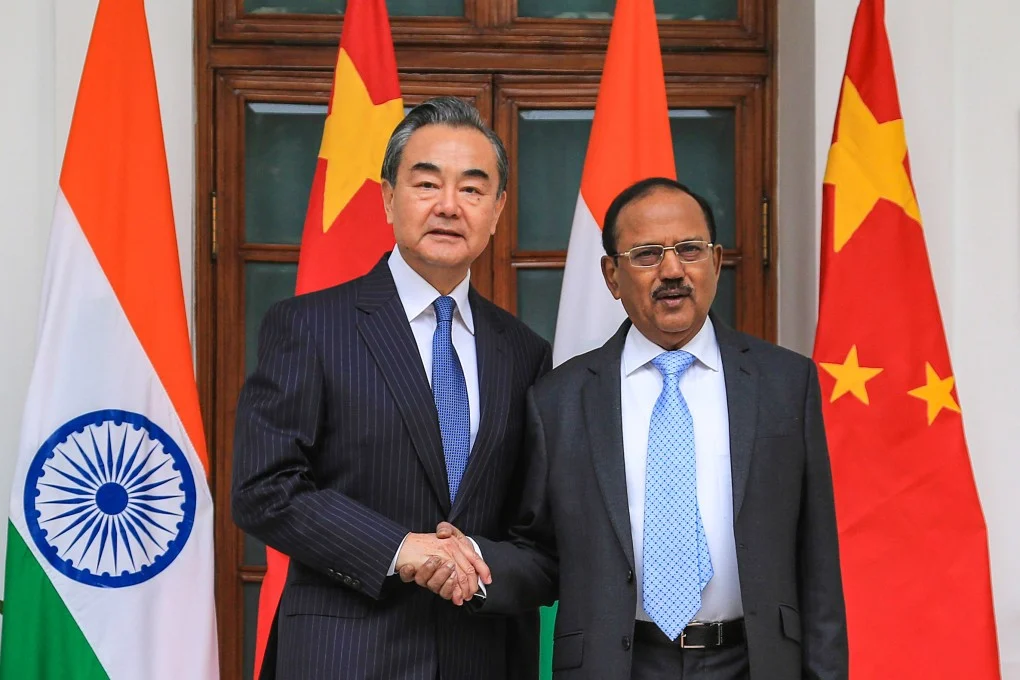
National Security Advisor Ajit Doval held talks with Chinese Foreign Minister Wang Yi at the 25th meeting of the Special Representatives on the India-China Boundary Question, with both sides signalling a renewed push to stabilise bilateral relations and maintain peace along the disputed border.
During the meeting, Wang said China was ready to work with India to strengthen mutual understanding, address differences and improve bilateral relations, according to a statement issued by the Chinese side.
Wang described India and China as important neighbours, major developing countries and representatives of emerging economies, arguing that stable relations between the two countries were in the fundamental interests of their people and carried significance beyond the bilateral relationship.
“The healthy and stable development of China-India relations serves the fundamental interests of the two peoples,” the Chinese statement said.
Wang said China was prepared to view bilateral relations from a “strategic height and long-term perspective” and called for greater communication and mutual understanding.
He said both countries should work to overcome differences and obstacles and develop a relationship based on cooperation and mutual benefit.
Wang also referred to meetings between Prime Minister Narendra Modi and Chinese President Xi Jinping in Kazan and Tianjin, saying the interactions had helped create conditions for improving bilateral relations.
He stressed that both sides were implementing understandings reached through the Special Representatives’ mechanism and remained committed to maintaining peace and tranquillity along the border.
According to the Chinese statement, Wang also called for both countries to draw lessons from their past experiences and gradually develop a more positive approach towards managing the boundary issue.
Doval, meanwhile, emphasised India’s view that the two countries should approach their relationship through cooperation rather than confrontation.
He described India and China as ancient civilisations and major economies and said the two countries should regard each other as partners rather than rivals.
According to the statement, Doval noted that India-China relations had returned to the “right track” and that the overall situation in the border areas remained peaceful.
He said India was prepared to strengthen strategic communication with Beijing, expand mutually beneficial cooperation and enhance coordination on multilateral issues.
Doval also stressed the importance of effectively managing border areas and accelerating the development of bilateral relations.
Despite the positive messaging, the long-standing boundary dispute remained at the heart of the Special Representatives’ discussions.
Both sides reaffirmed their commitment to pursuing a fair, reasonable and mutually acceptable package solution to the boundary question.
India and China agreed to continue addressing the dispute through dialogue and consultation while working jointly to preserve peace and tranquillity along the border.
The Special Representatives’ mechanism has emerged as one of the key diplomatic channels for addressing the boundary dispute, particularly following the military tensions that erupted in eastern Ladakh in 2020.
The latest meeting is also significant as both countries seek to consolidate the progress made towards reducing tensions along the Line of Actual Control (LAC).
The discussions are expected to cover border management, confidence-building measures and mechanisms to prevent a fresh escalation.
Maintaining peace along the LAC remains critical to the broader normalisation of India-China relations, with unresolved boundary issues continuing to influence trade, diplomatic engagement and strategic ties between the two Asian powers.
The talks assume additional significance ahead of Chinese President Xi Jinping’s expected visit to India for the BRICS Summit scheduled for September 12-13.
Although Beijing and New Delhi have not formally confirmed all details surrounding Xi’s participation, the possibility of his visit has raised expectations of further high-level engagement between the two countries.
A meeting between Prime Minister Narendra Modi and Xi could provide an opportunity to build on the recent diplomatic efforts and give further momentum to the process of stabilising bilateral relations.
The latest Special Representatives’ meeting therefore comes at a potentially important stage in India-China ties, with both sides seeking to maintain border peace while gradually rebuilding trust and expanding areas of cooperation.