
Agencies | Kathmandu:
The death toll from the devastating floods that struck Nepal last week has risen to 1,344, as search-and-rescue teams continue operations across the worst-affected areas, Nepal Police said.
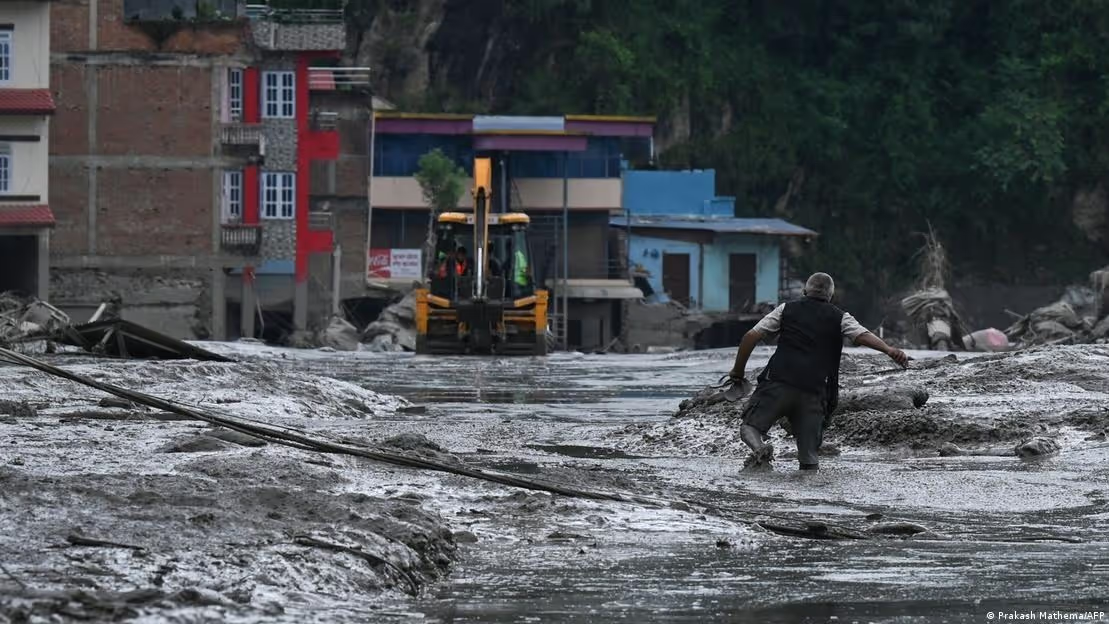
The floods began on August 26 after what officials described as a glacial collapse in the Himalayas, which is believed to have triggered the formation and overflow of lakes in the region. Torrential waters subsequently swept through several villages near the Tibetan border, causing widespread displacement and extensive damage to homes and infrastructure.
The disaster has severely disrupted daily life across affected parts of Nepal, with residents now facing the difficult task of rebuilding while authorities remain concerned about contaminated water and the possible spread of waterborne and other communicable diseases.
According to The Kathmandu Post, five of the 15 drinking-water sources tested in flood-hit Bidur were found contaminated with E. coli, a bacteria commonly associated with human and animal waste. Bidur is among the areas badly affected by flooding along the Bhotekoshi River.
Meanwhile, rescue teams on Friday, September 2, pulled out two workers who had been trapped inside a tunnel at the Trishuli 3A Hydropower Project after it was buried under debris during the floods. The rescue followed an extensive search operation involving teams deployed at the project site, according to the Nepalese government.
The scale of the disaster remains evident as thousands of people are still unaccounted for. Around 600 children are reportedly missing from Nepal’s Rasuwa and Nuwakot districts, while the joint command of the security forces is searching for 4,798 people reported missing from different disaster-hit areas.
India has also been significantly affected by the disaster, with 275 Indian nationals reported missing in Nepal, while 166 have been rescued, Ministry of External Affairs spokesperson Randhir Jaiswal said.
Jaiswal said India had dispatched around 95 tonnes of relief material to Nepal since the floods struck on August 26.
India was among the first countries to respond to the disaster, sending humanitarian assistance and specialised rescue teams to support relief and search-and-rescue operations.
As rescue teams continue to search through debris and affected settlements, authorities in Nepal and neighbouring countries remain focused on locating missing people, restoring essential services and preventing further health risks in the flood-hit regions.