
Agencies | London:
The United Kingdom on Tuesday announced a ban on imports of goods produced in Israeli settlements in the occupied West Bank, marking a significant hardening of its policy towards Israel.
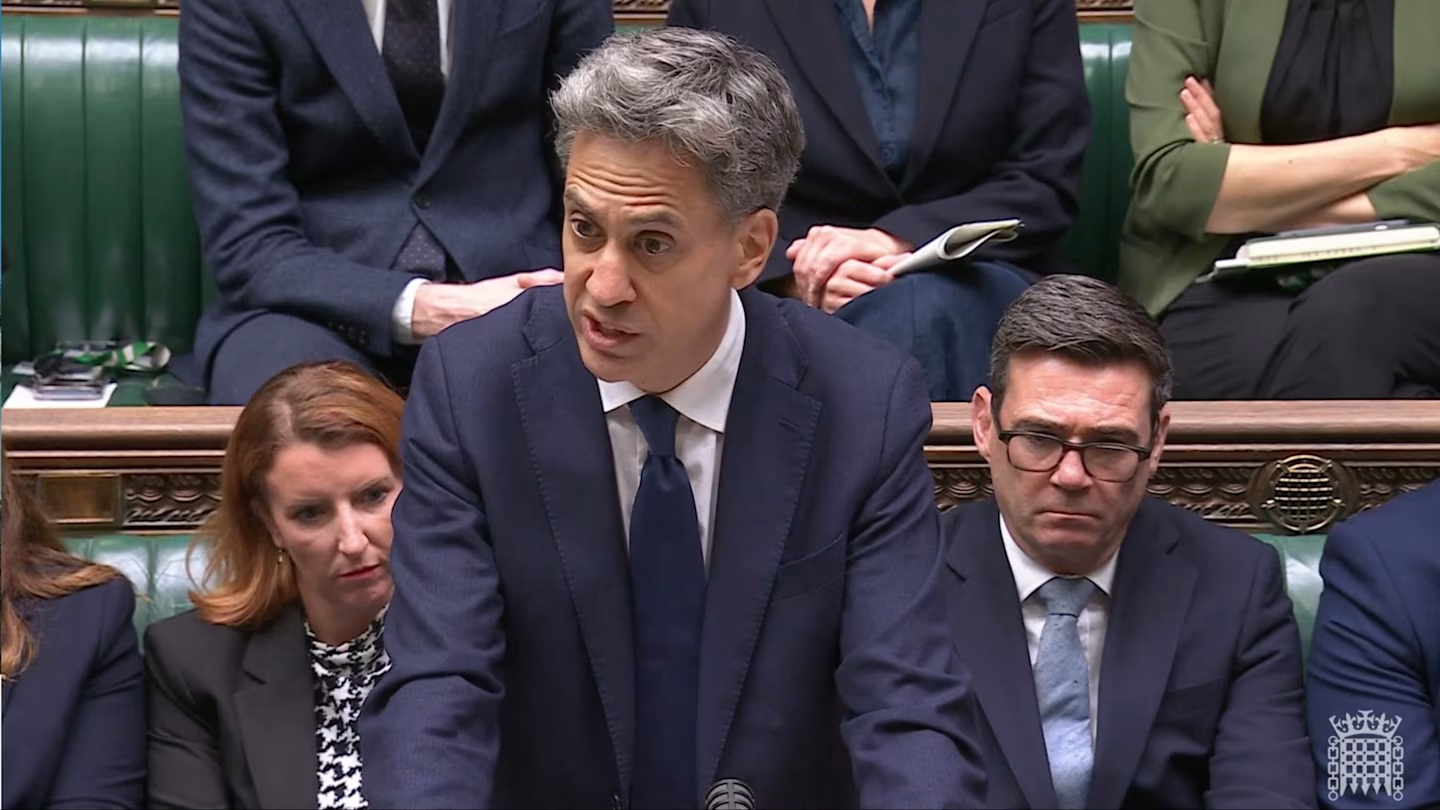
Foreign Secretary Ed Miliband said Britain would also restrict certain services linked to the settlements, including financing, construction, infrastructure, real estate and advertising. The measures are expected to come into effect within six to nine months.
France and Canada are also moving to ban trade in goods from Israeli settlements, while several other European countries have backed further restrictions. Twelve countries — including the UK, France, Canada, Denmark, Finland, Iceland, Ireland, Norway, Poland, Portugal, Spain and Sweden — said they would introduce or support restrictions on settlement trade under their respective national procedures.
Miliband said the British government believed Palestinians were facing ethnic cleansing in parts of the West Bank at the hands of what he described as “settler terrorists.” He cited the demolition of homes, destruction of roads and public infrastructure, and the displacement of Palestinian families.
The foreign secretary said Britain would not accept the destruction of prospects for a two-state solution.
The announcement represents one of the sharpest shifts in Britain’s approach to Israel in recent years. The UK has previously imposed sanctions on Israeli settlers and outposts over violence against Palestinians and settlement-related activities.
Israel captured the West Bank in the 1967 Middle East war. Most of the international community considers Israeli settlements there illegal under international law, while Israel disputes that position and regards the territory as historically significant to the Jewish people.
The move comes amid growing international concern over accelerated Israeli settlement expansion, including the E1 settlement project, which critics say could effectively divide the West Bank and further undermine the prospects of establishing a viable Palestinian state.
The British government has said the settlement expansion is threatening the possibility of a negotiated two-state solution between Israelis and Palestinians.
The UK also announced tighter restrictions on arms sales to Israel for use in Gaza, extending the embargo to weapons that it says could materially contribute to the occupation of Palestinian territories.
Britain recognised the State of Palestine in 2025 as part of its effort to revive international efforts towards a two-state solution.
Israeli President Isaac Herzog condemned the British move, calling it a serious miscalculation and accusing London of interfering in Israel’s democratic affairs ahead of its elections.
Israeli Foreign Minister Gideon Saar had warned that Israel would respond if Britain imposed measures against the country.
National Security Minister Itamar Ben-Gvir also criticised the British government and called for retaliatory measures, including recognition of Argentina’s claim to the Falkland Islands, a British overseas territory.
Israel has subsequently announced measures against British officials and other figures in response to the British position.
The decision also drew criticism from the United States.
US Ambassador to Israel Mike Huckabee described the move as discriminatory and warned that Britain could face repercussions if it proceeded with the sanctions.
Several US states have laws restricting public contracts or investments involving companies that boycott Israeli businesses, including those operating in or linked to the West Bank.
The US administration has not indicated that it intends to impose similar restrictions on Israeli settlements.
The tougher stance is likely to be welcomed by many members and supporters of Britain’s Labour Party who have urged the government to take stronger action over Israel’s policies in the Palestinian territories.
However, some Labour figures have expressed concern that the measures could strengthen support for Israeli Prime Minister Benjamin Netanyahu ahead of Israel’s elections and potentially increase tensions affecting British Jewish communities.
Prime Minister Andy Burnham spoke with US President Donald Trump on Monday and reiterated Britain’s commitment to regional peace, security and a two-state solution.
The British government has stressed that the measures are directed at Israeli settlement activity and are not a boycott of Israel or Israeli goods generally.
The announcement places Britain among a growing group of Western countries seeking to use trade and diplomatic measures to pressure Israel over settlement expansion and preserve the possibility of a future Palestinian state.