
Agencies | Cotabato:
Nearly 2.4 million voters in the Bangsamoro Autonomous Region in Muslim Mindanao (BARMM) in the southern Philippines are casting their ballots in the region’s first parliamentary elections since its establishment in 2019.
The historic vote is being closely watched as a crucial milestone in the implementation of a landmark peace process aimed at bringing greater self-governance to the Muslim-majority region after decades of insurgency, political marginalisation and violence.
The elections will determine the members of the Bangsamoro Parliament, the region’s legislative body, with 80 seats up for grabs. Of these, 40 seats are reserved for representatives of political parties, 32 for district representatives and eight for sectoral representatives.
The region’s Chief Minister, who heads the executive branch of the Bangsamoro government, will be elected by members of the parliament during its first session.
Election authorities have said they are targeting a voter turnout of at least 80 percent, following years of delays to the parliamentary polls. The election is intended to mark the formal end of the transition period overseen by the Bangsamoro Transition Authority (BTA), the interim regional government established in 2019.
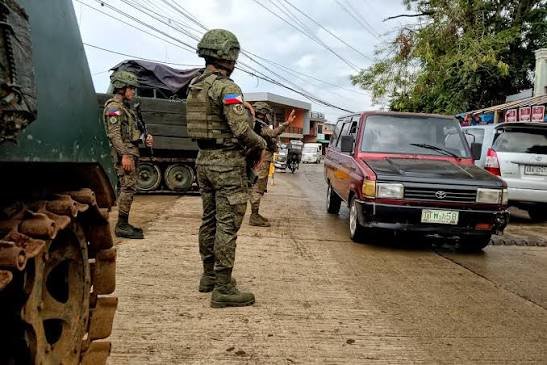
However, concerns over election security and irregularities have cast a shadow over the landmark vote.
Commission on Elections Chairman George Garcia said on Monday that Cotabato City had been placed under the commission’s control after a shooting late Sunday killed three people and injured 15 others.
Garcia also reported separate incidents in the city, including an explosion involving an improvised explosive device that injured the person carrying it. A gun was also fired in another incident, although no injuries were reported.
Authorities also placed the town of Maluso in Basilan under the commission’s control after pre-shaded ballots were discovered in 36 of its 68 polling precincts.
Garcia said he ordered the immediate reprinting of ballots for the affected precincts, warning that voting would be delayed in those locations while the replacement ballots were prepared.
In an earlier statement, Garcia described the election as the culmination of generations of struggle by the Bangsamoro people for their homeland, identity and right to self-determination.
“These elections stand on generations of Bangsamoro struggle for homeland, identity, and self-determination, in the face of dispossession, marginalization, conflict and sacrifice,” he said.
The election represents a significant turning point for a region that has experienced decades of armed conflict between the Philippine government and Muslim rebel groups seeking greater autonomy or independence.
The BARMM was created as part of a 2014 peace agreement between the Philippine government and the Moro Islamic Liberation Front (MILF), the country’s largest Muslim rebel organisation. Under the agreement, the MILF abandoned its demand for a separate independent Muslim state in exchange for greater political autonomy for areas where the Bangsamoro population is concentrated.
The peace agreement also provided for the gradual demobilisation of MILF fighters and the establishment of new political institutions to govern the autonomous region.
The Bangsamoro Transition Authority was subsequently established as an interim administration, with former rebel commanders and political representatives taking part in the process of transforming the insurgency into a political movement.
The parliamentary election now marks the next major stage of that transition, replacing the appointed authority with an elected legislature.
The conflict in the southern Philippines dates back to the 1970s and has resulted in an estimated 150,000 deaths, while displacing communities and severely affecting economic development across the region.
For years, parts of Mindanao were also associated with armed extremist groups and militant organisations. However, violence has declined in many areas following successive peace initiatives and the establishment of the Bangsamoro autonomous government.
Despite the progress, security remains a major concern. Local political rivalries, clan-based conflicts, armed groups and the presence of extremist elements continue to pose challenges to stability.
The parliamentary election is therefore being viewed not simply as a political exercise but as a test of whether the peace process can deliver durable institutions and greater public participation in governance.
For millions of Bangsamoro voters, the ballot represents an opportunity to shape the region’s political future after generations of conflict.
The new parliament will face the task of strengthening regional institutions, improving public services and promoting economic development while maintaining the delicate peace achieved through years of negotiations.
The successful conduct of the election could strengthen confidence in the autonomy arrangement and provide further momentum to the broader peace process. Conversely, prolonged violence, electoral disputes or political instability could pose challenges to the region’s transition towards democratic self-government.