
Agencies | Sanna:
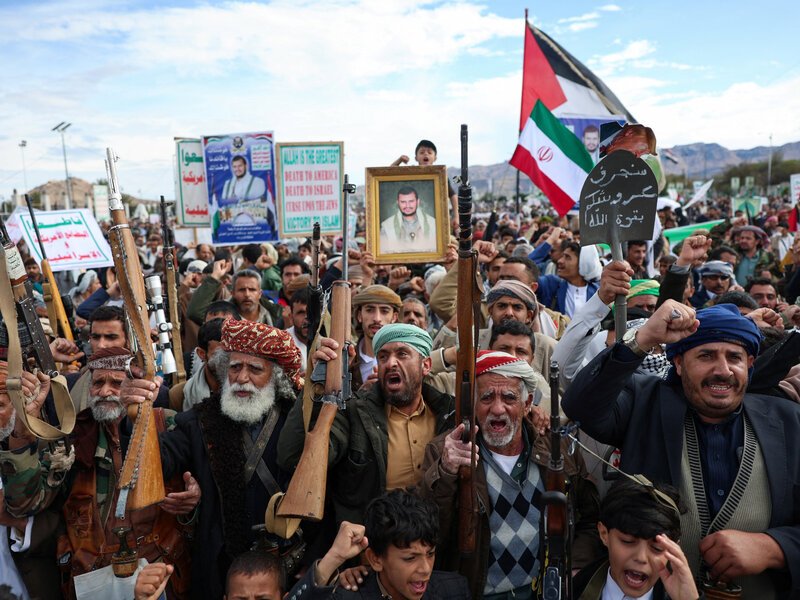
Yemen’s Houthi rebels have accused Saudi Arabia of carrying out dozens of air attacks as fighting intensifies in Yemen, while the prime minister of the internationally recognised Yemeni government has accused the militia of killing and displacing civilians during its rapid advance.
The latest escalation comes amid growing concerns over the wider impact of the conflict on regional security, shipping and global energy supplies.
The Houthis said Saudi forces had launched a series of air attacks against their positions, following a renewed push by Houthi fighters and government forces across parts of Yemen. The internationally recognised government has accused the rebels of causing civilian casualties and forcing people from their homes during their advance.
The developments have added to fears that the long-running Yemen conflict could further destabilise key maritime routes connecting the Middle East with global markets.
Separately, Oman’s navy rescued 23 crew members from an oil tanker that came under attack in the Strait of Hormuz, according to reports.
Search operations were continuing for two missing crew members as authorities assessed the circumstances surrounding the incident.
The Strait of Hormuz is one of the world’s most strategically important energy corridors, carrying a significant share of global oil and gas shipments. Any prolonged disruption in the waterway could have consequences for international energy markets and shipping costs.
Oil prices continued to climb as markets reacted to concerns over possible disruptions to crude supplies.
Recent attacks on Saudi energy infrastructure have left the kingdom’s East-West pipeline offline, raising fresh questions about the ability of major producers to reroute crude exports if shipping through Gulf waters becomes more difficult.
The pipeline provides Saudi Arabia with an alternative route for transporting crude to the Red Sea, allowing shipments to bypass the Strait of Hormuz. Its outage has therefore heightened market sensitivity to developments in the Gulf.
The combination of damaged energy infrastructure, heightened maritime risks and uncertainty over the security of major shipping routes has contributed to renewed pressure on oil prices.
Against this backdrop, Iran’s security chief has said the situation surrounding global energy shipments and the Strait of Hormuz has fundamentally changed.
He said Tehran would not enter negotiations with Washington until Iranian demands, including those outlined in an Islamabad memorandum of understanding, are met.
The position signals little immediate prospect of a diplomatic breakthrough between Iran and the United States, while tensions surrounding the Gulf’s vital energy routes remain elevated.
With Yemen’s conflict intensifying, attacks affecting regional energy infrastructure and uncertainty surrounding shipping through the Strait of Hormuz, concerns are growing that the crisis could have consequences well beyond the immediate battlefield.
For global markets, the central concern remains whether disruptions to oil production and transportation will persist long enough to create a sustained shock to energy supplies and prices.