
Examiner Bureau | Jammu:
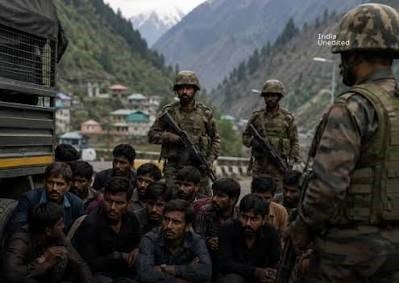
Jammu and Kashmir authorities on Monday deported 150 Bangladeshi nationals who were allegedly staying illegally in the Union Territory, marking another major step in the ongoing process of identifying and sending back foreign nationals found to be living without valid documentation.
The group was transported from Jammu and Kashmir in a special Indian Air Force aircraft to Bagdogra in West Bengal, where they were handed over to personnel of the Border Security Force (BSF), according to officials and Srinagar Police.
Officials said another batch of 150 Bangladeshi nationals is scheduled to be deported on October 7, indicating that the verification and deportation process is continuing in phases.
The latest action comes amid increased scrutiny by authorities over the presence of foreign nationals allegedly residing in Jammu and Kashmir without valid identity or travel documents. The exercise involves identification, verification of nationality and documentation, followed by appropriate action under the established legal and administrative process.
The 150 Bangladeshi nationals were flown to Bagdogra aboard a special IAF aircraft. Following their arrival, they were handed over to the BSF, which is responsible for border management and coordination in matters involving the India-Bangladesh border.
The use of Bagdogra as the transit point provides a route for the deportation process towards the India-Bangladesh border. Officials have not disclosed details regarding the identities, places of residence or circumstances under which the individuals were found in Jammu and Kashmir. Authorities have also not immediately released a district-wise or gender-wise breakup of the group.
According to officials, another group of 150 Bangladeshi nationals is scheduled to be deported on October 7. The planned second batch suggests that the latest operation is part of a broader, phased exercise rather than an isolated action. Further details regarding the number of foreign nationals identified for deportation in Jammu and Kashmir have not been made public.
The authorities have so far described the individuals being deported as Bangladeshi nationals who were staying illegally in the Union Territory.
The deportations come against the backdrop of increased official scrutiny of undocumented foreign nationals in Jammu and Kashmir, particularly in parts of the Jammu region.
In August, Jammu and Kashmir Police detained 21 suspected Bangladeshi nationals in Ramban after they were intercepted while travelling from Jammu towards Srinagar without documents establishing their identity. The group included three women and seven children and was subsequently taken into custody for further verification and questioning.
The Centre has also undertaken a broader review of reports concerning undocumented settlements in Jammu and Kashmir. A four-member central committee visited the Union Territory in August to examine claims relating to demographic changes and security implications, with its reported focus including border districts and areas where undocumented settlements had been alleged.
These developments have placed greater emphasis on verification of identity and nationality, particularly in sensitive border areas.
The deportation process involving Bangladeshi nationals is not limited to Jammu and Kashmir and is handled through established coordination mechanisms between Indian authorities and their Bangladeshi counterparts.
At a BSF-Border Guard Bangladesh meeting earlier this year, the BSF said Bangladeshi nationals found to have entered India illegally are dealt with through established procedures, including handover to the Bangladesh side where nationality and credentials are verified. The BSF has also said that cases in which nationality cannot immediately be verified may require additional processing through Indian agencies.
The India-Bangladesh border has consequently remained an important part of the wider process of verification and repatriation of undocumented Bangladeshi nationals.
For Jammu and Kashmir, Monday’s deportation is significant because the authorities are continuing to move from identification and verification to actual repatriation in cases where foreign nationals are determined to be staying without valid documentation.
With another batch scheduled for October 7, further deportations could follow as the verification process progresses.
Officials, however, have not disclosed the total number of Bangladeshi nationals identified for deportation from Jammu and Kashmir or provided details of the legal proceedings and verification process in individual cases.
The authorities are expected to continue the exercise while coordinating with central agencies and the BSF to ensure that identified foreign nationals are processed and repatriated through the prescribed mechanism.