
From Editor’s Desk
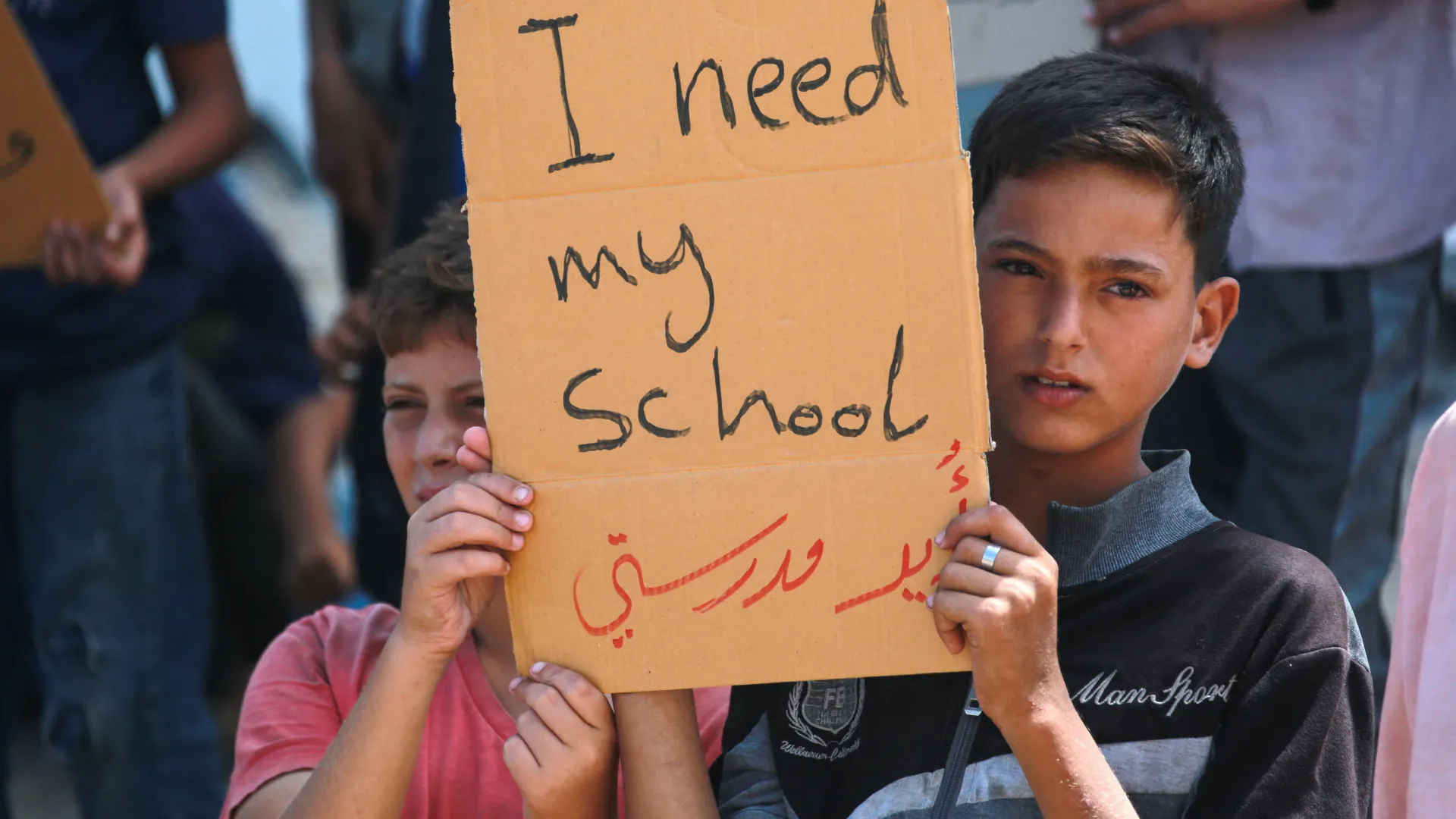
Wars are often measured in death tolls, military victories, ceasefires and diplomatic negotiations. But some of the deepest scars of conflict are invisible in the immediate aftermath. They emerge years later — in broken societies, lost opportunities, traumatized children and shattered futures. In Gaza and the wider Palestinian territories, one such tragedy is unfolding in real time: the destruction of an entire generation’s access to education.
For decades, education represented hope for Palestinians. Despite occupation, blockade, poverty and political instability, Palestinian society maintained one of the highest literacy rates in the Middle East. Families invested heavily in schooling, universities and professional education, believing knowledge was the only durable path toward dignity and survival. Today, that foundation lies buried beneath rubble.
According to UNICEF and UN agencies, more than 90 percent of schools in Gaza have been damaged or destroyed during the war. Hundreds of thousands of children remain without access to formal education, while universities, libraries, laboratories and cultural institutions have either collapsed or been rendered unusable.
This is no longer merely an education crisis. It is the creation of a “lost generation.”
The destruction goes far beyond buildings. Schools in Gaza have become refugee shelters, medical centres and emergency camps for displaced families. Students who once carried school bags now carry water containers, food packets and trauma. Children who should be preparing for exams spend nights under bombardment, uncertain whether they will survive until morning.
The psychological consequences may prove even more devastating than the physical destruction. Mental health experts repeatedly warn that prolonged exposure to violence, displacement and insecurity severely damages a child’s ability to learn, concentrate and emotionally develop. Many Palestinian children have now spent years outside normal classrooms, growing up in an environment defined by fear, grief and instability.
An entire educational ecosystem has collapsed. Teachers have been killed, displaced or left without salaries. University students have seen careers interrupted indefinitely. Thousands who dreamed of becoming doctors, engineers, journalists and scientists now face uncertainty about whether they will ever complete their education.
The scale of destruction has led UN experts to describe the situation as “scholasticide” — the systematic destruction of an education system. The term is controversial and politically charged, but the reality behind it is undeniable: Gaza’s educational infrastructure has suffered near-total devastation.
Israel argues that military operations target Hamas infrastructure and militants embedded within civilian areas. Israeli authorities and some watchdog reports have also raised concerns about alleged militant links within parts of UNRWA’s educational network. These concerns have become central to Israel’s justification for tighter scrutiny and restrictions around educational institutions in Gaza.
However, even amid debates over security and militancy, international humanitarian organisations maintain that children’s right to education cannot become collateral damage in war. International law places special protection on schools, educational facilities and children during armed conflict. Yet Gaza’s children continue to lose classrooms faster than they can be rebuilt.
Perhaps the most dangerous consequence of this collapse is what comes next. History shows that societies deprived of education become vulnerable to deeper cycles of extremism, poverty and instability. When millions of children grow up without schools, opportunities or psychological support, the long-term consequences extend far beyond one territory or one generation.
Education is not simply about literacy. It is about social stability, economic mobility and hope. Remove education from a society for years, and the vacuum is often filled by anger, despair and radicalisation.
This is why the destruction of Gaza’s schools should alarm the entire world — not only Palestinians or Israelis. A child denied education today becomes a vulnerable adult tomorrow. The longer the war continues, the harder rebuilding becomes. Reconstructing classrooms is possible. Rebuilding shattered childhoods is far more difficult.
Despite the devastation, Palestinian families continue to show extraordinary resilience. Across Gaza, makeshift schools operate inside tents, damaged buildings and temporary shelters. Volunteer teachers attempt to continue lessons using scraps of paper and minimal resources. UNICEF’s “Back to Learning” initiative has tried to restore some access to education for hundreds of thousands of children.
But emergency learning spaces cannot replace a functioning education system.
The international community now faces a moral and political test. Humanitarian aid alone will not solve this crisis. Gaza requires a long-term educational reconstruction strategy — rebuilding schools, training teachers, restoring digital access, providing trauma counselling and protecting educational institutions from becoming permanent casualties of war.
Silence or indifference will only deepen the catastrophe. A generation without education is not just a Palestinian tragedy. It is a global failure.