
From Editor’s Desk
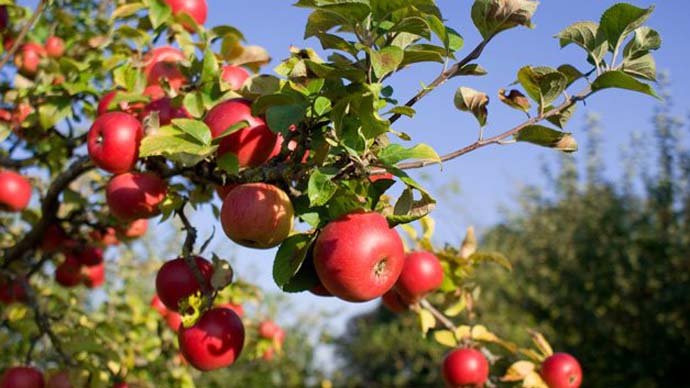
Horticulture in Kashmir is not merely an economic activity—it is the lifeline of the Valley’s rural economy. Employing lakhs of people directly and indirectly, this sector has long been the backbone of livelihoods across districts, sustaining families through generations. From the iconic apple orchards of Shopian and Sopore to the walnut groves of Kupwara and almond blossoms of Budgam, horticulture defines both the identity and the economy of Kashmir.
Yet, beneath this legacy lies a growing concern: the sector that once symbolized resilience is now grappling with stagnation, structural challenges, and an urgent need for transformation.
The numbers tell a compelling story. Jammu and Kashmir contributes a significant share to India’s apple production, with Kashmiri apples enjoying a strong reputation in domestic markets. However, the reality on the ground reveals a widening gap between potential and performance. Farmers are increasingly facing unpredictable weather patterns, erratic snowfall, and untimely rains—clear signals of climate change disrupting traditional cultivation cycles.
At the same time, market dynamics are shifting. Imported apples from countries like Iran and Turkey, often cheaper and better packaged, are capturing shelf space in Indian markets. This has exposed a critical weakness in Kashmir’s horticulture ecosystem—its limited focus on value addition, branding, and global standards.
The problem is not production alone; it is the absence of a comprehensive value chain. Post-harvest losses remain high due to inadequate cold storage facilities, inefficient transportation, and lack of modern grading and packaging infrastructure. While Controlled Atmosphere (CA) storage units have been introduced, their reach is still limited compared to the scale of production.
Equally concerning is the issue of market access. Farmers often remain dependent on middlemen, leaving them vulnerable to price fluctuations and exploitation. The absence of strong farmer-producer organizations (FPOs) and direct market linkages has prevented growers from realizing the true value of their produce.
But perhaps the most pressing challenge is the lack of diversification and innovation. For decades, apple monoculture has dominated the Valley’s horticulture landscape. While apples remain a strength, overdependence on a single crop makes the sector vulnerable. There is immense untapped potential in high-density plantations, exotic fruits like kiwi and cherry, and niche segments such as organic produce and floriculture.
Encouragingly, there have been efforts in recent years to introduce high-density apple farming, which promises higher yields and better quality. Government schemes, subsidies, and technical interventions are steps in the right direction. However, implementation gaps and lack of awareness among farmers often dilute their impact.
The way forward lies in reimagining horticulture as a modern, market-driven sector rather than a traditional occupation. This requires a multi-pronged approach. Investment in infrastructure—especially cold chains, logistics, and processing units—must be prioritized. Equally important is skill development, equipping farmers with knowledge of modern techniques, digital marketing, and global quality standards.
Branding “Kashmir produce” at an international level could be a game-changer. Just as regions like Himachal Pradesh and countries like New Zealand have built strong fruit brands, Kashmir too must position its apples, walnuts, and saffron as premium global products.
Policy support must also evolve. Instead of short-term relief measures, there is a need for long-term structural reforms that empower farmers, reduce intermediaries, and ensure price stability. Public-private partnerships can play a crucial role in bringing technology, investment, and market access to the sector.
Ultimately, the future of Kashmir’s horticulture lies in its ability to adapt. The Valley’s soil, climate, and human capital provide a natural advantage—one that few regions possess. But without innovation, integration, and strategic vision, this advantage risks being eroded.
Horticulture has sustained Kashmir for decades. Now, it must be strengthened, modernized, and reimagined—not just as an economic sector, but as a symbol of sustainable growth and prosperity for the region.