
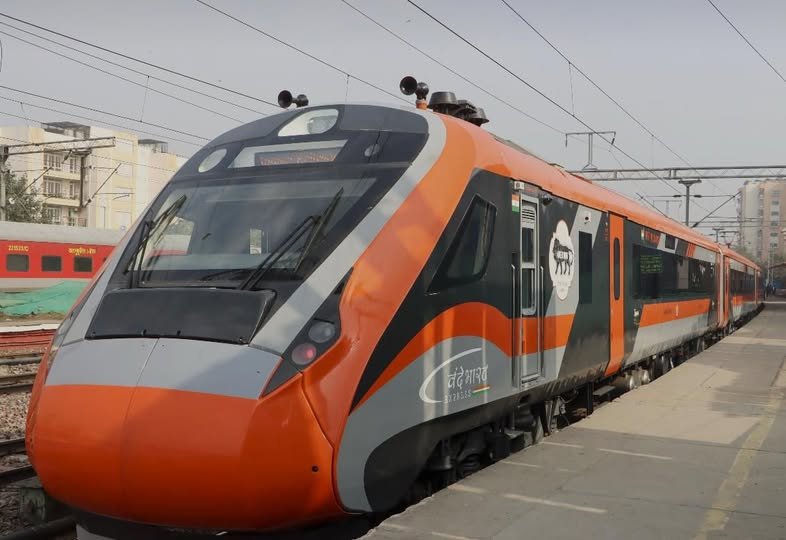
From Editor’s Desk-
The inauguration of the Vande Bharat Express between Jammu Tawi and Srinagar marks far more than the launch of a new transport service—it signals a historic shift in how Jammu and Kashmir connects with itself and the rest of India. For decades, the dream of seamless rail connectivity to the Kashmir Valley has been both an engineering challenge and a political aspiration. Today, that vision has begun to take concrete shape.
At its core, this rail link represents integration—geographical, economic, and psychological. The Kashmir Valley, often cut off during harsh winters and vulnerable to road disruptions, now gains a reliable, all-weather alternative. This is not merely about convenience; it is about resilience. A dependable rail network reduces the region’s dependence on the fragile highway system and ensures continuity of movement for people, goods, and essential services.
The economic implications are equally profound. Tourism, the backbone of Kashmir’s economy, stands to benefit immediately. Easier access is likely to increase footfall, diversify tourist inflows, and extend the travel season beyond traditional peaks. For local businesses—from hoteliers and transporters to artisans and traders—this could translate into sustained income and broader market access. The rail link also opens new logistical pathways for horticulture, particularly the export of apples, saffron, and other high-value produce, enabling faster and more cost-effective transportation.
However, the true significance of this development lies in its long-term potential. Connectivity is often the first step toward investment. With improved infrastructure, Jammu and Kashmir becomes more attractive for industries, educational institutions, and service-sector enterprises. It sends a signal that the region is ready to be part of larger economic circuits, not as a peripheral zone, but as an active participant.
Yet, infrastructure alone cannot guarantee transformation. The success of this rail corridor will depend on how effectively it is integrated into a broader development strategy. Complementary investments in last-mile connectivity, logistics hubs, tourism infrastructure, and skill development will be crucial. Without these, the full benefits of the rail link may remain underutilised.
There is also a social dimension that deserves attention. For many residents of the Valley, this train is not just a mode of transport—it is a symbol of accessibility and inclusion. It reduces distances not only in kilometres but in opportunity. Students, patients, job seekers, and families will find it easier to travel, connect, and aspire.
At the same time, policymakers must remain mindful of environmental concerns. The fragile Himalayan ecosystem demands that development be both responsible and sustainable. Increased tourist inflow and economic activity should not come at the cost of ecological balance. Strict safeguards, sustainable tourism practices, and careful urban planning will be essential to ensure that progress does not undermine the very beauty that defines Kashmir.
In many ways, this train is a beginning rather than a culmination. It is a foundation upon which a more connected, prosperous, and inclusive Jammu and Kashmir can be built. The challenge now lies in ensuring that this steel track becomes a pathway to opportunity, stability, and growth for all sections of society.
History will likely remember this moment not just as the day a train reached Kashmir, but as the day the region moved a step closer to unlocking its full potential.