
Agencies | Mumbai:
Calling Saif Ali Khan a mediocre actor would be unfair. Over the years, he has showcased remarkable range with performances in films like Omkara and the acclaimed series Sacred Games. At the same time, he has also appeared in critically panned projects such as Humshakals and Adipurush, where his performances often appeared disengaged.
In many of his weaker films, including last year’s Jewel Thief, Saif looked as though he was merely going through the motions. That is why watching his latest Netflix outing, Kartavya, feels unusual. Here, Saif appears fully invested in the role, even as the film itself seems uncertain about the issues it wants to address.
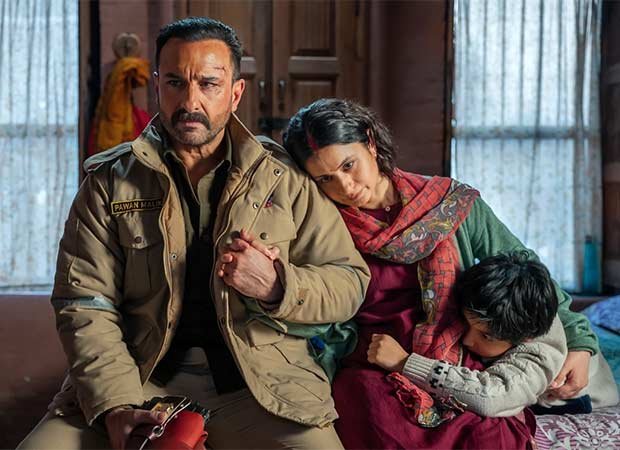
Set in a fictional North Indian state, Kartavya casts Saif as Pawan, an upright police officer determined to challenge corruption, caste oppression and a powerful cult leader accused of abusing children. The story begins with the murder of a journalist attempting to expose the cult leader, an incident that takes place under Pawan’s watch. He vows to solve the case and file a chargesheet within a week.
Simultaneously, Pawan is drawn into another conflict when his younger brother Deepak elopes with a girl from another caste, making them targets of a violent khap panchayat. Pawan takes it upon himself to protect the couple, but director Pulkit presents the protagonist as a deeply flawed “hero” who fails on both fronts.
As the narrative unfolds, the film struggles to establish why Pawan suddenly decides to rebel against a corrupt system he has lived within all his life. At 40, with a settled family and years of experience in the same environment, his sudden transformation into a crusader lacks convincing emotional groundwork.
The film repeatedly highlights Pawan’s outrage over the crimes of cult leader Anand Shri, played by Saurabh Dwivedi. However, it feels implausible that a local police officer would be unaware of allegations surrounding a powerful godman operating openly in the same town for years.
Even the subplot involving his brother suffers from weak writing. Pawan speaks casually about a relative who was previously killed for entering an inter-caste relationship, suggesting he has always known about the regressive practices within his own family and community. Yet the film fails to explain why he never opposed these injustices earlier.
Though Pawan possesses the anger and bravado of a conventional Bollywood hero, Kartavya refuses to reward him with meaningful victories. Instead, he emerges as an ineffective officer and a poor judge of character.
In one instance, he entrusts the safety of a vulnerable teenager to an unreliable subordinate, resulting in tragic consequences. In another, he carelessly reveals the secret location of his brother and his partner, ultimately leading to their deaths.
The screenplay repeatedly undermines its own protagonist. Crucial breakthroughs come not through Pawan’s investigative abilities but from other characters handing him information. His failures are exposed through dramatic confrontations rather than genuine self-realisation, leaving little room for character growth.
The film’s bleak conclusion further complicates its message. The villains largely remain unpunished, innocent lives are lost, and the protagonist ends up defeated and directionless.
As a result, Kartavya raises an important question without offering a satisfying answer: what exactly is the film trying to say?
Despite its ambitious themes of caste violence, institutional failure and religious exploitation, the Netflix drama lacks the narrative clarity and emotional depth needed to tie these elements together. Saif Ali Khan’s committed performance stands out, but it is ultimately trapped inside a film that appears uncertain of its own identity and purpose.