
Agencies | Srinagar:
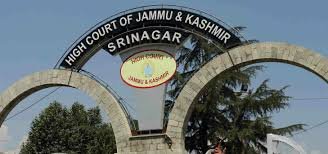
Srinagar, July 2: The High Court of Jammu & Kashmir and Ladakh has dismissed a batch of petitions seeking the quashing of criminal proceedings in the alleged ₹227-crore Jammu & Kashmir Bank loan fraud involving Aman Hospitality Pvt. Ltd., holding that the material collected during the investigation prima facie discloses offences of cheating, criminal conspiracy and diversion of loan funds.
In a judgment reserved on May 14 and pronounced on June 30, 2026, Justice Sanjay Dhar ruled that the High Court, while exercising its inherent jurisdiction under Section 482 of the Code of Criminal Procedure (CrPC), cannot assess the truthfulness of the defence or undertake a detailed examination of the evidence at the pre-trial stage.
The common judgment disposed of eight connected petitions filed by Aman Hospitality Pvt. Ltd., its promoters and associated companies, challenging charge sheets arising out of FIR No. 15/2019 registered by the Anti-Corruption Bureau (ACB), Srinagar, and the subsequent CBI case.
According to the prosecution, J&K Bank’s Ansal Plaza Branch in New Delhi sanctioned a term loan of ₹227 crore and a bank guarantee of ₹15 crore to Aman Hospitality for a five-star hotel project in Delhi. Following the borrower’s default, the loan account was restructured and an additional Funded Interest Term Loan (FITL) of ₹47.21 crore was sanctioned. By June 2018, the outstanding liability had risen to ₹289.28 crore.
Investigators alleged that despite the outstanding dues, the bank entered into a One-Time Settlement (OTS) for ₹128.94 crore, conferring an undue financial benefit on the borrower and causing substantial loss to the bank. The investigation further alleged that sanctioned loan amounts were diverted through group companies and shell entities for purposes unrelated to the project.
The Anti-Corruption Bureau initially investigated the case before it was transferred to the Central Bureau of Investigation (CBI) in 2021. Following further investigation, the CBI filed a supplementary charge sheet in December 2024, alleging large-scale diversion and siphoning of loan funds through multiple entities allegedly linked to the promoters.
The petitioners denied the allegations, contending that the transactions represented legitimate reimbursements to contractors after construction work had been completed. They argued that forensic audits had found no evidence of fraud or diversion of funds and maintained that financial difficulties arose due to delays in infrastructure development around the project. They also pointed out that several lending banks had accepted the One-Time Settlement and issued no-dues certificates.
Rejecting the plea to quash the proceedings, Justice Dhar observed that the material on record prima facie indicated fraudulent utilisation of the sanctioned loans and dishonest inducement of the bank to release successive loan tranches.
The court held that there was sufficient material to support allegations of cheating and criminal conspiracy, observing that the funds were allegedly utilised for purposes outside the conditions of the loan sanction.
Justice Dhar also noted that the One-Time Settlement was concluded for an amount substantially lower than the outstanding liability, resulting in an apparent pecuniary loss to J&K Bank.
Holding that the charge sheets disclose a prima facie case requiring judicial examination, the High Court dismissed all eight petitions, vacated the interim relief granted earlier and directed that the criminal proceedings continue before the trial court.
The court, however, clarified that its observations were limited to deciding the petitions seeking quashing of proceedings and should not influence the trial court while adjudicating the case on its merits.