
Agencies | Damuscus:
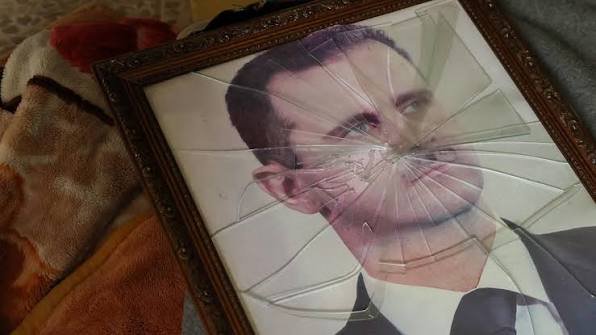
A Syrian court on Tuesday sentenced ousted President Bashar Assad and his younger brother Maher Assad to death in absentia for crimes against humanity and war crimes committed during the country’s 14-year conflict, which claimed an estimated half a million lives.
The verdict, delivered by the Fourth Criminal Court in Damascus, represents the first major sentences against Assad or members of his inner circle since the Assad family’s nearly five-decade rule came to an end in December 2024.
Judge Fakhareddine al-Aryan, while reading the verdict during a session broadcast live on state television, said Bashar Assad had used state institutions to carry out war crimes and crimes against humanity.
Assad’s maternal cousin, Atef Najib, was also sentenced to death in the same case. Najib was convicted over his alleged role in overseeing a security crackdown in the southern province of Daraa in 2011, an episode widely regarded as a catalyst for the uprising that eventually developed into a full-scale civil war.
Najib appeared in court under tight security, wearing a prison uniform and standing inside a cage as the judge announced the sentence. A crowd gathered outside the courthouse in central Damascus to hear the verdict.
Assad Brothers Fled to Russia
Bashar Assad and Maher Assad fled Syria following the collapse of the government in December 2024 after a rapid rebel offensive. The brothers subsequently received political asylum in Russia.
Syria’s new authorities have repeatedly called on Moscow to hand the former president and his brother over to face legal proceedings.
Tuesday’s verdict is being viewed as a significant step in efforts by Syria’s post-Assad authorities to hold senior figures of the former regime accountable for alleged abuses committed during the conflict.
Daraa Crackdown and the Start of the Uprising
Atef Najib, a former Syrian army brigadier general, served as head of the Political Security Branch in Daraa province in 2011. He was accused of overseeing a crackdown against protesters during the early days of the uprising.
The unrest began after more than a dozen teenagers were arrested and reportedly tortured for writing anti-government graffiti on a school wall in Daraa. The arrests triggered protests against the government’s security policies.
The authorities responded with a forceful crackdown, which fuelled wider demonstrations across the country. The unrest eventually escalated into a prolonged civil war involving the Syrian government, opposition groups, extremist organisations and foreign military powers.
Najib, who had been sanctioned by the US Treasury in April 2011, was later detained by Syria’s new authorities. His trial made him one of the highest-ranking former regime officials to face judicial proceedings since Assad’s government fell.
Maher Assad’s Role
Maher Assad, Bashar Assad’s younger brother, was the former commander of Syria’s elite 4th Armoured Division. Opposition activists have accused the division and its leadership of involvement in killings, torture, extortion and the operation of detention facilities during the conflict.
The division was considered one of the most powerful and heavily armed formations loyal to the Assad government and played a major role in military operations against opposition-held areas.
The allegations against Maher Assad have included responsibility for abuses committed by forces under his command, although he has remained outside Syria since the fall of the Assad government.
A Landmark Verdict for Post-Assad Syria
The sentencing marks a major moment for Syria’s new authorities as they attempt to address allegations of widespread abuses committed during the conflict.
The Syrian war, which began with protests in 2011, resulted in hundreds of thousands of deaths and displaced millions of people. It also left large parts of the country devastated and generated extensive allegations of torture, enforced disappearances, extrajudicial killings and other serious violations.
The death sentences against Assad, his brother and Najib are likely to have significant political and diplomatic implications, particularly because the Assad brothers remain in Russia.
The verdict also places renewed focus on demands for accountability for senior figures of the former Syrian government and on whether countries sheltering former regime officials will cooperate with Syria’s new authorities.