
Agencies | New Delhi:
India on Tuesday strongly rejected references to Jammu and Kashmir in a joint statement issued by China and Pakistan, calling them “unwarranted” and reaffirming that Jammu and Kashmir, along with Ladakh, remain integral and inalienable parts of the country.
In a statement, the Ministry of External Affairs (MEA) said India “categorically rejects unwarranted references” to the Union Territory of Jammu and Kashmir made in the joint statement released by the two countries.
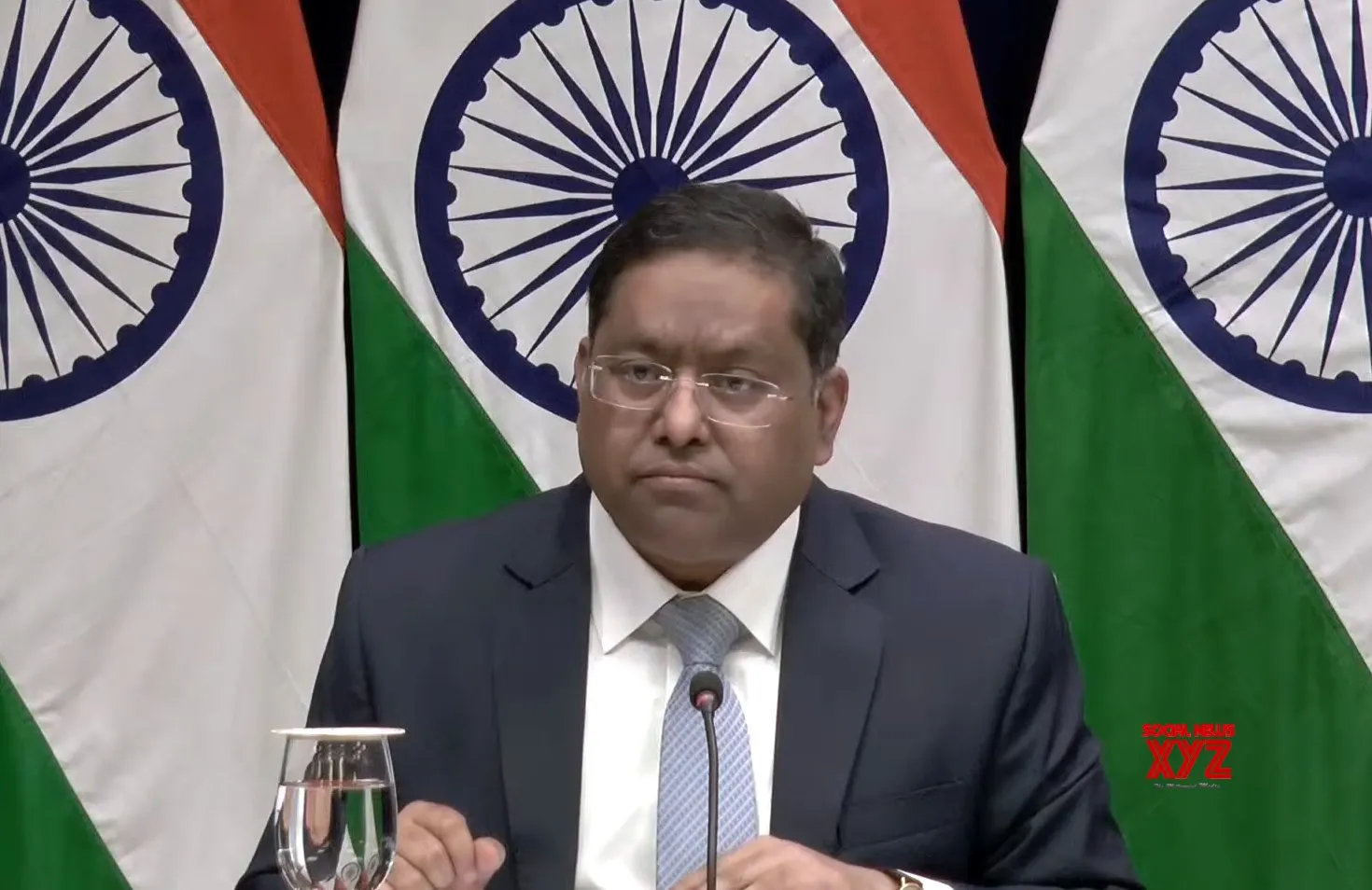
MEA spokesperson Randhir Jaiswal reiterated that India’s position on Jammu and Kashmir and Ladakh is “consistent and well known,” adding that both Union Territories “have been, are and will always remain” an integral part of India.
“The Government of India does not recognise the locus standi of any other country to comment on matters concerning its sovereignty and territorial integrity,” the MEA said.
The joint statement, released by Pakistan’s Ministry of Foreign Affairs, stated that Islamabad had briefed the Chinese side on developments related to Jammu and Kashmir. It added that China described the issue as a “left over from history” and called for it to be resolved “peacefully in accordance with the UN Charter, relevant UN Security Council resolutions and bilateral agreements.”
The wording closely mirrors language used in a similar China-Pakistan joint statement issued in 2024, which India had also rejected at the time as “unwarranted.”
India has consistently maintained that Jammu and Kashmir and Ladakh are integral parts of the country and has opposed what it describes as repeated attempts by Pakistan to internationalise the issue.
New Delhi has also repeatedly objected to references linked to the China-Pakistan Economic Corridor (CPEC), parts of which pass through territory that India says is under Pakistan’s “illegal and forcible occupation.”
India maintains that such projects violate its sovereignty and territorial integrity.
The MEA additionally rejected references to so-called “trans-boundary water resources cooperation” between China and Pakistan, arguing that the two countries do not share a common boundary in the concerned region.
“We have also seen references to the so-called ‘trans-boundary water resources cooperation’ between China and Pakistan. As the two countries do not share any boundary, the question of such cooperation does not arise,” the MEA said.
India also reiterated that it does not recognise the 1963 boundary agreement signed between China and Pakistan.
New Delhi has consistently asserted that issues related to Jammu and Kashmir are strictly bilateral in nature and has maintained that its territorial position on the region remains unchanged.