
Agencies | New Delhi:
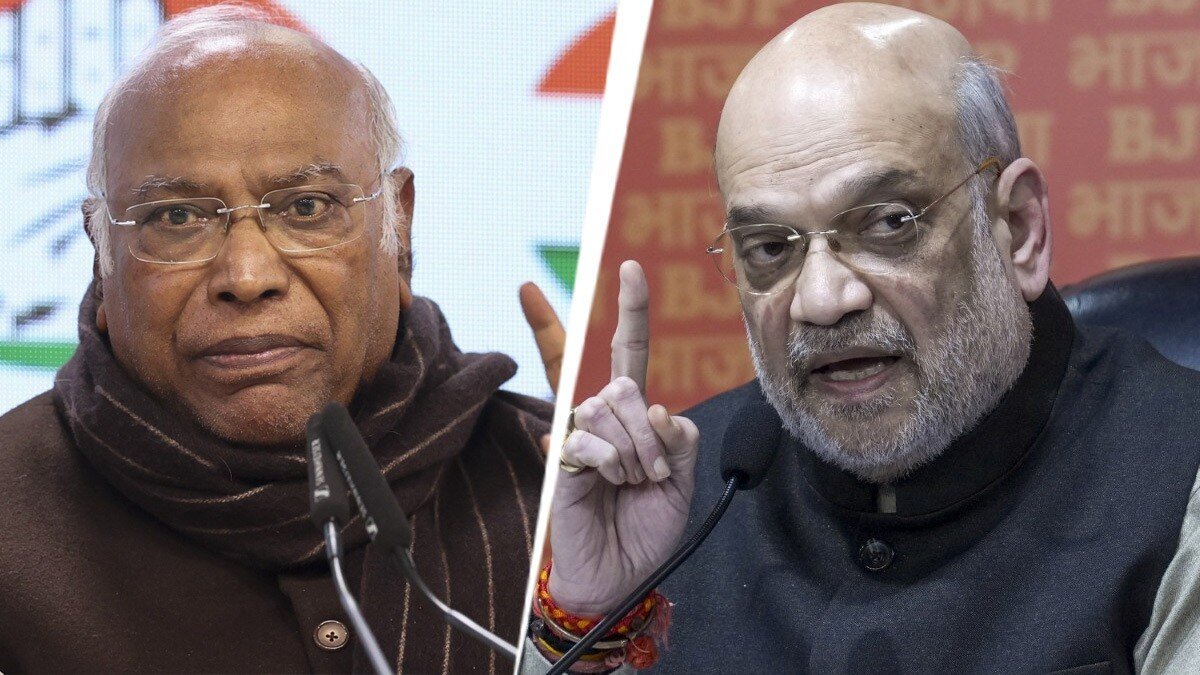
A heated exchange erupted in the Rajya Sabha on Thursday after the Bharatiya Janata Party (BJP) accused Leader of Opposition Mallikarjun Kharge of making a “threat of violence” against Union Home Minister Amit Shah during a debate on the Public Examinations (Prevention of Unfair Means) Amendment Bill, 2026.
Participating in the discussion on the proposed legislation, Kharge attacked the Centre over the police action against students protesting the alleged NEET paper leak and irregularities in the examination system at Jantar Mantar last week. He held the Home Minister responsible for the police response and demanded his resignation.
Alleging that students were subjected to lathi-charge and pellet guns, Kharge said, “Home Minister Amit Shah must answer for the police brutality. Why is he silent on the crackdown? He must clarify. If not, he must resign.”
He further remarked, “The Home Minister is hiding behind closed doors. We will drag you out someday,” triggering strong protests from members of the Treasury benches.
NDA members objected to the statement, describing it as a “threat of violence” against the Home Minister and accusing the Congress of lowering the standards of parliamentary discourse.
The sharp exchange came after Union Minister Jitendra Singh defended the Bill, arguing that the legislation was part of the NDA government’s efforts to strengthen the integrity of public examinations. He also accused the previous UPA government of failing to establish a national testing agency despite recommendations made decades ago.
“The suggestion to create a national testing agency dates back to 1992 during a Congress-led government. Subsequent committees, including one constituted during the UPA in 2010, strongly recommended such an agency. The NDA has completed the unfinished task by establishing the National Testing Agency (NTA),” Singh said.
Kharge, however, maintained that merely enhancing penalties and establishing fast-track courts would not eliminate paper leaks. He argued that the amended law failed to address the structural issues behind examination malpractice and alleged that the government introduced the legislation only after widespread protests over the NEET paper leak controversy.
The Public Examinations (Prevention of Unfair Means) Amendment Bill, 2026, was taken up for discussion in the Rajya Sabha a day after it was passed by the Lok Sabha.