Examiner News Desk | Srinagar:
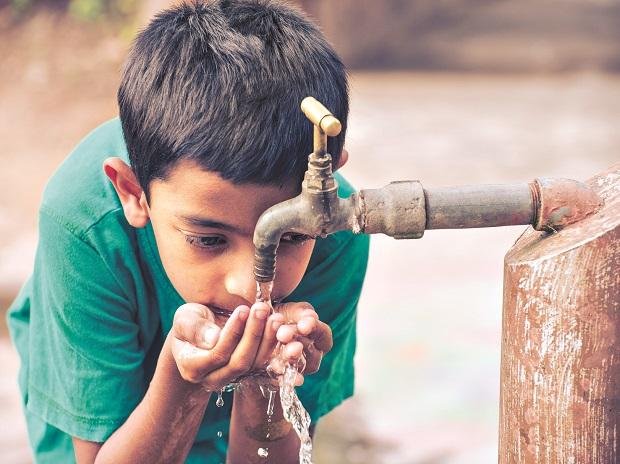
Nearly one in every five rural households in Jammu and Kashmir is still without a household tap water connection despite nearly seven years of the Centre’s flagship Jal Jeevan Mission, according to the latest data presented in the Lok Sabha.
Figures released by the Union Ministry of Jal Shakti show that as of July 18, 2026, only 15,64,303 of Jammu and Kashmir’s 19,24,945 rural households had been provided tap water connections, leaving 3,60,642 households yet to be covered.
The data places the Union Territory’s rural tap water coverage at 81.26 per cent, marginally below the national average of 82.09 per cent. This means that 18.74 per cent of rural households in J&K continue to depend on traditional or alternative sources for drinking water.
In contrast, neighbouring Ladakh has emerged as one of the country’s top-performing regions under the scheme. Of its 40,534 rural households, 39,835 have been connected through household tap water, leaving only 699 households uncovered and pushing coverage to an impressive 98.28 per cent.
Nationally, the Jal Jeevan Mission has expanded rural tap water coverage from just 3.24 crore households (16.72 per cent) at its launch in August 2019 to 15.89 crore households out of a total 19.36 crore by July 18, 2026. Even so, about 3.46 crore rural households across the country are yet to receive household tap water connections.
Replying to an Unstarred Question (No. 1962) in the Lok Sabha, Minister of State for Jal Shakti V. Somanna said the Union Cabinet has approved the extension of Jal Jeevan Mission 2.0 until December 2028 with an enhanced financial outlay and a restructured implementation framework aimed at strengthening rural drinking water infrastructure through structural reforms.
The Ministry reiterated that drinking water is a State subject, with State and Union Territory governments responsible for planning, implementation, operation and maintenance of water supply schemes. The Centre, it said, provides financial and technical support to accelerate coverage.
The Jal Jeevan Mission aims to provide every rural household with a functional tap water connection supplying at least 55 litres of potable water per person per day, meeting prescribed quality standards on a regular and sustainable basis.
The national figures also reveal significant disparities among States and Union Territories. Himachal Pradesh, Haryana, Punjab, Telangana, Goa and Mizoram have reported universal rural tap water coverage, while Rajasthan continues to have the highest number of uncovered households at 44.02 lakh, followed by Kerala (31.74 lakh) and Madhya Pradesh (27.85 lakh).
Although Jammu and Kashmir has fewer uncovered households than many larger States, its overall coverage remains below the national average. Ladakh, meanwhile, stands among the country’s best-performing regions, underscoring the contrasting pace of implementation within the two neighbouring Union Territories.
The figures were shared by the Ministry of Jal Shakti in the Lok Sabha on July 30, 2026, in response to a question on the progress of universal rural tap water coverage under the Jal Jeevan Mission.