
Agencies | Jammu:
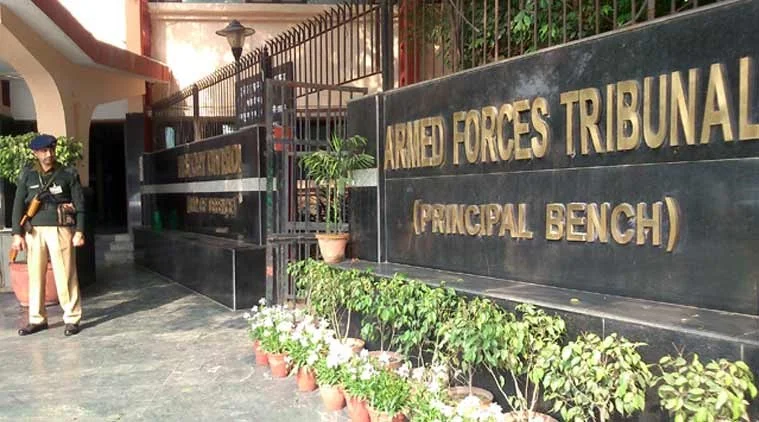
The Armed Forces Tribunal (AFT) has upheld the Indian Army’s decision to award ‘severe displeasure’ to Brigadier P Acharya, who was commanding a Rashtriya Rifles (RR) sector in Jammu and Kashmir’s Poonch region, in connection with the deaths of three civilians during interrogation following a militant ambush in December 2023.
The Chandigarh Bench of the AFT, comprising Justice Sudhir Mittal and Lt Gen Rambir Singh, in its order pronounced on August 20, held that there was no illegality or violation of due process in the Army’s action against the officer. The tribunal found no grounds to interfere with the administrative penalty.
The findings were reported by The Tribune.
The tribunal noted that the incident occurred in the aftermath of a deadly militant attack in which four Army personnel were killed, including two soldiers whose bodies were subsequently found to have been beheaded. The court acknowledged the intense emotions among troops following the attack but stressed that anger and the desire for retaliation could not override military discipline or legal obligations.
In its judgment, the AFT observed that the officiating commanding officer of 48 Rashtriya Rifles had directed a company commander to employ “slightly harsh” methods while questioning suspects in an effort to obtain information about the militant attack.
The tribunal further noted that Brigadier Acharya himself had displayed anger, assaulted a suspect and failed to ensure that officers serving under his command exercised appropriate restraint during the interrogation of civilians.
The Bench emphasised that soldiers are required to maintain discipline and follow the law even under extraordinarily difficult circumstances.
While recognising the emotional trauma caused by the ambush and the loss of fellow soldiers, the tribunal held that such emotions could not take precedence over established military standards and legal obligations.
The judgment underscored that even during wartime, members of the Indian armed forces are expected to maintain discipline and comply with the Geneva Conventions. Where human emotions come into conflict with military discipline and the law, the tribunal observed, “human emotions must yield.”
The sequence of events dates back to December 21, 2023, when an Army convoy came under a militant attack in the Poonch region.
At the time, 48 RR was operating Company Operating Bases at Dera Ki Gali (DKG), Mastan Dhara and Bafliaz under the command structure of 13 Sector RR, which was headed by Brigadier Acharya.
According to court records, Major Pankaj Singh, one of the company commanders, had sought permission from the officiating commanding officer, Major Raj Kumar, to conduct night firing. The request was approved.
Vehicles from the Bafliaz Company Operating Base were subsequently deployed for movement.
At around 3.37 pm, information was received that vehicles returning towards Bafliaz had come under a militant ambush. The commanding officer informed the Sector Commander, following which troops and an ambulance were dispatched to the site.
Four Army personnel were killed in the attack. Two of the deceased soldiers were subsequently found to have been beheaded, adding to the gravity of the incident and triggering a major search-and-cordon operation in the area.
Following the attack, security forces launched an extensive operation to locate the militants responsible.
Later that night, at around 10.30 pm, the Sector Commander sent a list of suspects to the commanding officer. The latter was directed to de-induct from the cordon the following morning.
Several civilians suspected of having information about the attack were subsequently rounded up and taken to COB Mastan Dhara, where interrogation began.
According to the records before the tribunal, three civilians subsequently died.
Following the deaths, Headquarters 16 Corps ordered a Court of Inquiry in December 2023 to examine the circumstances surrounding the deaths of the three civilians within the operational area of 48 RR.
The inquiry examined the conduct of officers involved in the interrogation process and the command and control exercised during the operation.
Brigadier Acharya was subsequently served a show-cause notice in April 2024. He was asked to explain why administrative action should not be initiated against him over allegations that he had failed to exercise proper command and control during the interrogation of civilians.
The allegations also included failure to prevent excessive and unlawful use of force that resulted in the deaths of three civilians, use of physical force against civilians, and failure to issue clear directions to officers under his command regarding the appropriate treatment of civilians.
After considering his response, the General Officer Commanding, 16 Corps, Nagrota, awarded Brigadier Acharya the penalty of ‘severe displeasure’ in July 2024, effective for a period of two years.
The officer subsequently challenged the decision before the Armed Forces Tribunal, arguing against the administrative action taken by the Army authorities.
After examining the record, the tribunal concluded that the Army authorities had followed the prescribed procedure and that the action taken against Brigadier Acharya did not suffer from any legal infirmity.
The Bench rejected the plea for judicial interference and upheld the penalty.
The tribunal’s ruling effectively confirms that the Army was within its authority to take administrative action against the officer based on the findings of the inquiry.
The judgment also highlights the principle that command responsibility extends beyond operational decisions to ensuring that personnel under an officer’s command act within the boundaries of law and military discipline.
According to court records, Brigadier Acharya informed the tribunal that he was told on the night of December 21, 2023, that he had been removed from command.
An Army Headquarters signal issued on December 22 attached him to Headquarters 25 Infantry Division. The Court of Inquiry was convened the following day to examine the circumstances surrounding the deaths of the three civilians.
The tribunal considered the sequence of events and the circumstances under which the Army personnel were operating following the ambush.
However, it held that the extraordinary nature of the situation could not absolve commanders and troops of their responsibility to maintain discipline and comply with legal norms.
The AFT ruling comes against the backdrop of the difficult security environment in the Pir Panjal region, where security forces have conducted sustained counter-militancy operations.
The tribunal’s observations underline the challenge faced by the armed forces in balancing operational requirements with the protection of civilians and adherence to established rules of engagement.
The Bench recognised that soldiers who had lost comrades in a particularly brutal attack could naturally experience anger, grief and a desire for revenge. Nevertheless, it made clear that such emotions could not justify conduct that violates military discipline or the law.
By upholding the penalty, the tribunal reaffirmed the principle that commanders remain responsible for maintaining restraint and lawful conduct among personnel under their command, particularly when civilians are involved.
The decision also brings a judicial conclusion to the challenge mounted by Brigadier Acharya against the administrative action taken following the 2023 incident.
The AFT ultimately dismissed his challenge, holding that the Army authorities had acted lawfully and had followed due process while awarding him the penalty of ‘severe displeasure’.