
Examiner News Desk
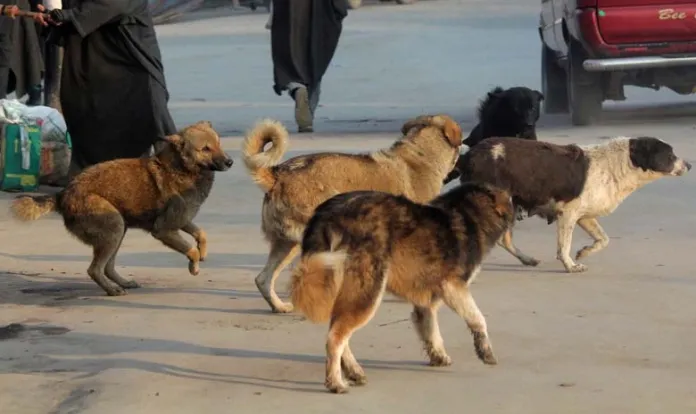
The growing menace of stray dogs in Kashmir Valley has transformed from a civic inconvenience into a full-fledged public safety crisis. From Srinagar’s busy marketplaces to remote villages in South and North Kashmir, residents are increasingly living under the fear of dog attacks, especially during early morning and evening hours. Children walking to schools, elderly citizens, street vendors, sanitation workers and even tourists have become vulnerable targets.
Despite repeated public outrage, increasing dog-bite cases and years of complaints, the question being asked across the Valley is becoming louder: Has the government failed to handle the stray dog menace in Kashmir?
A Crisis Visible on Every Street
In almost every district of Kashmir, stray dogs roam freely in large packs. Hospitals continue to witness a steady rise in dog-bite cases, with anti-rabies clinics often overcrowded. In several areas, parents hesitate to send children alone to schools, particularly during winter mornings when visibility is low and stray dog activity is high.
The problem is especially severe around garbage dumping sites, markets, hospitals, bus stands and residential colonies where food waste attracts dogs in large numbers. Many localities in Srinagar, Anantnag, Baramulla and Budgam have repeatedly reported aggressive dog attacks, some resulting in serious injuries.
For many residents, the fear has become part of daily life.
Government Measures: Enough or Not?
Over the years, authorities have introduced sterilisation programmes, anti-rabies vaccination drives and dog-catching squads under the Animal Birth Control (ABC) programme. Municipal bodies have claimed that thousands of stray dogs have been sterilised in the Valley.
However, the visible ground reality tells a different story.
The stray dog population continues to rise, while attacks remain frequent. Citizens often complain that response systems are slow and ineffective. In many areas, complaints filed with municipal authorities reportedly receive delayed action or no action at all.
One of the major reasons behind the worsening crisis is the lack of proper implementation and coordination among departments. Municipal bodies, health departments, veterinary services and local administrations often work in isolation instead of following a unified strategy.
The absence of modern animal shelters, poor waste management systems and shortage of trained manpower have further weakened the response.
Garbage Mismanagement Fuelling the Problem
Experts believe the stray dog crisis cannot be solved without addressing Kashmir’s growing garbage problem. Open dumping of waste in residential areas and inadequate waste disposal systems provide a constant food source for stray dogs.
In Srinagar and several district headquarters, overflowing garbage bins and illegal dumping sites have effectively become feeding zones for dog packs. As long as food availability remains unchecked, the stray dog population is unlikely to decline significantly.
This has exposed another administrative failure: poor urban planning and weak sanitation management.
Human Rights vs Public Safety Debate
The issue has also triggered a sensitive debate between animal rights activists and citizens demanding stronger action. Animal welfare groups oppose mass culling and advocate humane population control measures such as sterilisation and vaccination.
At the same time, many residents argue that public safety cannot be ignored while waiting years for long-term sterilisation policies to show results.
The administration finds itself trapped between legal restrictions, animal rights concerns and growing public anger.
Yet critics argue that the real failure lies not in legal limitations but in the lack of urgency, infrastructure and execution.
Impact on Tourism and Public Image
Kashmir heavily depends on tourism, but recurring incidents involving stray dogs also affect the Valley’s image among visitors. Tourists frequently report being chased or attacked in popular destinations, particularly during early mornings and nights.
In a region trying to project itself as a safe and welcoming tourist destination, the unchecked stray dog menace raises concerns about urban management and civic safety.
Health Risks Beyond Dog Bites
Apart from physical attacks, the crisis also carries serious health risks. Rabies remains a deadly concern, especially in areas where awareness and access to timely medical treatment remain limited.
Health experts warn that delayed vaccination after dog bites can prove fatal. While anti-rabies injections are available in major hospitals, rural areas often face shortages or delayed access.
This makes prevention even more critical.
What Needs to Be Done?
Experts believe Kashmir requires a comprehensive and scientific strategy rather than temporary responses after every public outcry. Key steps include:
- Expanding sterilisation and vaccination programmes on a large scale
- Improving waste management and removing open garbage dumps
- Establishing modern dog shelters and rescue centres
- Increasing emergency response teams in urban and rural areas
- Launching public awareness campaigns on safety and rabies prevention
- Strengthening coordination between municipal bodies and health departments
Most importantly, authorities need a time-bound action plan with measurable results.
A Growing Test for Governance
The stray dog menace is no longer just a municipal issue. It has become a test of governance, public safety and administrative accountability in Kashmir.
Residents are not demanding cruelty against animals; they are demanding safety, planning and effective governance. The continued rise in attacks despite years of promises has deepened public frustration and eroded confidence in the system’s ability to handle basic civic challenges.
Until visible and sustained action is taken, the question will continue to haunt the administration across Kashmir’s streets:
Has the government truly failed to control the stray dog menace, or is it still searching for the political and administrative will to act decisively?