Agencies | Washington:
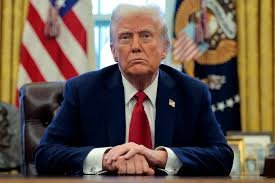
Pressure on Iran is intensifying as the United States tightens its grip through a sustained blockade of the Strait of Hormuz, in what analysts describe as a calculated economic chokehold. According to a report by The Wall Street Journal, US President Donald Trump has directed his aides to prepare for a “long-term siege” on Iran, marking a strategic shift from short-term escalations to prolonged economic pressure.
The report indicates that the US administration has weighed options such as renewed military strikes or a complete pullback, ultimately concluding that a sustained blockade presents a lower-risk yet highly effective alternative.
At the centre of this strategy lies the Strait of Hormuz—one of the world’s most critical oil transit routes. By restricting Iran’s ability to move oil tankers through this narrow passage, Washington is targeting Tehran’s primary revenue source. Iranian oil exports have slowed significantly, with immediate consequences for the country’s economy.
Recent assessments suggest Iran may have only 12 to 22 days of available oil storage capacity remaining. With production continuing and exports constrained, the country is rapidly running out of space to store crude oil. Once storage capacity is exhausted, Iran may be forced to cut production, dealing a direct blow to state revenues heavily reliant on oil sales.
In response, Iran has reportedly turned to unconventional measures, including reactivating ageing vessels such as the long-retired “ghost ship” M/T Nasha to store excess crude at sea. However, such floating storage solutions are expensive, inefficient, and offer only temporary relief.
The broader economic implications are becoming increasingly severe. Reduced export revenues are straining Iran’s ability to stabilise its currency, manage inflation, and finance essential imports. Prolonged pressure could deepen these economic challenges significantly.
For the United States, officials view the blockade as a strategic tool to weaken Iran without triggering a full-scale military confrontation. However, the approach carries inherent risks, including potential retaliation in the Gulf region and increased volatility in global oil markets.
As the situation evolves, it is clear that the standoff has entered a prolonged phase, with Iran facing a sustained economic battle where time, storage capacity, and financial resilience are rapidly diminishing.