
Agencies | Dubai:
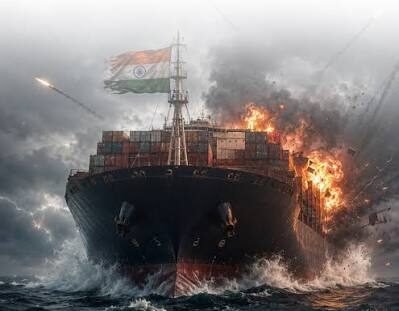
The widening military conflict in West Asia has claimed the lives of six Indian seafarers, bringing into sharp focus the grave risks faced by thousands of Indian maritime workers navigating some of the world’s most volatile shipping routes.
The fatalities include crew members caught in crossfire and military strikes near strategic maritime choke points such as the Strait of Hormuz and the Gulf of Oman. In the latest incident, a strike on the Palau-flagged oil tanker MT Settebello resulted in the deaths of three Indian sailors—a cadet, a fitter, and the chief engineer—from Himachal Pradesh, Uttar Pradesh, and Andhra Pradesh.
As New Delhi lodges formal diplomatic protests and deploys emergency response mechanisms, the crisis has highlighted a sobering reality: Indian nationals now constitute a significant share of the global commercial shipping workforce, placing them increasingly on the frontlines of geopolitical conflicts.
India is currently the world’s third-largest supplier of seafarers, accounting for nearly 10 per cent of the global merchant navy workforce. More than 300,000 Indian maritime professionals serve aboard international container ships, bulk carriers, and oil tankers. Their strong technical expertise, rigorous training standards, and proficiency in English have made them highly sought after by global shipping companies.
As a result, Indian crew members are present on a vast number of commercial vessels transiting the Persian Gulf, Red Sea, and Gulf of Oman. However, with regional tensions involving the United States, Iran, and allied groups continuing to intensify, these vital trade corridors have increasingly become high-risk zones, leaving civilian merchant sailors vulnerable to becoming unintended casualties of conflict.
Economic Incentives Amid Growing Risks
Despite the dangers, the maritime profession remains an attractive career path for many young Indians due to its significant financial rewards. Employment on foreign-flagged vessels offers dollar-denominated salaries that far exceed earnings available in many comparable land-based professions within India.
A cadet or junior engineer at sea can often earn several times more than an entry-level engineering professional onshore. Additionally, Indian tax regulations exempt seafarers from income tax if they spend more than 183 days outside the country during a financial year.
The prospect of accumulating substantial savings, investing in property, and achieving financial security at a relatively young age continues to draw thousands of candidates from middle-class families into the maritime sector, despite its inherent occupational hazards.
The Growing Threat of ‘Grey Fleet’ Operations
The risks are further amplified by the nature of vessels operating in conflict-prone waters. Many seafarers find themselves aboard ships associated with the so-called “grey” or “dark fleet”—vessels that often operate with limited transparency and, in some cases, outside conventional monitoring systems to transport sanctioned oil and fuel cargoes.
Crew members typically have little influence over voyage assignments or knowledge of the geopolitical sensitivities associated with their destinations. Routing decisions are largely determined by shipping companies, charterers, and vessel registries.
Seafarers’ unions have repeatedly called for stronger international protections, including the right for sailors to refuse assignments to high-risk conflict zones without fear of professional repercussions. However, limited global enforcement mechanisms mean that thousands of Indian seafarers continue to navigate increasingly dangerous waters, playing an indispensable role in sustaining global trade while facing escalating threats to their safety.