
Examiner Editoral Box:
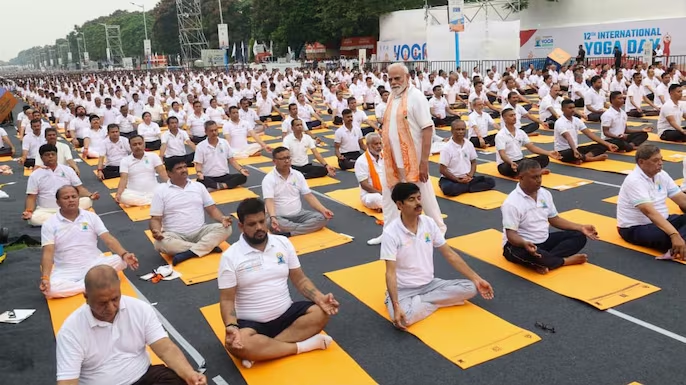
Every year on June 21, millions of people across India and the world participate in International Yoga Day. Parks, schools, government offices, and public spaces become centers of mass yoga sessions. The event receives extensive media coverage and strong support from the government. This raises an important question: Should Yoga Day be celebrated like a national event?
There is no doubt that yoga is one of India’s greatest contributions to the world. Originating thousands of years ago, it promotes physical fitness, mental well-being, and a balanced lifestyle. The recognition of International Yoga Day by the United Nations has enhanced India’s cultural influence and global image. For many, celebrating Yoga Day on a grand scale is a matter of national pride.
Supporters argue that treating Yoga Day as a national event encourages people to adopt healthier habits. In a time when stress, obesity, and lifestyle diseases are increasing, yoga offers a simple and affordable solution. Large-scale celebrations create awareness and motivate citizens to include yoga in their daily lives. Moreover, such events showcase India’s rich cultural heritage to the world.
However, critics question whether Yoga Day should receive the same level of attention as national events such as Independence Day or Republic Day. These occasions commemorate significant moments in the nation’s history and symbolize democratic values and national unity. Yoga Day, on the other hand, focuses on a particular practice and lifestyle. Some believe that excessive official promotion may make the event appear more political than cultural or health-oriented.
Another concern is whether a one-day celebration truly achieves its purpose. While mass yoga sessions create visibility, the real benefits of yoga come from regular practice. Critics argue that resources spent on grand events could instead be directed toward long-term health and fitness programs in schools and communities.
The debate ultimately comes down to how society defines a national event. If national events are meant to celebrate achievements, culture, and values that unite people, Yoga Day certainly has a strong claim. If they are reserved only for historical and constitutional milestones, then Yoga Day may be better viewed as an important cultural and health observance rather than a national event.
International Yoga Day is undoubtedly significant for India and the world. Whether it should be celebrated like a national event remains open to discussion. What is certain, however, is that the true spirit of Yoga Day lies not in large gatherings or official ceremonies, but in embracing a healthier and more balanced way of life.