
Input from Agencies | New Delhi/Islamabad:
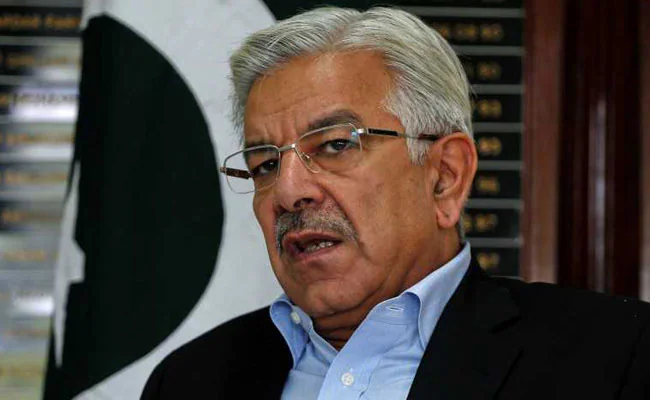
Fresh tensions have surfaced between India and Pakistan after Pakistan’s Defence Minister Khawaja Asif warned that Islamabad could resort to military action if it perceives a serious threat to its water security, amid the ongoing fallout from India’s decision to place the Indus Waters Treaty (IWT) in abeyance.
“The moment we feel that our national security and water are being threatened, we will go to war against India. Definitely,” Asif said during an interview with ARY News, escalating rhetoric over the future of one of the world’s longest-standing water-sharing agreements.
The remarks come weeks after India suspended the implementation of the 1960 Indus Waters Treaty following the April 2025 terror attack in Pahalgam that claimed 26 lives. New Delhi has maintained that the treaty will remain in abeyance until Pakistan takes “credible and irreversible” action against cross-border terrorism.
A Treaty That Survived Wars
The Indus Waters Treaty was signed in Karachi on September 19, 1960, by then Indian Prime Minister Jawaharlal Nehru and Pakistani President Ayub Khan, with the World Bank acting as a mediator.
The agreement divided the six rivers of the Indus basin between the two countries. Pakistan received rights over the western rivers — Indus, Jhelum and Chenab — while India retained control over the eastern rivers — Ravi, Beas and Sutlej. The arrangement ensured uninterrupted water supplies to Pakistan’s agriculture-dependent economy and was widely regarded as a rare example of sustained cooperation between the two rivals.
Despite wars in 1965, 1971 and 1999, as well as periods of heightened diplomatic and military tensions, the treaty remained intact and continued to function through the Permanent Indus Commission.
Why India Wants a Review
India has increasingly argued that the treaty no longer reflects present-day realities. Officials have cited climate change, rising population pressures, evolving energy requirements and repeated procedural disputes over hydropower projects as reasons for seeking modifications to the agreement.
New Delhi has also accused Pakistan of repeatedly delaying Indian infrastructure projects through arbitration and legal mechanisms, despite such projects being permissible under the treaty’s provisions.
India formally sought amendments to the agreement in 2023 and reiterated its demand in 2024, signalling growing dissatisfaction with the existing framework.
Pahalgam Attack Changed the Calculus
The April 2025 terror attack in Pahalgam marked a turning point in India’s approach. Linking water cooperation to security concerns, the Government of India announced that the treaty would be held in abeyance until Pakistan demonstrates tangible action against terrorism emanating from its soil.
Officials argue that a treaty founded on cooperation and mutual trust cannot function normally in an environment marked by persistent security threats.
What Suspension Means
Contrary to public speculation, India has not stopped the flow of water into Pakistan. Experts note that the current infrastructure does not permit an immediate diversion or storage of the massive volumes carried by the western rivers.
However, the suspension effectively freezes cooperative mechanisms under the treaty and allows India to accelerate the utilisation of its permissible share of water through hydropower, storage and infrastructure projects on the western rivers.
Why Pakistan Is Concerned
Pakistan’s economy remains heavily dependent on the Indus basin. Agriculture, food security, rural livelihoods and a significant portion of the country’s power generation rely on water flowing through the river system.
As one of the world’s most water-stressed nations, Pakistan fears that any long-term reduction in water availability could have serious economic and social consequences. This concern has prompted strong reactions from Pakistani leaders, who have described India’s move as a potential threat to regional stability.
A Defining Moment for the Treaty
While experts agree that India currently lacks the infrastructure to halt river flows on a large scale, they believe New Delhi can gradually expand its utilisation of water resources permitted under the treaty, potentially reducing downstream flows during certain periods.
More than six decades after it was signed, the Indus Waters Treaty now faces its most significant challenge. Once regarded as an untouchable symbol of cooperation between two adversaries, the agreement has become a focal point in the broader India-Pakistan security equation, with far-reaching implications for diplomacy, regional stability and water security in South Asia.