
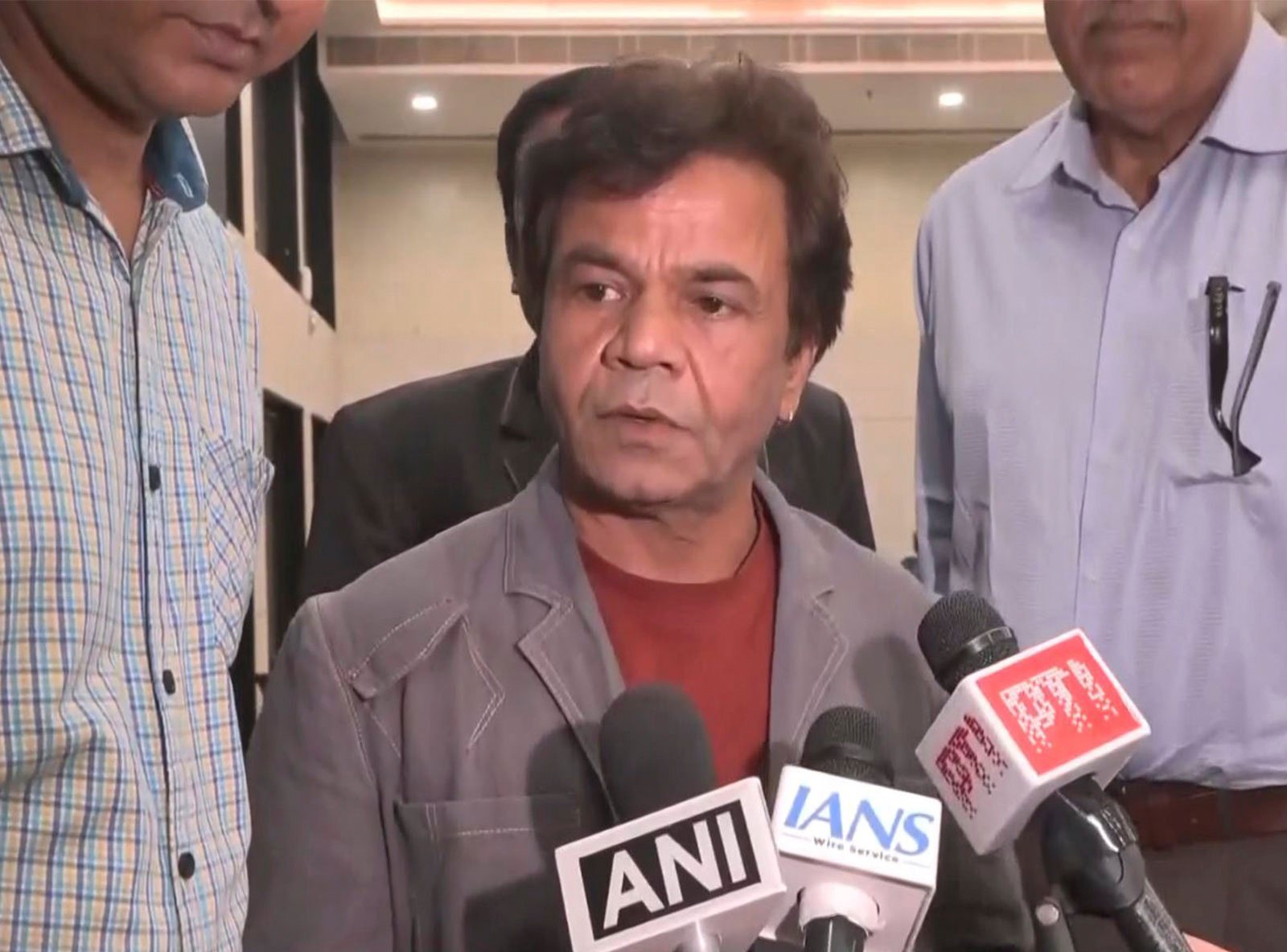
Agencies | New Delhi:
The Supreme Court on Tuesday directed actor Rajpal Yadav to deposit Rs 5 crore with its Registry by September 9 as a condition for granting him interim relief from surrendering to serve a three-month sentence in seven cheque-bounce cases involving film producer-financier Murli Projects Pvt Ltd.
A bench headed by Chief Justice Justice Joymalya Bagchi, along with Justice V. Mohana, issued a conditional notice on Yadav’s plea challenging the Delhi High Court’s July 10 judgment, which upheld his conviction and three-month imprisonment in the cases under Section 138 of the Negotiable Instruments Act. The matter is scheduled to come up next on September 15.
The order came after Yadav’s plea was orally mentioned before the bench.
The Delhi High Court had directed Yadav to surrender and serve his sentence, setting September 10 as the deadline, after dismissing his criminal revision petitions challenging the conviction and sentence.
The cases stem from seven complaints filed by Murli Projects against Yadav, his wife Radha Rajpal Yadav, and their film production company over the dishonour of seven cheques issued in connection with financing for the film “Ata Pata Lapata.”
According to court records, Murli Projects advanced Rs 5 crore in 2010 for completion of the film. As the film’s release was delayed, the parties entered into a series of agreements, with the repayment amount revised at different stages.
Yadav has contended that the original transaction was an investment in the film rather than a loan and that the cheques were issued as security.
Under a supplementary agreement executed in August 2012, eight post-dated cheques were issued, with the repayment obligation linked to the film’s release.
The dispute escalated after Murli Projects approached the Delhi High Court in 2012 in relation to the film and obtained an order restraining the petitioners from creating third-party interests in the film’s rights.
Seven complaints under Section 138 of the Negotiable Instruments Act were subsequently filed following the dishonour of seven cheques.
Yadav, however, has relied on a subsequent consent agreement dated April 21, 2013, under which the parties allegedly agreed to a full and final settlement of Rs 10.40 crore, including Rs 40 lakh already paid through RTGS.
Under the settlement, four fresh post-dated cheques were issued as security. Yadav’s plea claims that the earlier eight security cheques were required to be returned under the agreement, but Murli Projects instead continued with the cheque-bounce proceedings.
Before the Supreme Court, Yadav has argued that the subsequent settlement rendered the original complaints unsustainable.
He has relied on the Supreme Court’s judgment in Gimpex Pvt Ltd v. Manoj Goel, contending that once parties enter into a settlement, a complaint relating to dishonour of the earlier cheques cannot continue and that a fresh cause of action would arise only if cheques issued under the settlement were subsequently dishonoured.
The plea also refers to a subsequent Delhi High Court judgment applying the Gimpex principle, arguing that a settlement agreement supersedes the original dispute concerning the earlier cheques.
A trial court convicted Yadav and the other accused in April 2018 in all seven complaints. Yadav was initially sentenced to six months’ imprisonment and fined Rs 1.60 crore in each case.
The sentence was subsequently reduced. On May 22, 2019, Yadav was sentenced to three months’ simple imprisonment and fined Rs 1.35 crore in each of the seven cases, with the sentences directed to run concurrently.
The Sessions Court upheld the conviction in 2024 and maintained the three-month sentence and Rs 1.35 crore fine in each case.
The Delhi High Court, in its July 10, 2026 judgment, declined to interfere with the conviction and sentence and also rejected Yadav’s plea seeking probation.
The High Court took note of his conduct during the prolonged proceedings and the opportunities given to him to settle the dispute. It observed that Yadav had given several undertakings to make payments to the complainant but failed to honour them.
The court recorded that approximately Rs 2.25 crore had eventually been paid during the proceedings, but said Yadav later declined to make further payments.
The High Court therefore held that he did not merit the discretionary benefit of probation.
At the same time, it directed that the Rs 2.25 crore already deposited and released to Murli Projects be adjusted against the fine amount payable.
The Supreme Court’s order on Tuesday provides Yadav temporary relief from surrendering, subject to his depositing Rs 5 crore with the Registry by September 9.
The actor’s challenge to the conviction and sentence will be considered further when the matter comes up before the Supreme Court on September 15.