
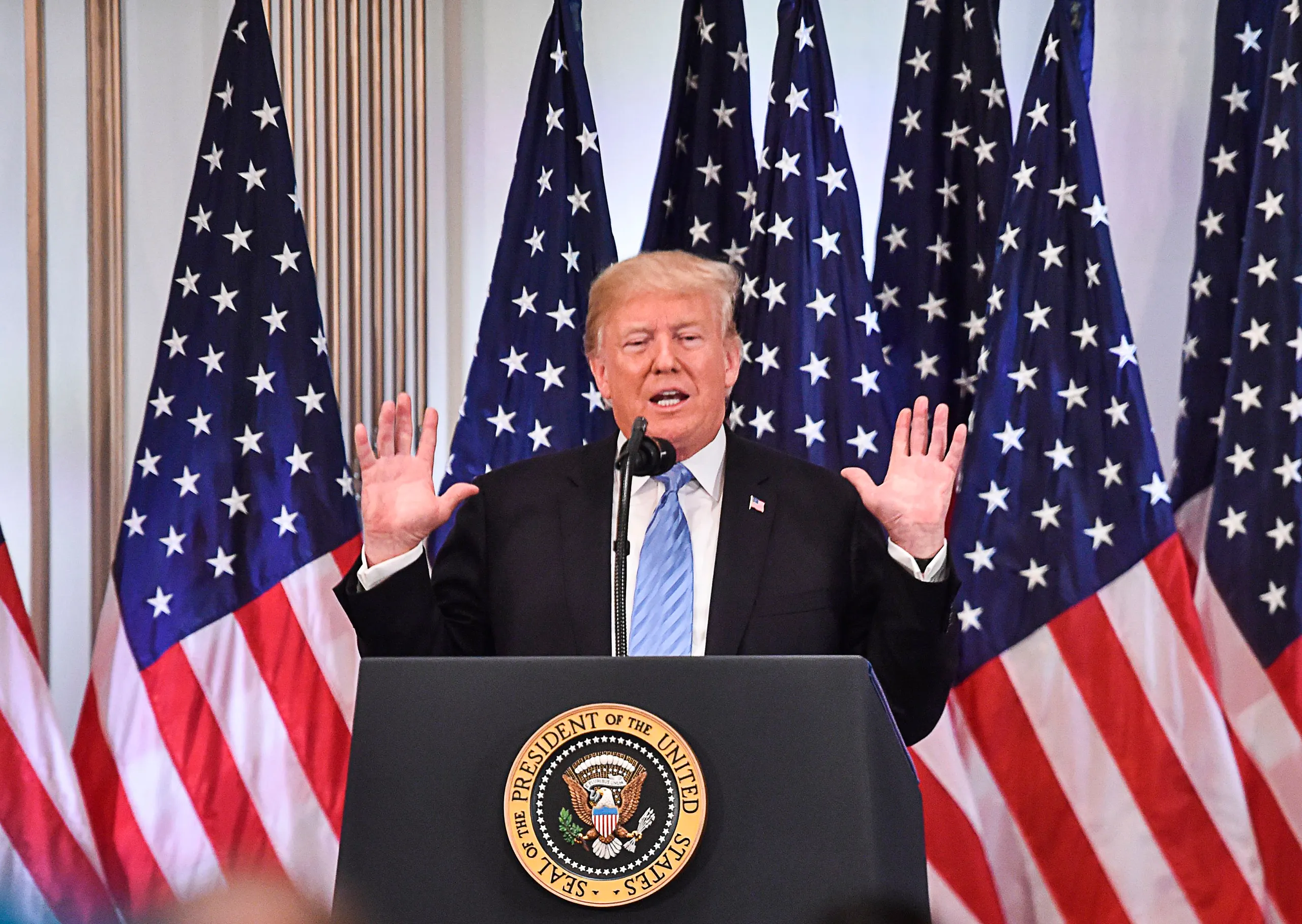
Agencies | Washington: Fresh diplomatic momentum is building in the West Asia conflict, with United States President Donald Trump indicating that stalled peace talks with Iran could resume within days, even as Israel and Lebanon move towards rare direct negotiations.
In an interview, Trump suggested that a new round of US-Iran discussions could take place in Pakistan “over the next two days,” with officials from Washington, Tehran, and Islamabad also signalling the possibility of renewed engagement later this week. However, no formal schedule has been finalised so far.
The development comes amid heightened tensions in the strategically crucial Strait of Hormuz, where the United States has begun enforcing a naval blockade on Iranian ports. In response, Iran is reportedly considering a temporary pause in shipments through the waterway to avoid further escalation and keep the door open for negotiations.
Diplomatic efforts are further complicated by deep mistrust between the two sides. US Vice President JD Vance acknowledged that while progress has been made, longstanding distrust remains the biggest obstacle to a breakthrough. Washington continues to insist on firm guarantees that Iran will not pursue nuclear weapons as a precondition for any long-term agreement.
Meanwhile, Pakistan has stepped up its role as a mediator, pushing for a 45-day extension of the fragile ceasefire and facilitating backchannel communication between the two sides. Prime Minister Shehbaz Sharif is also expected to engage regional stakeholders in Saudi Arabia and Turkiye to sustain diplomatic momentum.
In a parallel development, Israel and Lebanon have agreed to initiate direct negotiations following talks mediated by US Secretary of State Marco Rubio in Washington. The move is being seen as a rare and significant step between the two long-time adversaries, although Israeli strikes on southern Lebanon continue to threaten the fragile peace process.
The broader conflict remains volatile, with Hezbollah claiming multiple attacks on Israeli positions, continued airstrikes in Lebanon, and regional tensions spilling over into Iraq and the Gulf. Iran has also raised fresh demands for compensation from several Gulf nations, accusing them of enabling US-Israel actions.
Amid these developments, global concerns persist over energy security and trade disruptions, particularly as oil shipments through the Strait of Hormuz remain uncertain.
While diplomatic signals suggest a willingness to return to the negotiating table, the path to de-escalation remains complex, with competing demands, ongoing military activity, and geopolitical rivalries continuing to shape the crisis.