
Examiner Bureau | Jammu:
The Jammu and Kashmir government has introduced stringent new measures to curb drug trafficking, mandating immediate passport impounding and travel restrictions against individuals arrested in narcotics-related cases under the NDPS Act.
According to the newly issued Standard Operating Procedure (SOP), law enforcement agencies have been directed to initiate swift legal and administrative action against accused drug traffickers to prevent them from fleeing the country or continuing cross-border narcotics operations.
The SOP lays down a detailed step-by-step procedure beginning with the “identification, documentation and preparation of dossier” of the accused.
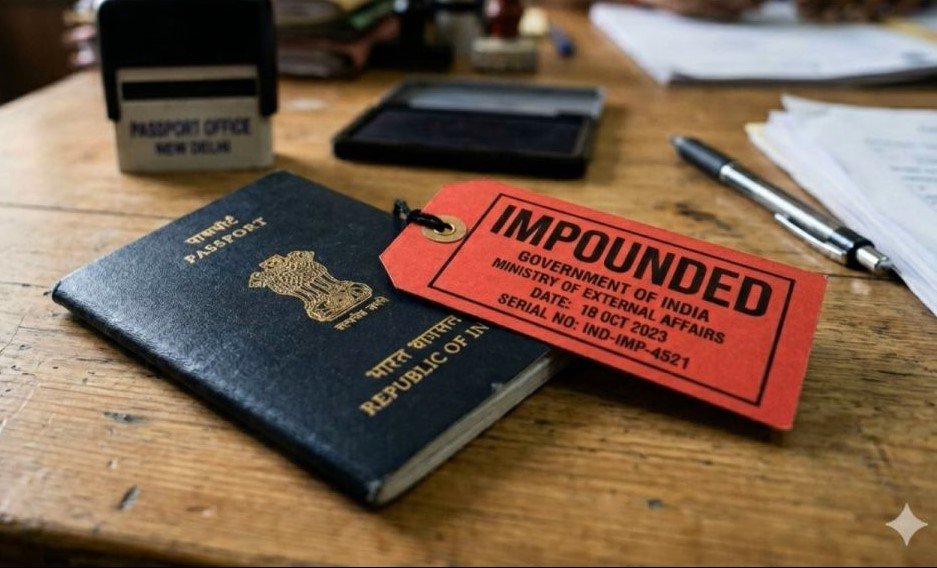
Under the new guidelines, if a passport is found in the physical possession of an accused at the time of arrest, the Investigating Officer (IO) is required to seize it immediately and initiate action for its impounding under Section 13 of the Passports Act, 1967.
The seizure must be officially recorded in the arrest memo as well as the case diary, while the confiscated passport is to be deposited with the concerned Regional Passport Officer within 48 hours.
Look Out Circulars to Prevent Escape
The SOP further directs the IO and the concerned Superintendent of Police (SP) or Senior Superintendent of Police (SSP) to simultaneously issue a Look Out Circular (LOC) request to the Bureau of Immigration under the Ministry of Home Affairs.
The LOC is aimed at preventing the accused from leaving India through airports, seaports or land immigration checkpoints.
Officials said the request will be sent through designated police communication channels, including official email, fax or online portals, followed by a formal communication through registered post.
Copies of the LOC request will also be shared with the CISF authorities at Srinagar and Jammu airports and the Director General of Police, Jammu and Kashmir.
Passport Suspension and Blacklisting Measures
The SOP also authorises police authorities to seek suspension, revocation or emergency impounding of passports in serious cases involving organised drug trafficking or trans-national narcotics networks.
After approval from the SP or SSP, the Investigating Officer will formally approach the Regional Passport Officer in Srinagar or Jammu seeking cancellation or impoundment of the passport.
In cases involving high flight risk or international trafficking links, police may invoke Section 10A of the Passports Act for immediate suspension of the passport pending full revocation proceedings.
The application to passport authorities must include supporting documents such as certified copies of the FIR, detention or remand orders, recent photographs of the accused and the seized passport, if available.
Additionally, police authorities will request the Ministry of External Affairs’ Consular, Passport and Visa Division to flag or blacklist the passport number in the Immigration, Visa and Foreigners Registration and Tracking (IVFRT) system to ensure the accused cannot leave the country.
Officials said the SOP forms part of the administration’s broader anti-drug strategy aimed at dismantling narcotics networks, curbing narco-terrorism and strengthening legal action against organised drug trafficking in Jammu and Kashmir.