
By: Syed Salman
The demolition drive carried out in the Raika Bandi area of Sidhra on the outskirts of Jammu has triggered a major political, legal and humanitarian debate in Jammu and Kashmir. Conducted just days before Eid-ul-Zuha, the operation left dozens of Gujjar and Bakarwal tribal families homeless, sparking outrage among civil society groups, political parties and tribal rights activists, who have questioned whether the action violated constitutional safeguards, the Forest Rights Act, and principles of natural justice.
The administration has maintained that the operation was part of an anti-encroachment drive aimed at retrieving forest land. However, critics argue that the timing, manner and selective nature of the demolitions have raised serious concerns about whether a particular community was disproportionately targeted.
The Demolition Drive
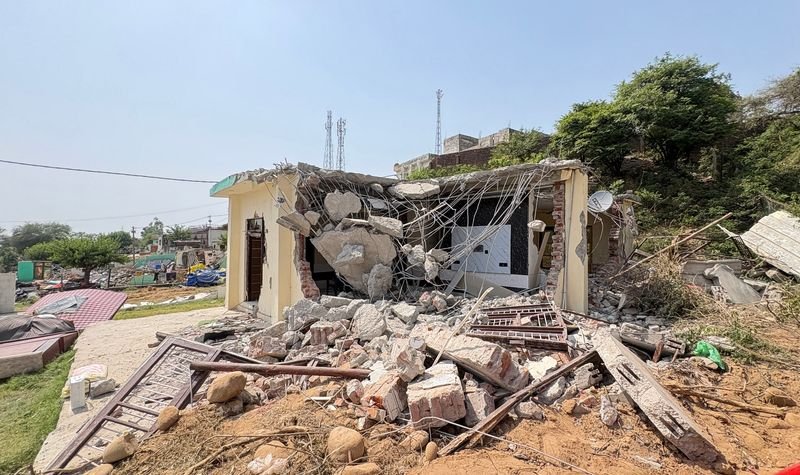
Officials from the Forest Department, Revenue Department and Police jointly carried out the demolition operation in Sidhra’s Raika Bandi forest belt. Around 25 structures were razed and nearly 60 kanals of forest land were reportedly retrieved during the drive.
Many of the affected families claimed they had been living in the area for decades and alleged that the administration acted without serving proper notices or offering rehabilitation.
Several families said they belonged to the nomadic Gujjar-Bakarwal community, a Scheduled Tribe group recognised under the Constitution of India. Some residents claimed their names existed in voter records dating back to the 1950s, arguing that the settlements were not recent encroachments but long-standing habitations.
The demolitions took place in the run-up to Eid-ul-Zuha, one of the most significant festivals for Muslims, intensifying public anger and emotional distress among the affected families.
Forest Rights Act and Legal Questions
At the centre of the controversy lies the Forest Rights Act (FRA), 2006 — a landmark legislation enacted to recognise and protect the rights of forest-dwelling Scheduled Tribes and other traditional forest dwellers.
The Act provides legal recognition to communities residing in forest areas and lays down procedures before eviction or displacement can take place. Importantly, claims under the Act are required to be examined through Gram Sabhas and designated committees before any eviction proceedings are initiated.
Legal experts and tribal activists have raised several critical questions:
- Were the affected families surveyed under the FRA?
- Were claims of forest rights examined before demolition?
- Was due process followed?
- Were adequate notices served?
- Was rehabilitation considered?
- Did the authorities distinguish between commercial encroachers and vulnerable tribal families?
These questions became more significant after the Jammu and Kashmir Government constituted a two-member fact-finding committee to examine alleged violations of the Forest Rights Act in the Sidhra demolitions.
The committee, formed by the Department of Tribal Affairs, was tasked with investigating whether the rights of tribal families were violated during the operation.
Constitutional and Humanitarian Dimensions
The Indian Constitution guarantees equality before law under Article 14 and protection of life and personal liberty under Article 21. Over the years, Indian courts have expanded the interpretation of Article 21 to include the right to shelter and dignified living.
The Supreme Court has repeatedly held that even in cases of illegal occupation, authorities must follow humane procedures and ensure due process before eviction.
Human rights observers argue that demolitions conducted without proper rehabilitation, particularly against economically vulnerable communities, risk violating these constitutional protections.
The humanitarian dimension became even sharper because the operation occurred days before Eid-ul-Zuha. Families alleged that food supplies, livestock shelters, household goods and children’s belongings were buried under debris. Women and elderly residents were seen sitting amid the rubble as temperatures soared in Jammu.
For many observers, the issue was not merely about encroachment removal, but about the state’s responsibility towards marginalised tribal communities.
Political Reactions Intensify
The demolitions triggered sharp political reactions across Jammu and Kashmir.
Minister for Forest, Ecology and Environment Javed Ahmed Rana termed the drive “illegal and unjust” and ordered an inquiry into the operation. He alleged that the rights of Gujjar-Bakarwal families had been ignored and said the matter would be taken up with Chief Minister Omar Abdullah.
Rana accused officials of carrying out the operation without consulting the elected government and demanded accountability for those responsible.
Leaders of the ruling Jammu & Kashmir National Conference visited the demolition site and expressed solidarity with the affected families. Several National Conference leaders alleged that the action reflected insensitivity towards tribal communities and called for immediate rehabilitation.
Leaders of the Jammu and Kashmir Apni Party also visited Sidhra and demanded a fair investigation into the demolitions. They urged the administration to halt further action until the fact-finding committee completed its report.
Former Chief Minister Mehbooba Mufti described the demolitions as selective targeting and accused authorities of marginalising tribal Muslims under the guise of anti-encroachment drives.
Encroachment vs Rights Debate
The Sidhra incident has once again revived the larger national debate between environmental protection and human rights.
Forest departments across India frequently argue that illegal occupation of forest land contributes to ecological degradation, deforestation and unplanned urban expansion. Administrations often defend anti-encroachment drives as necessary for environmental conservation and protection of public land.
However, tribal rights activists argue that indigenous communities are often unfairly labelled as encroachers despite historically living in forests for generations. They contend that commercial land grabbers and vulnerable tribal families are frequently treated alike, creating injustice.
In Jammu and Kashmir, where Gujjar and Bakarwal communities have historically depended on forest landscapes for seasonal migration and livelihood, the issue becomes even more sensitive.
Selective Action Allegations
A major concern raised by critics is the allegation of selective targeting.
Opposition leaders and community representatives questioned whether similar action had been taken against influential land encroachers elsewhere. They argued that poor tribal settlements become easier targets because of limited political and economic power.
The perception of discrimination intensified because the demolitions affected a predominantly Muslim tribal population shortly before a major religious festival.
While the administration has denied communal motives, the optics of bulldozers arriving before Eid created a strong emotional and political reaction across sections of society.
Need for Policy Clarity
The Sidhra demolitions expose a larger governance challenge in Jammu and Kashmir: the absence of a balanced policy framework that simultaneously protects forests and safeguards tribal rights.
Experts believe the government needs:
- Transparent land surveys
- Proper implementation of the Forest Rights Act
- Rehabilitation policies for vulnerable families
- Distinction between commercial encroachment and traditional habitation
- Community consultation before eviction drives
- Independent monitoring mechanisms
Without such safeguards, eviction operations risk becoming politically controversial and socially destabilising.
The Sidhra demolition drive is no longer just a local land dispute. It has evolved into a larger debate about constitutional rights, tribal dignity, governance accountability and the limits of state power.
Whether the operation was legally justified or procedurally flawed will ultimately depend on the findings of the inquiry committee and any future judicial scrutiny. But the images emerging from Sidhra — displaced tribal families sitting amid rubble days before Eid-ul-Zuha — have already left a deep political and moral impact.
For Jammu and Kashmir, the incident serves as a reminder that environmental governance cannot be separated from questions of justice, inclusion and human dignity.