
Agencies | New Delhi:
India has strongly rejected references to Jammu and Kashmir contained in a joint press communiqué issued by Pakistan and the European Union, reiterating that the region remains an internal matter of the country.
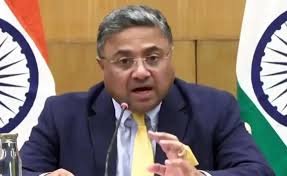
Responding to the communiqué, MEA spokesperson Randhir Jaiswal said India categorically rejects the unwarranted comments and maintains that the Union Territories of Jammu and Kashmir and Ladakh are integral and inalienable parts of the country.
He emphasized that external entities have no locus standi in matters concerning India’s sovereignty and territorial integrity, and urged them to refrain from interfering in the country’s internal affairs.
The response reflects New Delhi’s long-standing position against the internationalisation of the Kashmir issue. India has consistently maintained that matters related to Jammu and Kashmir are strictly bilateral and that third parties have no role in addressing them.
In recent years, Pakistan has repeatedly sought to include references to Jammu and Kashmir in bilateral and multilateral statements to draw international attention to the issue. India, however, has firmly opposed such efforts, asserting that its territorial and administrative matters are not open to external commentary.
The diplomatic rebuttal also comes as India continues to highlight political, economic and infrastructural developments in Jammu and Kashmir and Ladakh. The government has pointed to local democratic processes, governance reforms and investment initiatives as indicators of normalcy and development in the region.
Observers note that India’s response serves not only as a message to Islamabad but also to international partners, including the European Union, underscoring that strategic and economic engagement should remain separate from issues New Delhi considers part of its domestic jurisdiction.
Indian officials view the inclusion of Jammu and Kashmir in the Pakistan-EU communiqué as unnecessary and maintain that any attempt to question India’s territorial sovereignty will be firmly contested through diplomatic channels.