
Examiner Bureau | Srinagar:
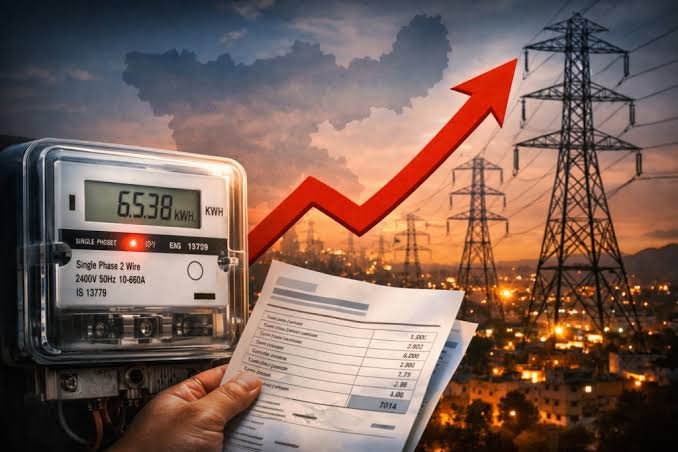
The Jammu and Kashmir Government has no role in the recently approved 6.8 per cent increase in electricity tariffs, National Conference spokesperson Imran Nabi Dar said, seeking to clarify the government’s position amid growing criticism over higher power charges.
Dar described the revision as part of the normal regulatory process undertaken by the Joint Electricity Regulatory Commission (JERC) and said such tariff reviews were independent of the Jammu and Kashmir Government.
“JK Govt has no role in tariff hike by JERC; it is a normal process that has been ongoing and will continue,” Dar said.
His remarks come amid a growing public debate over the revised electricity tariffs and their likely impact on household budgets, businesses and other electricity consumers across Jammu and Kashmir.
The National Conference spokesperson’s statement appears aimed at distinguishing the elected government from the tariff-setting process, which is undertaken by the electricity regulatory authority.
The 6.8 per cent increase approved by JERC has attracted criticism from sections of the public and opposition parties, who have raised concerns over the additional financial burden on consumers at a time when electricity costs remain a sensitive issue across the Union Territory.
Dar, however, maintained that electricity tariffs in Jammu and Kashmir continue to remain comparatively lower than those in other northern states.
The assertion is likely to become part of the wider political debate over electricity pricing, with opposition parties and consumer groups expected to scrutinise the revised rates and their impact on different categories of users.
Electricity tariffs are periodically reviewed by regulatory authorities to take into account factors such as the cost of power procurement, transmission and distribution expenses, revenue requirements and the financial health of power utilities.
The latest revision has nevertheless generated concern among consumers, particularly those already facing rising household and operational expenses.
For domestic consumers, even a relatively moderate percentage increase can translate into higher monthly bills depending on consumption levels. Commercial and industrial consumers could also face increased operating costs, with the overall impact varying according to tariff category and electricity usage.
The clarification from the National Conference comes as the government faces questions over the broader electricity situation in Jammu and Kashmir, including power availability, distribution losses, infrastructure requirements and the financial sustainability of the power sector.
While Dar stressed that the government did not have a role in the JERC decision, the tariff hike is nevertheless likely to remain a politically sensitive issue.
The government’s challenge will be to explain the distinction between the regulatory authority’s tariff-setting powers and its own broader responsibility for the functioning and performance of the electricity sector.
The controversy has also renewed calls for greater transparency over tariff calculations and for ensuring that any increase is accompanied by improvements in power supply, billing systems and service delivery.
Consumers are likely to closely monitor the revised tariff structure and its effect on their monthly electricity bills in the coming billing cycles.
For the government, the immediate political task will be to address public concerns while making clear that the tariff revision was approved through the regulatory mechanism rather than being a decision of the Jammu and Kashmir administration.
The debate is expected to continue as political parties, consumer groups and other stakeholders assess whether the revised tariffs are justified and how effectively the electricity sector can balance financial sustainability with the interests of consumers.