
Agencies | Kathmandu:
At least 359 people have been killed in Nepal and three in Tibet, while nearly 1,400 people remain missing, after devastating glacial floods swept through Himalayan communities along the Nepal-Tibet border, authorities said.
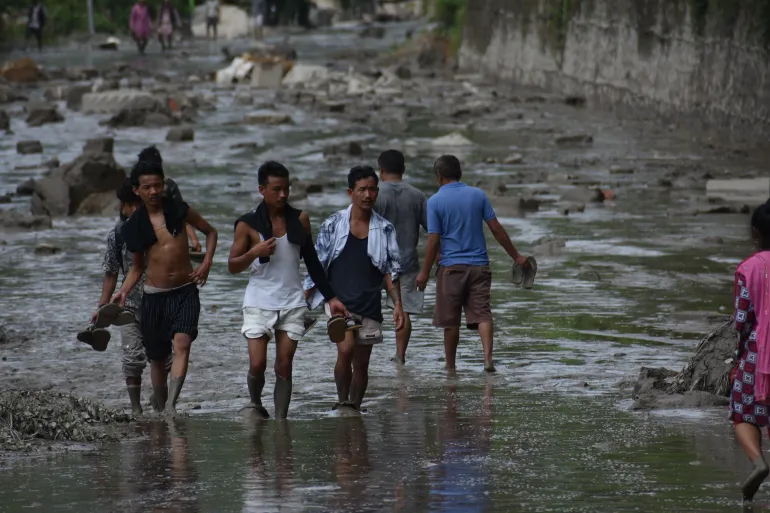
Rescue teams continued their search for survivors on Thursday, a day after torrents of water, mud and debris surged through several settlements, leaving widespread destruction across the affected region.
The disaster has particularly devastated Rasuwa district and communities situated along the Bhotekoshi and Trishuli river systems, with rescue workers facing major challenges in reaching affected areas.
Emergency teams have been deployed to search for people who may be trapped or missing following the catastrophic flooding.
Local residents have gathered outside hospitals as authorities continue efforts to account for those affected. Survivors have also begun recounting the terrifying moments when the flash floods struck, describing the sudden arrival of powerful torrents that swept through communities.
With communications and access disrupted in parts of the disaster zone, officials have warned that the casualty figures could change as rescue teams reach areas that remain difficult to access.
Authorities have issued another warning over the possibility of further flooding after a lake formed at the site of Wednesday’s disaster began rising.
Nepal’s disaster management authorities said the lake was created after a river blockage during the flooding. The rising water has raised concerns that it could burst and trigger another surge downstream.
Residents and rescue personnel have been urged to stay away from riverbanks and remain in safer locations until authorities issue further instructions.
The warning has added urgency to ongoing rescue operations, with officials closely monitoring the affected waterways and surrounding areas.
Aid organisations have warned that the disaster could create a serious public-health challenge, particularly in communities where water and sanitation infrastructure has been damaged.
WaterAid said the floods have severely affected Rasuwa and communities along the Bhotekoshi and Trishuli river systems, leaving families facing loss, displacement and uncertainty.
“Having grown up in Rasuwa district – one of the hardest hit regions in the recent flash floods in Nepal – it is truly devastating to see so many families facing unimaginable loss, displacement and uncertainty,” WaterAid Nepal Country Director Sudarshan Neupane said in a statement.
Neupane said the disaster highlighted the rapidly escalating impact of extreme climate events and stressed the importance of ensuring access to safe drinking water, sanitation and hygiene facilities to prevent the spread of disease.
WaterAid said communities in Nepal have repeatedly been forced to recover from increasingly extreme disasters despite having contributed comparatively little to the wider climate and water crisis.
The organisation stressed that restoring water and sanitation facilities would be critical as relief operations continue and displaced families begin dealing with the aftermath of the disaster.
Meanwhile, authorities continue to search for the missing and assess the extensive damage caused by the floods.
With the threat from the rising lake still present, officials have urged people living near rivers and in low-lying areas to remain vigilant and strictly follow evacuation and safety advisories.
The scale of the disaster is still unfolding, and authorities fear the death toll could rise further as rescue teams gain access to isolated communities and verify reports of missing people.